Division of Health Services Management and Policy, Ohio State University, Columbus, OH 43210, USA.
Med Care Res Rev. 2010 Dec;67(6):694-706. doi: 10.1177/1077558710368807. Epub 2010 Jun 2.
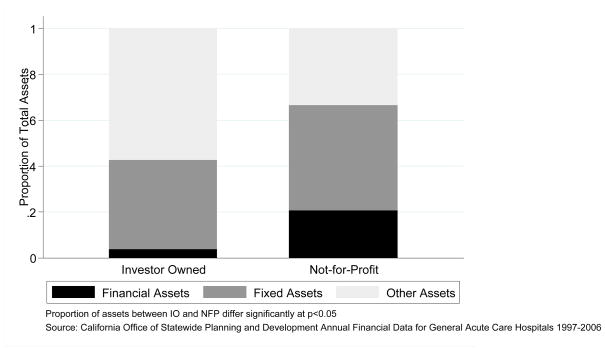
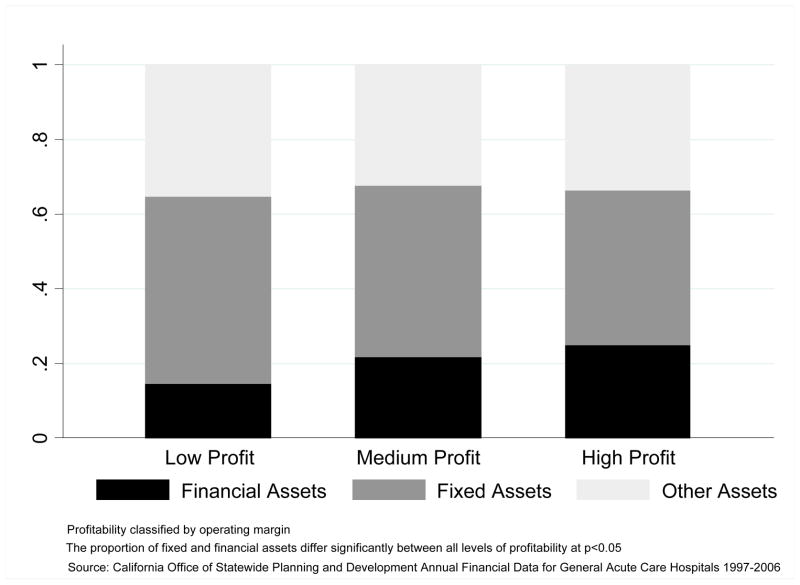
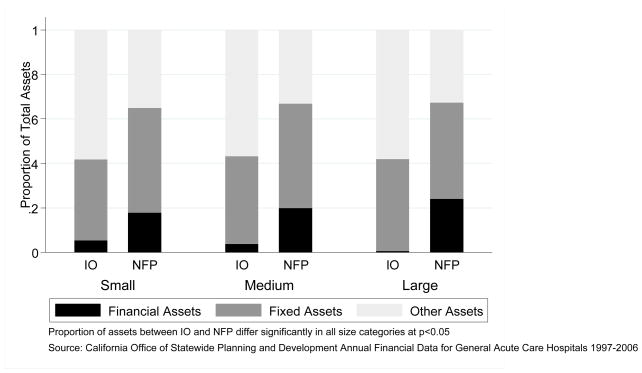
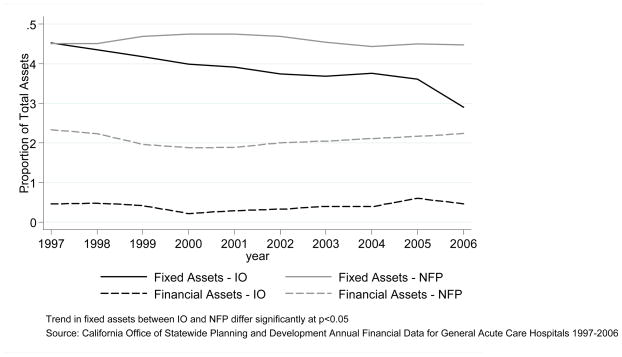
The delivery of health care is a capital-intensive industry, and thus, hospital investment strategy continues to be an important area of interest for both health policy and research. Much attention has been given to hospitals' capital investment policies with relatively little attention to investments in financial assets, which serve an important role in not-for-profit (NFP) hospitals. This study describes and analyzes trends in aggregate asset structure between NFP and investor-owned (IO) hospitals during the post-capital-based prospective payment system implementation period, providing the first documentation of long-term trends in hospital investment. The authors find hospitals' aggregate asset structure differs significantly based on ownership, size, and profitability. For both NFP and IO hospitals, financial securities have remained consistent over time, while fixed asset representation has declined in IO hospitals.
医疗保健服务是一个资本密集型产业,因此,医院投资策略一直是医疗政策和研究的重要关注点。人们非常关注医院的资本投资政策,而相对较少关注非营利性(NFP)医院金融资产投资,这些投资在 NFP 医院中发挥着重要作用。本研究描述和分析了资本为基础的后支付制度实施期间 NFP 和投资者所有(IO)医院的总体资产结构趋势,首次记录了医院投资的长期趋势。作者发现,医院的总体资产结构因所有权、规模和盈利能力而有显著差异。对于 NFP 和 IO 医院,金融证券一直保持稳定,而 IO 医院的固定资产比例则有所下降。