The Neurosciences Institute, San Diego, California, USA.
PLoS One. 2010 May 26;5(5):e10848. doi: 10.1371/journal.pone.0010848.
Tubulin is a major substrate of the cytoplasmic class II histone deacetylase HDAC6. Inhibition of HDAC6 results in higher levels of acetylated tubulin and enhanced binding of the motor protein kinesin-1 to tubulin, which promotes transport of cargoes along microtubules. Microtubule-dependent intracellular trafficking may therefore be regulated by modulating the activity of HDAC6. We have shown previously that the neuromodulator serotonin increases mitochondrial movement in hippocampal neurons via the Akt-GSK3beta signaling pathway. Here, we demonstrate a role for HDAC6 in this signaling pathway.
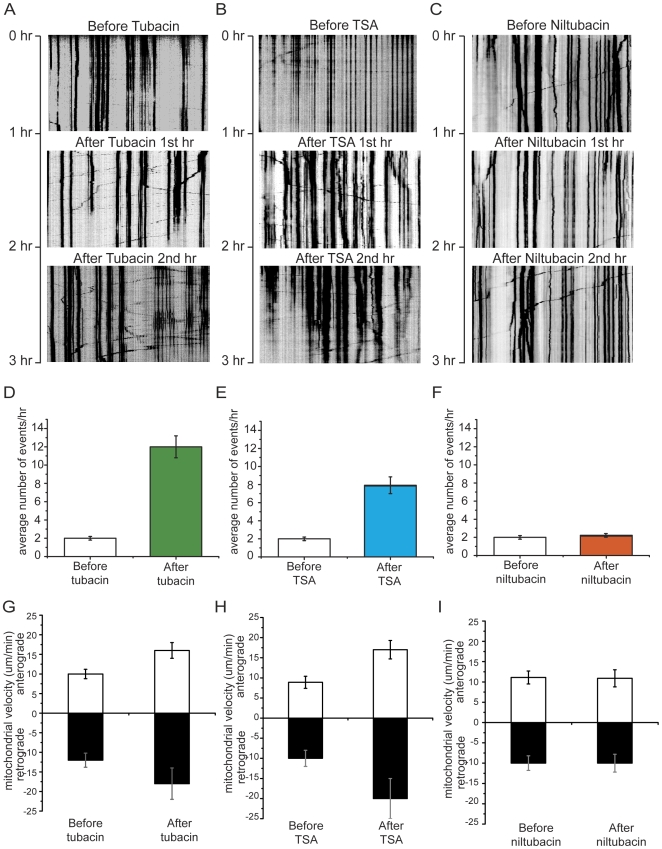
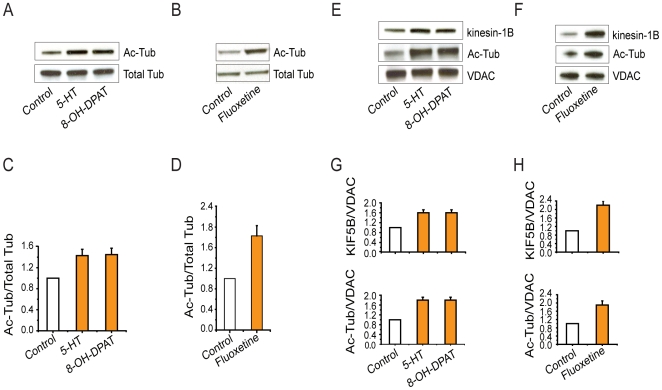
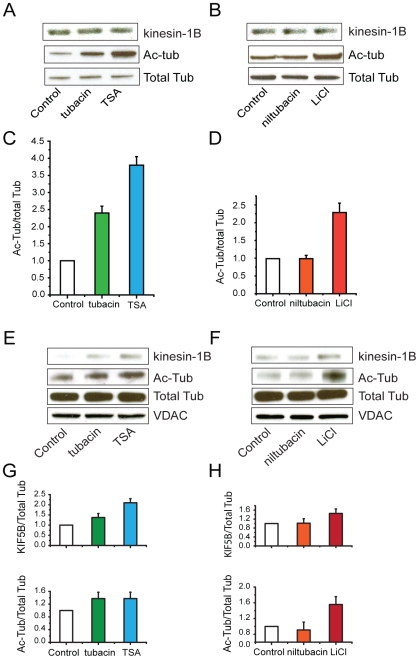
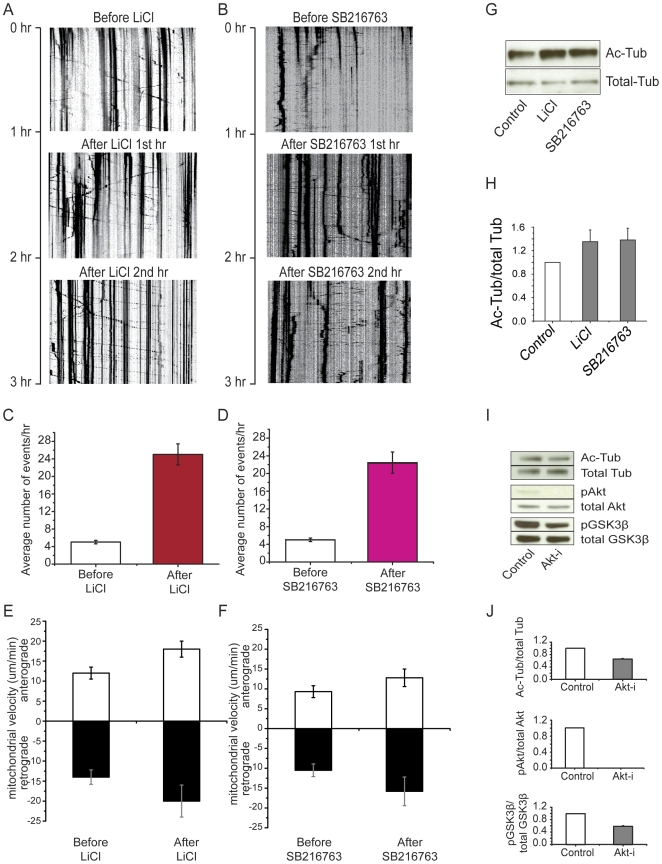
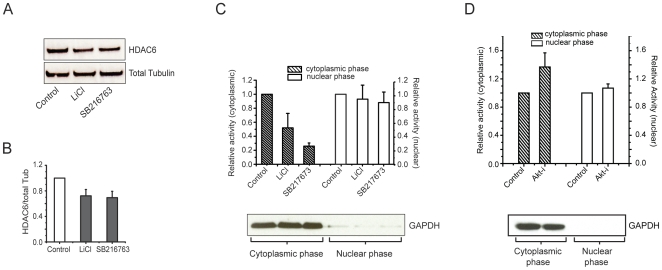
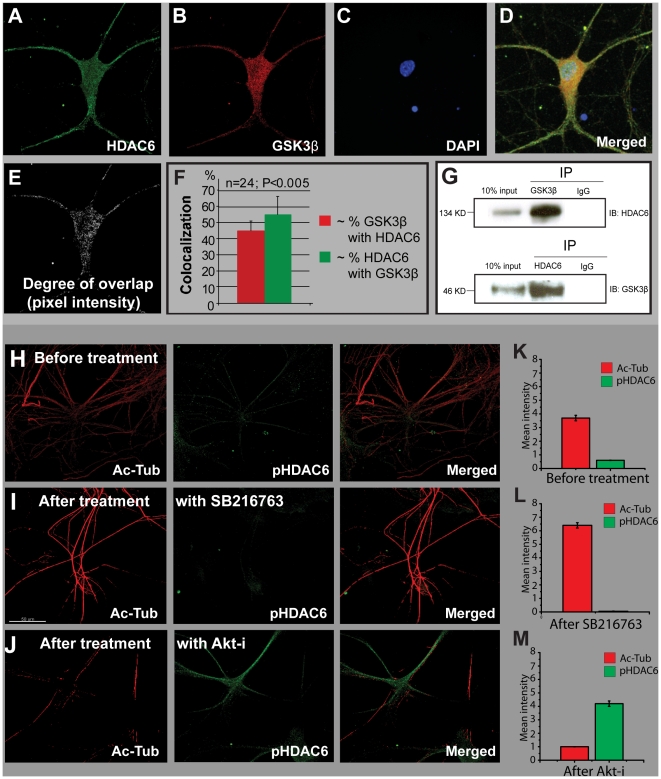
METHODOLOGY/PRINCIPAL FINDINGS: We found that the presence of tubacin, a specific HDAC6 inhibitor, dramatically enhanced mitochondrial movement in hippocampal neurons, whereas niltubacin, an inactive tubacin analog, had no effect. Compared to control cultures, higher levels of acetylated tubulin were found in neurons treated with tubacin, and more kinesin-1 was associated with mitochondria isolated from these neurons. Inhibition of GSK3beta decreased cytoplasmic deacetylase activity and increased tubulin acetylation, whereas blockade of Akt, which phosphorylates and down-regulates GSK3beta, increased cytoplasmic deacetylase activity and decreased tubulin acetylation. Concordantly, the administration of 5-HT, 8-OH-DPAT (a specific 5-HT1A receptor agonist), or fluoxetine (a 5-HT reuptake inhibitor) increased tubulin acetylation. GSK3beta was found to co-localize with HDAC6 in hippocampal neurons, and inhibition of GSK3beta resulted in decreased binding of antibody to phosphoserine-22, a potential GSK3beta phosphorylation site in HDAC6. GSK3beta may therefore regulate HDAC6 activity by phosphorylation.
CONCLUSIONS/SIGNIFICANCE: This study demonstrates that HDAC6 plays an important role in the modulation of mitochondrial transport. The link between HDAC6 and GSK3beta, established here, has important implications for our understanding of neurodegenerative disorders. In particular, abnormal mitochondrial transport, which has been observed in such disorders as Alzheimer's disease and Parkinson's disease, could result from the misregulation of HDAC6 by GSK3beta. HDAC6 may therefore constitute an attractive target in the treatment of these disorders.
微管蛋白是细胞质 II 类组蛋白去乙酰化酶 HDAC6 的主要底物。HDAC6 的抑制导致乙酰化微管蛋白水平升高,并增强了马达蛋白驱动蛋白-1与微管蛋白的结合,从而促进了货物沿着微管的运输。因此,微管依赖性细胞内运输可能受到调节 HDAC6 活性的调节。我们之前已经表明,神经调节剂血清素通过 Akt-GSK3β信号通路增加海马神经元中的线粒体运动。在这里,我们证明了 HDAC6 在该信号通路中的作用。
方法/主要发现:我们发现,特异性 HDAC6 抑制剂 tubacin 的存在极大地增强了海马神经元中的线粒体运动,而无效的 tubacin 类似物 niltubacin 则没有影响。与对照培养物相比,用 tubacin 处理的神经元中发现乙酰化微管蛋白水平升高,并且从这些神经元分离的线粒体与更多的驱动蛋白-1相关。GSK3β 的抑制降低了细胞质去乙酰化酶活性并增加了微管蛋白乙酰化,而 Akt 的阻断(磷酸化并下调 GSK3β)增加了细胞质去乙酰化酶活性并降低了微管蛋白乙酰化。一致地,5-HT、8-OH-DPAT(一种特异性 5-HT1A 受体激动剂)或氟西汀(一种 5-HT 再摄取抑制剂)的给药增加了微管蛋白乙酰化。在海马神经元中发现 GSK3β 与 HDAC6 共定位,并且 GSK3β 的抑制导致与磷酸丝氨酸-22(HDAC6 中的潜在 GSK3β 磷酸化位点)结合的抗体减少。因此,GSK3β 可能通过磷酸化调节 HDAC6 活性。
结论/意义:这项研究表明,HDAC6 在调节线粒体运输中起着重要作用。这里建立的 HDAC6 与 GSK3β 之间的联系,对我们理解神经退行性疾病具有重要意义。特别是,在阿尔茨海默病和帕金森病等疾病中观察到的异常线粒体运输可能是由于 GSK3β 对 HDAC6 的错误调节所致。因此,HDAC6 可能成为治疗这些疾病的有吸引力的靶点。