Research Group Molecular Ecology, Max-Planck Institute for Evolutionary Anthropology, Leipzig, Germany.
PLoS One. 2010 May 27;5(5):e10447. doi: 10.1371/journal.pone.0010447.
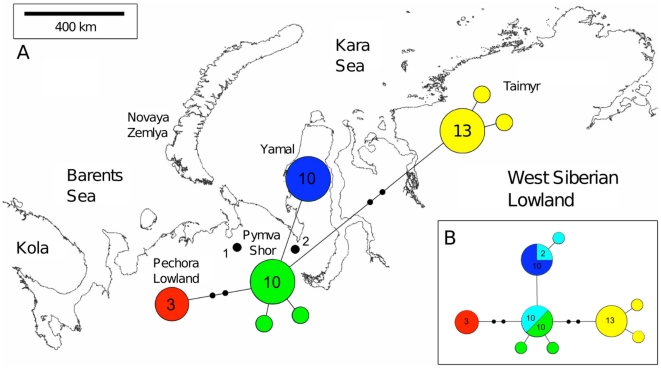
Global temperature increased by approximately half a degree (Celsius) within the last 150 years. Even this moderate warming had major impacts on Earth's ecological and biological systems, especially in the Arctic where the magnitude of abiotic changes even exceeds those in temperate and tropical biomes. Therefore, understanding the biological consequences of climate change on high latitudes is of critical importance for future conservation of the species living in this habitat. The past 25,000 years can be used as a model for such changes, as they were marked by prominent climatic changes that influenced geographical distribution, demographic history and pattern of genetic variation of many extant species. We sequenced ancient and modern DNA of the collared lemming (Dicrostonyx torquatus), which is a key species of the arctic biota, from a single site (Pymva Shor, Northern Pre Urals, Russia) to see if climate warming events after the Last Glacial Maximum had detectable effects on the genetic variation of this arctic rodent species, which is strongly associated with a cold and dry climate.
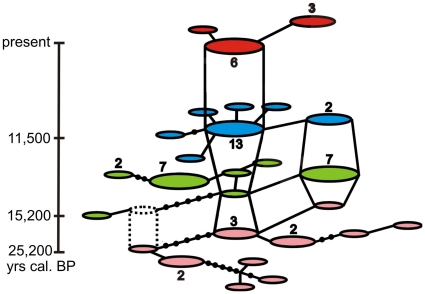
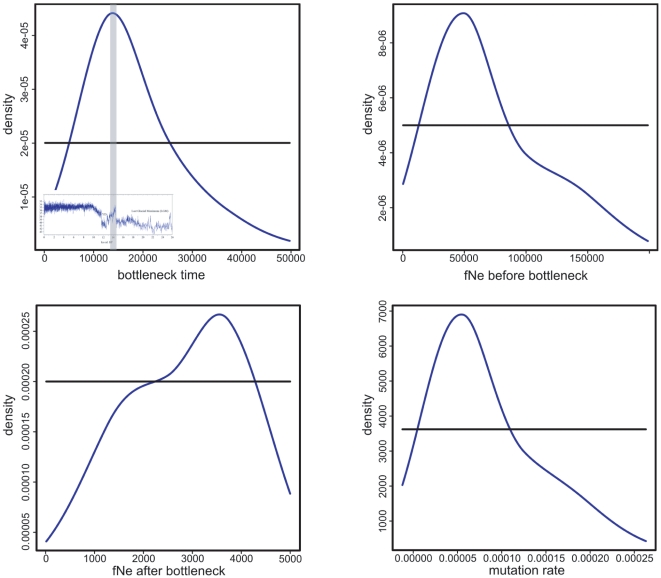
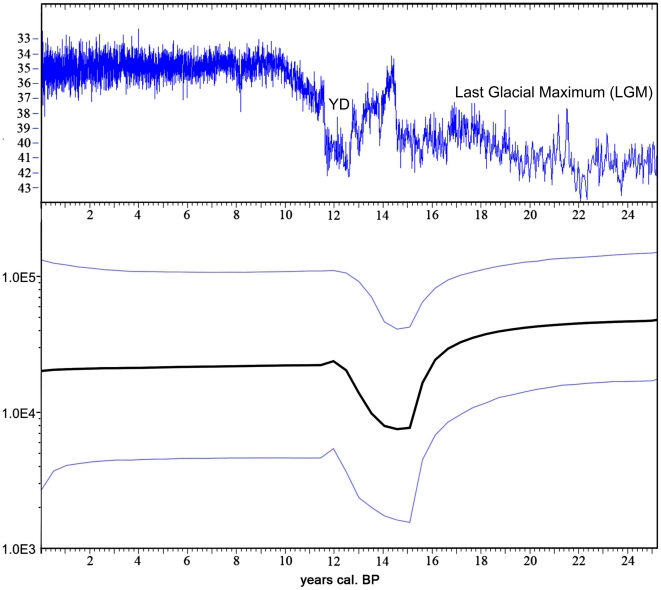
Using three dimensional network reconstructions we found a dramatic decline in genetic diversity following the LGM. Model-based approaches such as Approximate Bayesian Computation and Markov Chain Monte Carlo based Bayesian inference show that there is evidence for a population decline in the collared lemming following the LGM, with the population size dropping to a minimum during the Greenland Interstadial 1 (Bølling/Allerød) warming phase at 14.5 kyrs BP.
Our results show that previous climate warming events had a strong influence on genetic diversity and population size of collared lemmings. Due to its already severely compromised genetic diversity a similar population reduction as a result of the predicted future climate change could completely abolish the remaining genetic diversity in this population. Local population extinctions of collared lemmings would have severe effects on the arctic ecosystem, as collared lemmings are a key species in the trophic interactions and ecosystem processes in the Arctic.
在过去的 150 年里,全球温度升高了约半摄氏度。即使是这种适度的变暖也对地球的生态和生物系统产生了重大影响,特别是在北极,非生物变化的幅度甚至超过了温带和热带生物群落。因此,了解气候变化对高纬度地区的生物后果对于保护生活在该栖息地的物种至关重要。过去的 25000 年可以作为此类变化的模型,因为它们以显著的气候变化为标志,这些气候变化影响了许多现存物种的地理分布、种群历史和遗传变异模式。我们从一个单一地点(俄罗斯北乌拉尔的 Pymva Shor)对环斑旅鼠(Dicrostonyx torquatus)的古代和现代 DNA 进行测序,环斑旅鼠是北极生物群的关键物种,以了解末次冰期后气候变暖事件是否对这种与寒冷和干燥气候密切相关的北极啮齿动物物种的遗传变异产生了可检测的影响。
使用三维网络重建,我们发现环斑旅鼠的遗传多样性在末次冰期后急剧下降。基于模型的方法,如近似贝叶斯计算和基于马尔可夫链蒙特卡罗的贝叶斯推断,表明有证据表明环斑旅鼠在末次冰期后种群数量减少,种群数量在 14500 年前的格陵兰间冰期 1(Bølling/Allerød)变暖阶段降至最低。
我们的研究结果表明,先前的气候变暖事件对环斑旅鼠的遗传多样性和种群大小产生了强烈影响。由于其遗传多样性已经严重受损,因此预测未来气候变化导致的类似种群减少可能会使该种群剩余的遗传多样性完全消失。环斑旅鼠的局部灭绝将对北极生态系统产生严重影响,因为环斑旅鼠是北极生态系统中营养相互作用和生态过程的关键物种。