Department of Biochemistry and Molecular Genetics, University of Illinois at Chicago, College of Medicine, Chicago, Illinois 60607-7170, USA.
Cancer Res. 2010 Jun 15;70(12):5054-63. doi: 10.1158/0008-5472.CAN-10-0545. Epub 2010 Jun 8.
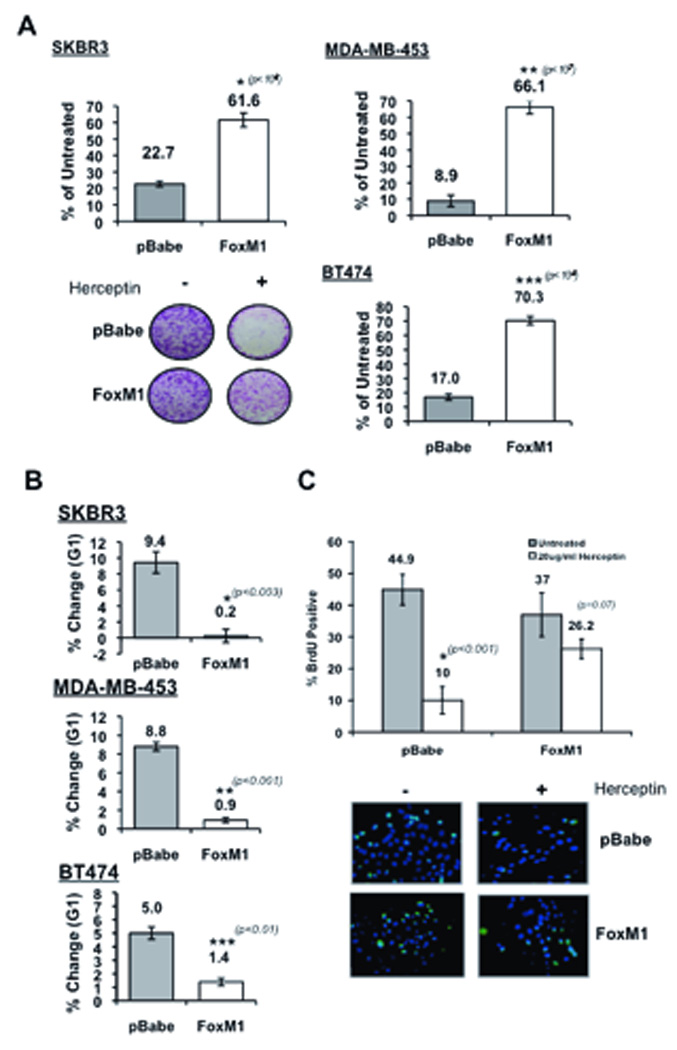
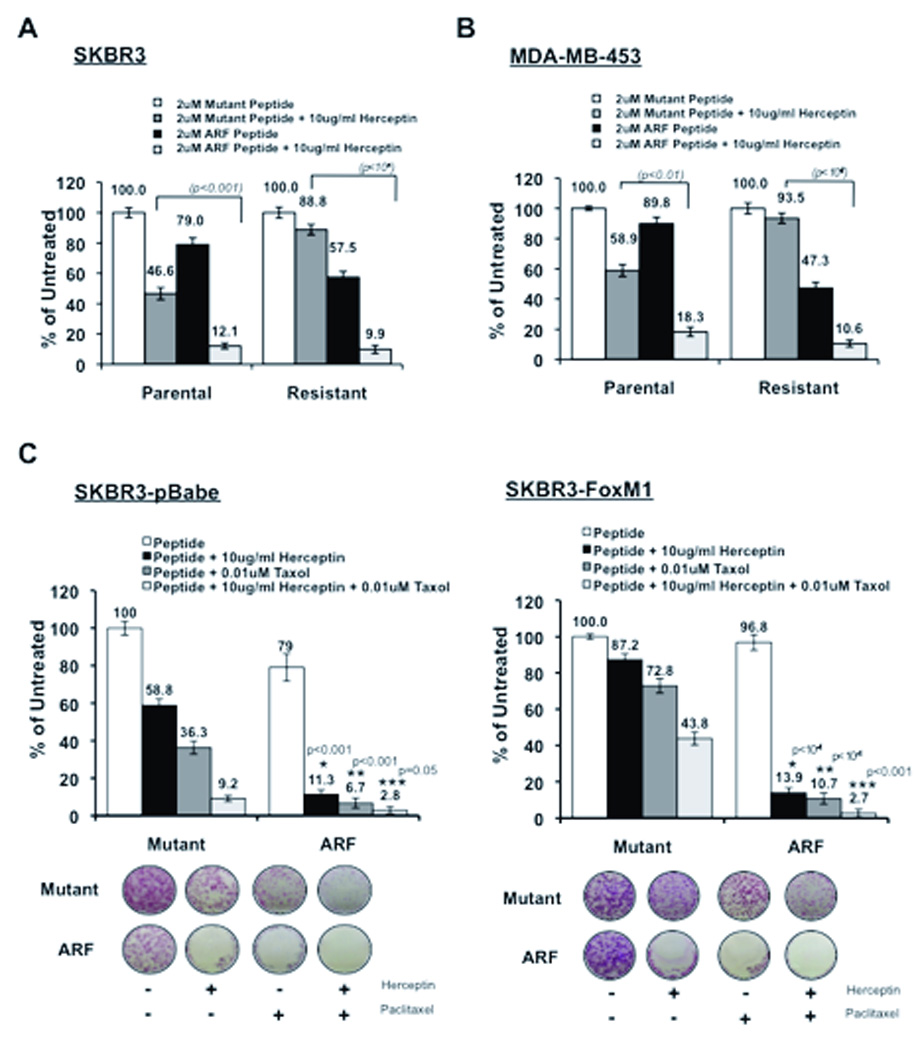
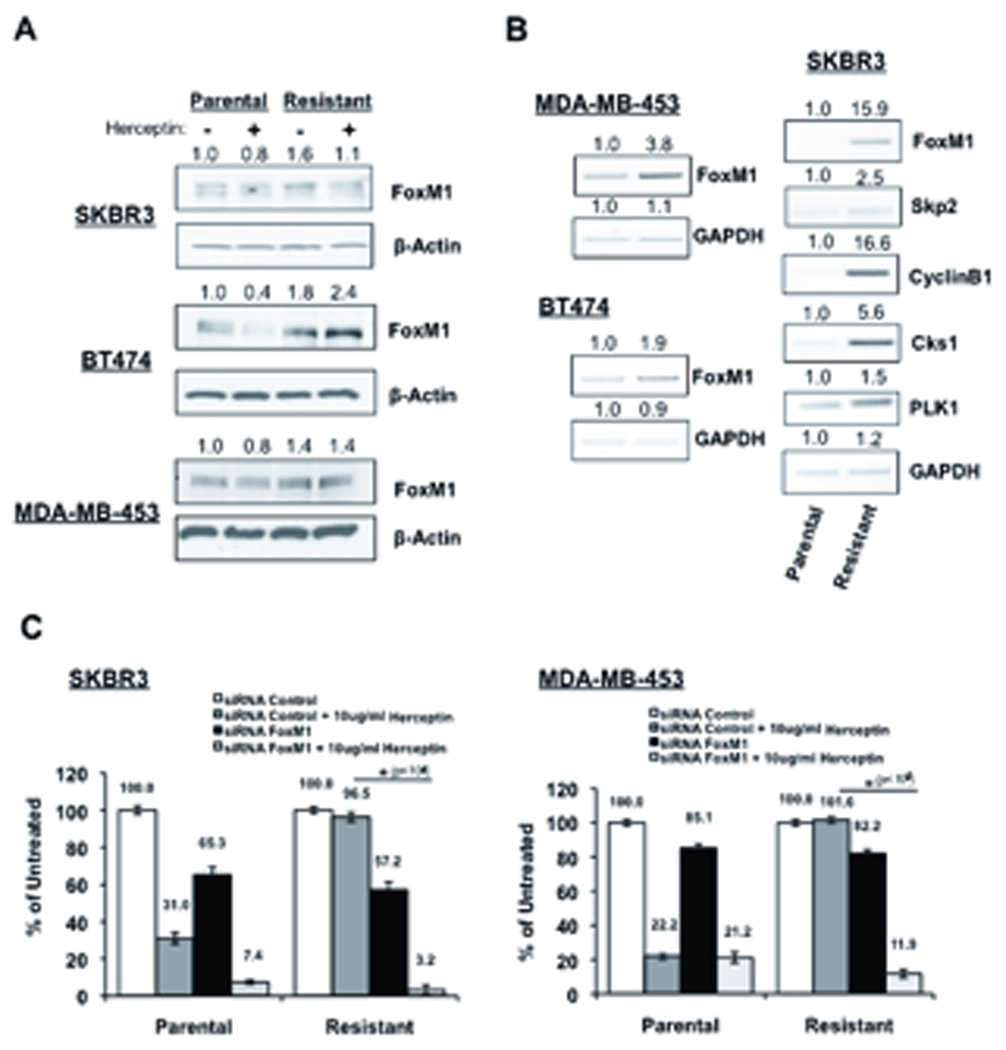
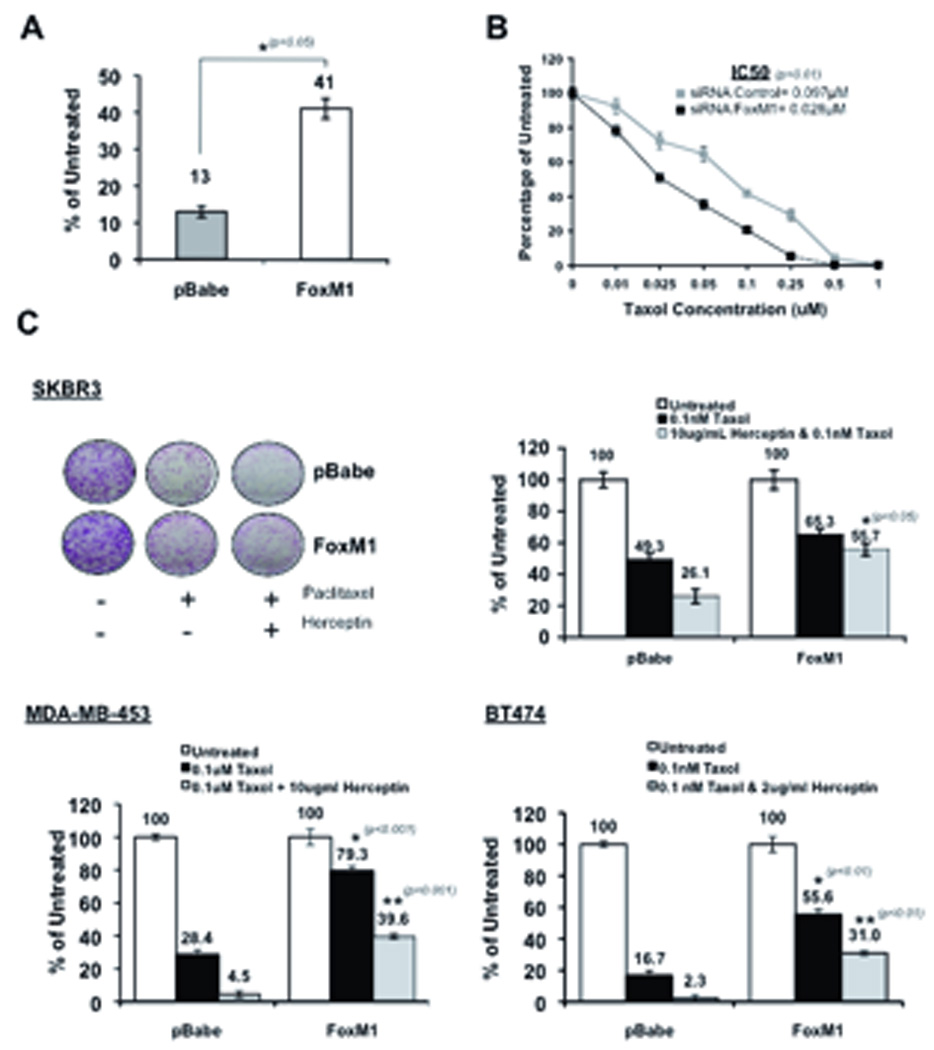
Inherent and acquired therapeutic resistance in breast cancer remains a major clinical challenge. In human breast cancer samples, overexpression of the oncogenic transcription factor FoxM1 has been suggested to be a marker of poor prognosis. In this study, we report that FoxM1 overexpression confers resistance to the human epidermal growth factor receptor 2 monoclonal antibody Herceptin and microtubule-stabilizing drug paclitaxel, both as single agents and in combination. FoxM1 altered microtubule dynamics to protect tumor cells from paclitaxel-induced apoptosis. Mechanistic investigations revealed that the tubulin-destabilizing protein Stathmin, whose expression also confers resistance to paclitaxel, is a direct transcriptional target of FoxM1. Significantly, attenuating FoxM1 expression by small interfering RNA or an alternate reading frame (ARF)-derived peptide inhibitor increased therapeutic sensitivity. Our findings indicate that targeting FoxM1 could relieve therapeutic resistance in breast cancer.
在乳腺癌中,内在和获得性治疗抵抗仍然是一个主要的临床挑战。在人类乳腺癌样本中,致癌转录因子 FoxM1 的过表达被认为是预后不良的标志物。在这项研究中,我们报告 FoxM1 的过表达赋予了人表皮生长因子受体 2 单克隆抗体赫赛汀和微管稳定剂紫杉醇的耐药性,无论是单独使用还是联合使用。FoxM1 改变微管动力学,以保护肿瘤细胞免受紫杉醇诱导的凋亡。机制研究表明,微管不稳定蛋白 Stathmin 的表达也赋予了紫杉醇的耐药性,是 FoxM1 的直接转录靶标。重要的是,通过小干扰 RNA 或替代阅读框 (ARF) 衍生肽抑制剂降低 FoxM1 的表达增加了治疗敏感性。我们的研究结果表明,靶向 FoxM1 可能会缓解乳腺癌的治疗抵抗。