Laboratorio de Biología Celular, Departamento de Biología Celular, Facultad de Ciencias Biológicas, Universidad de Concepción, Concepción, Chile.
ASN Neuro. 2010 May 25;2(3):e00035. doi: 10.1042/AN20090059.
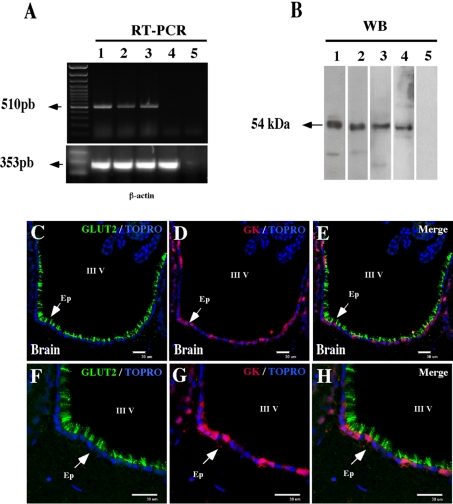
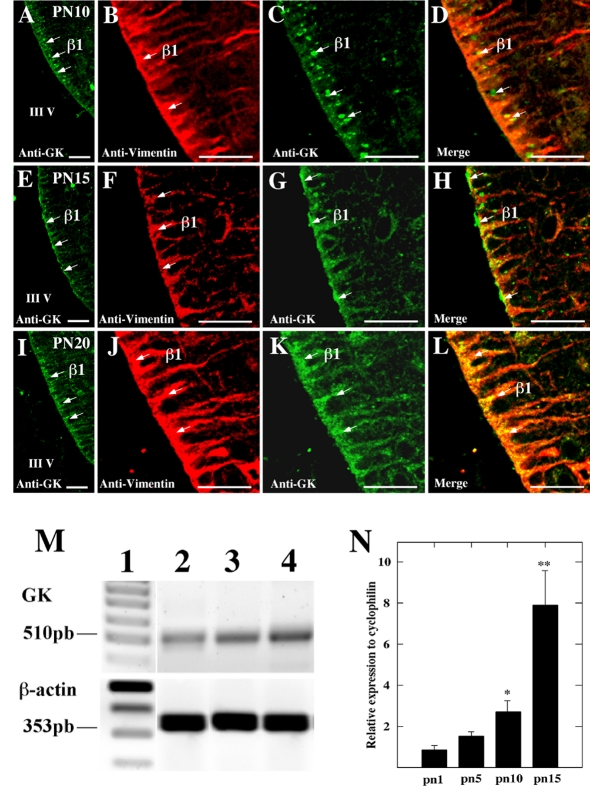
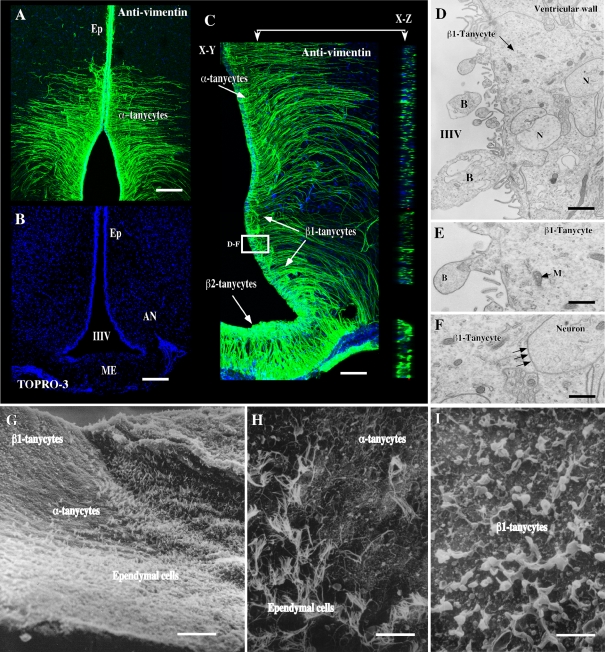
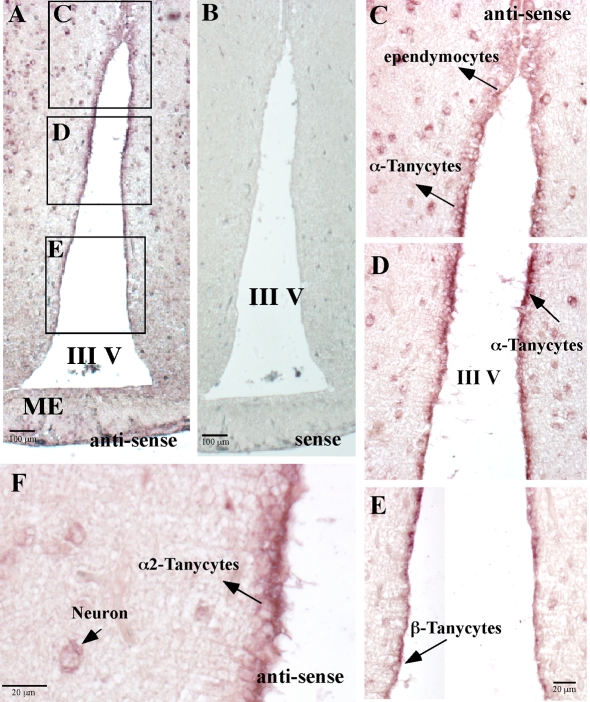
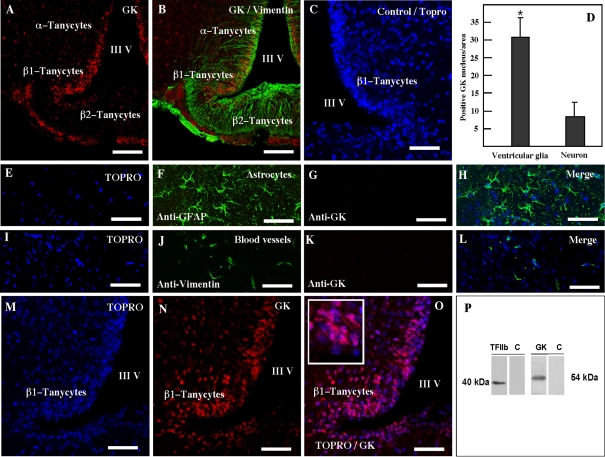
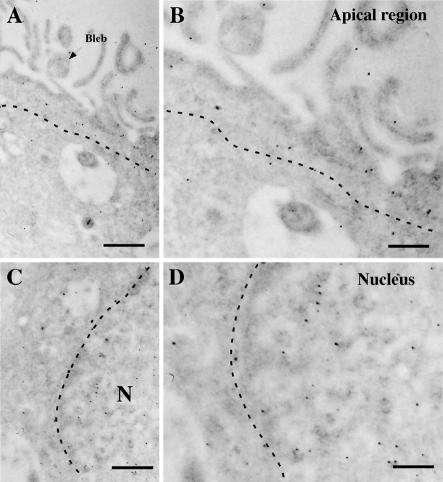
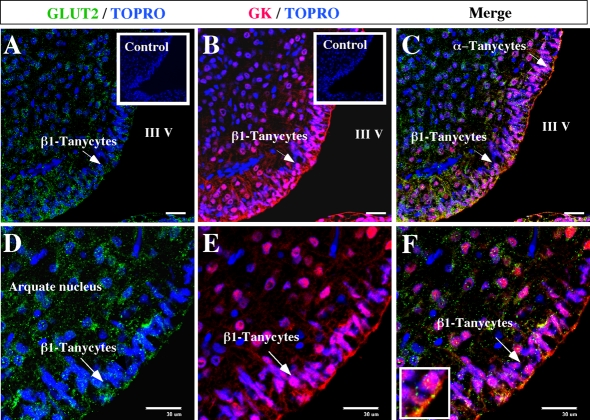
It has recently been proposed that hypothalamic glial cells sense glucose levels and release lactate as a signal to activate adjacent neurons. GK (glucokinase), the hexokinase involved in glucose sensing in pancreatic beta-cells, is also expressed in the hypothalamus. However, it has not been clearly determined if glial and/or neuronal cells express this protein. Interestingly, tanycytes, the glia that cover the ventricular walls of the hypothalamus, are in contact with CSF (cerebrospinal fluid), the capillaries of the arcuate nucleus and adjacent neurons; this would be expected for a system that can detect and communicate changes in glucose concentration. Here, we demonstrated by Western-blot analysis, QRT-PCR [quantitative RT-PCR (reverse transcription-PCR)] and in situ hybridization that GK is expressed in tanycytes. Confocal microscopy and immuno-ultrastructural analysis revealed that GK is localized in the nucleus and cytoplasm of beta1-tanycytes. Furthermore, GK expression increased in these cells during the second week of post-natal development. Based on this evidence, we propose that tanycytes mediate, at least in part, the mechanism by which the hypothalamus detects changes in glucose concentrations.
最近有人提出,下丘脑神经胶质细胞能够感知葡萄糖水平,并释放乳酸作为信号来激活相邻的神经元。在胰腺β细胞中参与葡萄糖感应的葡萄糖激酶(GK)也在下丘脑表达。然而,尚未明确确定胶质细胞和/或神经元是否表达这种蛋白。有趣的是,覆盖在下丘脑室壁的神经胶质细胞——室管膜细胞,与脑脊液(CSF)、弓状核的毛细血管和相邻神经元接触;对于一个能够检测和传递葡萄糖浓度变化的系统来说,这是意料之中的。在这里,我们通过 Western blot 分析、QRT-PCR(定量 RT-PCR)和原位杂交证明了 GK 在室管膜细胞中表达。共聚焦显微镜和免疫超微结构分析显示,GK 定位于β1-室管膜细胞的核和细胞质中。此外,在出生后第二周,这些细胞中的 GK 表达增加。基于这些证据,我们提出室管膜细胞介导了至少部分下丘脑检测葡萄糖浓度变化的机制。