Department of Functional Genomics, Medical Research Institute, Tokyo Medical and Dental University, Bunkyo-ku, Tokyo, Japan.
PLoS One. 2010 Jun 3;5(6):e10946. doi: 10.1371/journal.pone.0010946.
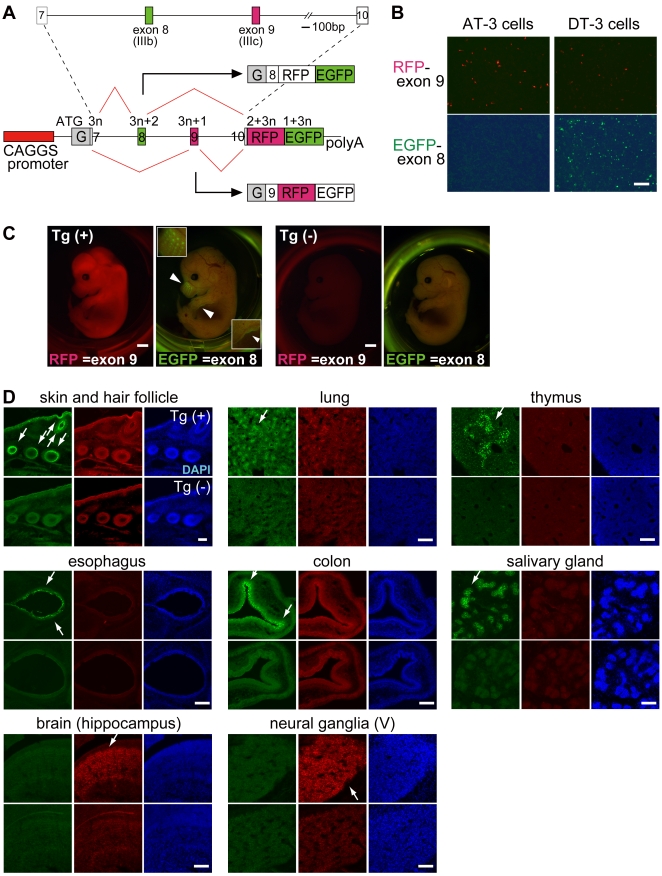
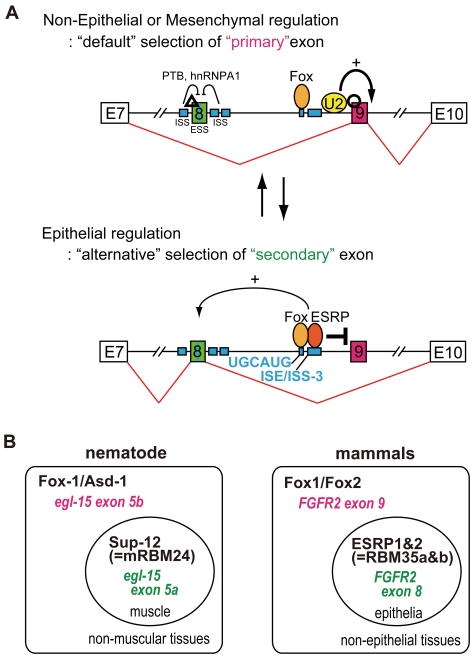
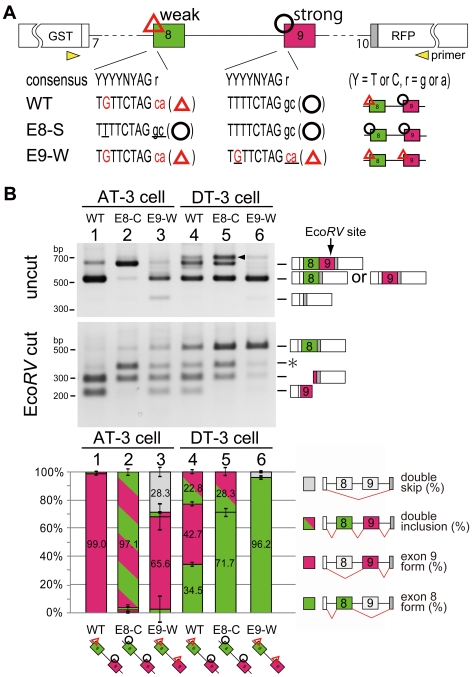
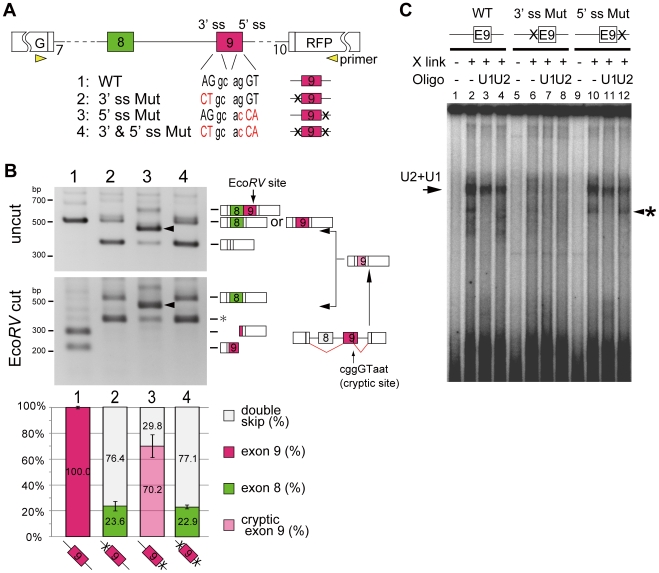
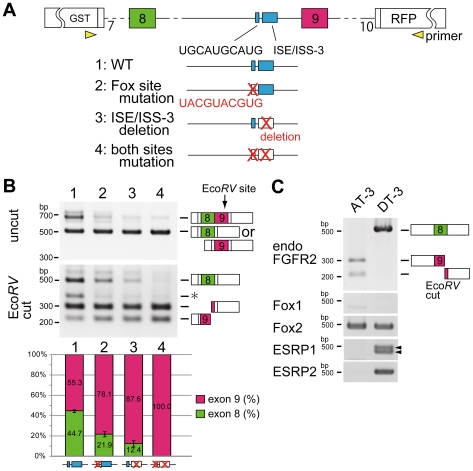
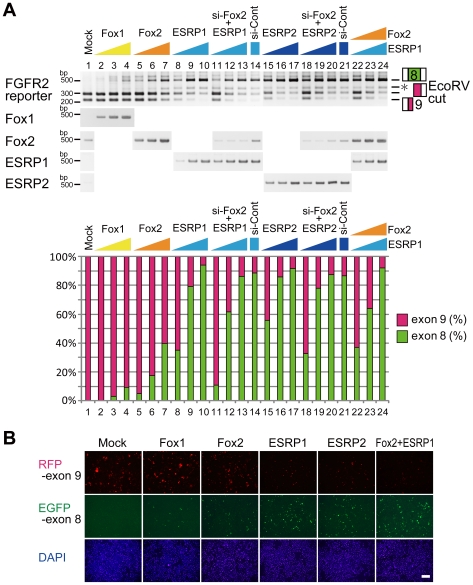
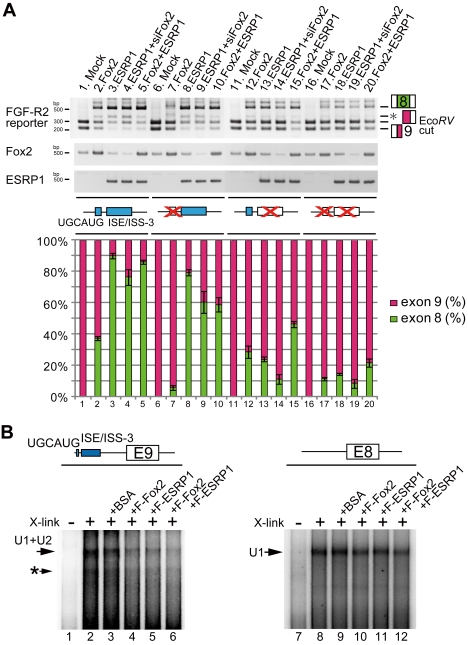
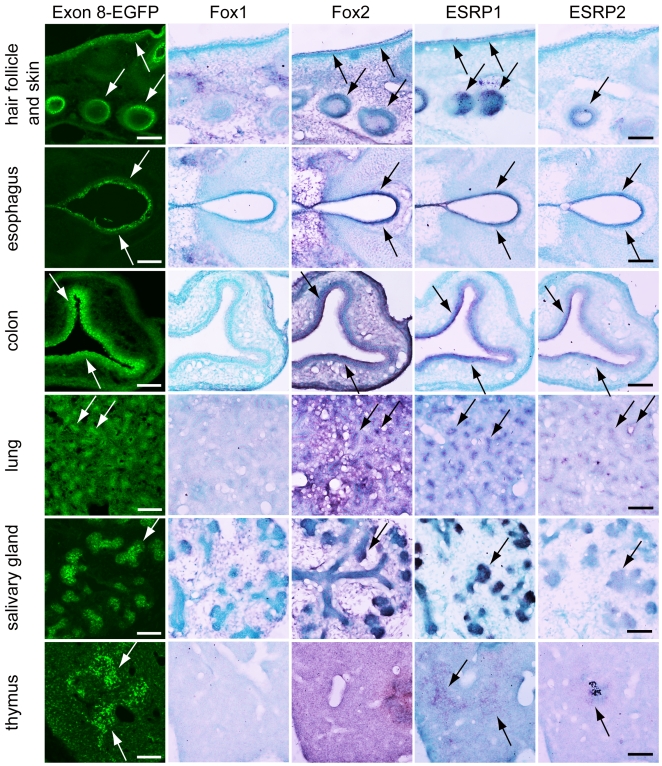
Since alternative splicing of pre-mRNAs is essential for generating tissue-specific diversity in proteome, elucidating its regulatory mechanism is indispensable to understand developmental process or tissue-specific functions. We have been focusing on tissue-specific regulation of mutually exclusive selection of alternative exons because this implies the typical molecular mechanism of alternative splicing regulation and also can be good examples to elicit general rule of "splice code". So far, mutually exclusive splicing regulation has been explained by the outcome from the balance of multiple regulators that enhance or repress either of alternative exons discretely. However, this "balance" model is open to questions of how to ensure the selection of only one appropriate exon out of several candidates and how to switch them. To answer these questions, we generated an original bichromatic fluorescent splicing reporter system for mammals using fibroblast growth factor-receptor 2 (FGFR2) gene as model. By using this splicing reporter, we demonstrated that FGFR2 gene is regulated by the "switch-like" mechanism, in which key regulators modify the ordered splice-site recognition of two mutually exclusive exons, eventually ensure single exon selection and their distinct switching. Also this finding elucidated the evolutionally conserved "splice code," in which combination of tissue-specific and broadly expressed RNA binding proteins regulate alternative splicing of specific gene in a tissue-specific manner. These findings provide the significant cue to understand how a number of spliced genes are regulated in various tissue-specific manners by a limited number of regulators, eventually to understand developmental process or tissue-specific functions.
由于前体 mRNA 的选择性剪接对于蛋白质组的组织特异性多样性的产生至关重要,因此阐明其调控机制对于理解发育过程或组织特异性功能是必不可少的。我们一直专注于相互排斥的选择性外显子选择的组织特异性调控,因为这暗示了选择性剪接调控的典型分子机制,并且可以作为引出“剪接代码”一般规则的很好的例子。到目前为止,相互排斥的剪接调控已经通过增强或抑制离散的替代外显子的多个调节剂的平衡的结果来解释。然而,这个“平衡”模型存在如何确保从几个候选者中选择仅一个合适的外显子以及如何切换它们的问题。为了回答这些问题,我们使用成纤维细胞生长因子受体 2 (FGFR2) 基因作为模型,为哺乳动物生成了原始的双色荧光剪接报告系统。通过使用这种剪接报告系统,我们证明了 FGFR2 基因受“开关样”机制的调节,其中关键调节剂修饰了两个相互排斥的外显子的有序剪接位点识别,最终确保了单个外显子的选择及其独特的切换。这一发现还阐明了进化保守的“剪接代码”,其中组织特异性和广泛表达的 RNA 结合蛋白的组合以组织特异性的方式调节特定基因的选择性剪接。这些发现为理解大量剪接基因如何通过有限数量的调节剂以各种组织特异性方式进行调控提供了重要线索,最终有助于理解发育过程或组织特异性功能。