Earth and Life Institute, Biodiversity Research Centre, Université catholique de Louvain, Louvain-la-Neuve, Belgium.
PLoS One. 2010 Jun 2;5(6):e10925. doi: 10.1371/journal.pone.0010925.
Almost all animals, including insects, need to adapt to temperature fluctuations. The molecular basis of thermal adaptation is not well understood, although a number of candidate genes have been proposed. However, a functional link between candidate genes and thermal tolerance has rarely been established. The gene Frost (Fst) was first discovered when Drosophila flies were exposed to cold stress, but the biological function(s) of Fst has so far not been characterized. Because Fst is up-regulated after a cold stress, we tested whether it was essential for chill-coma recovery.
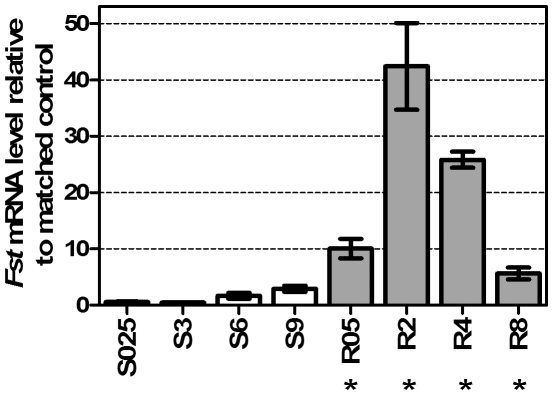
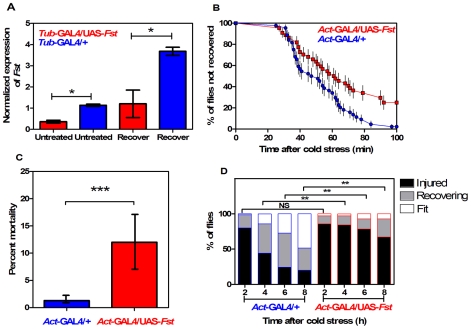
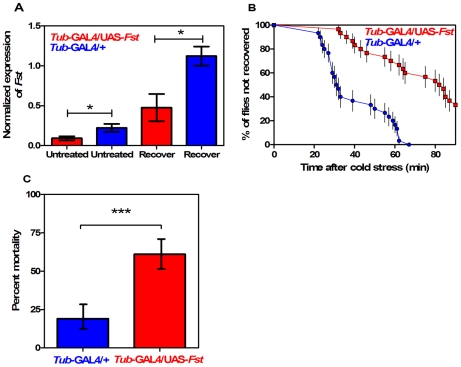
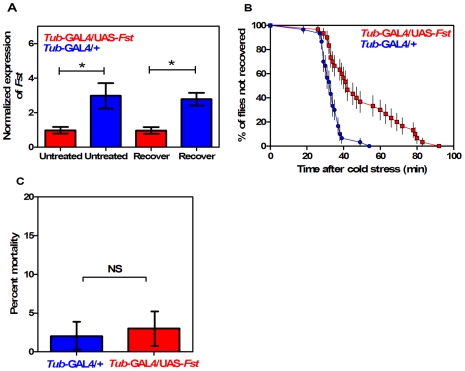
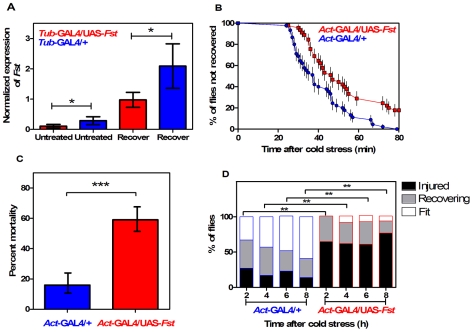
METHODOLOGY/PRINCIPAL FINDINGS: A marked increase in Fst expression was detected (by RT-PCR) during recovery from cold stress, peaking at 42-fold after 2 h. The GAL4/UAS system was used to knock down expression of Fst and recovery ability was assessed in transgenic adults following 12 h of chill coma at 0 degrees C. The ability to recover from cold stress (short-, medium- and long-term) was significantly altered in the transgenic adults that had Fst silenced. These findings show that Fst plays an essential role in the recovery from chill coma in both males and females.
CONCLUSIONS/SIGNIFICANCE: The Frost gene is essential for cold tolerance in Drosophila melanogaster and may play an important role in thermal adaptation.
几乎所有动物,包括昆虫,都需要适应温度波动。热适应的分子基础虽然已经提出了一些候选基因,但还没有很好地理解。然而,候选基因与热耐受性之间的功能联系很少得到确立。Frost (Fst) 基因最初是在果蝇暴露于冷应激时发现的,但到目前为止,Fst 的生物学功能尚未得到描述。由于 Fst 在冷应激后上调,我们测试了它是否对冷休克恢复至关重要。
方法/主要发现:通过 RT-PCR 检测到 Fst 在冷应激恢复过程中表达明显增加(42 倍),在 2 小时后达到峰值。使用 GAL4/UAS 系统敲低 Fst 的表达,并在 0°C 下 12 小时的冷休克后评估转基因成虫的恢复能力。沉默 Fst 的转基因成虫在从冷应激(短期、中期和长期)中恢复的能力显著改变。这些发现表明,Fst 在果蝇的冷休克恢复中起着至关重要的作用,并且可能在热适应中发挥重要作用。
结论/意义:Frost 基因在黑腹果蝇的耐寒性中是必不可少的,并且可能在热适应中发挥重要作用。