Department of Biology, San Diego State University, San Diego, California, United States of America.
PLoS One. 2010 Jun 3;5(6):e10950. doi: 10.1371/journal.pone.0010950.
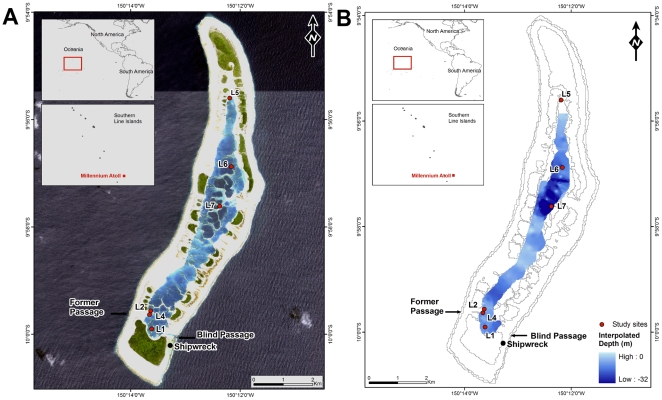
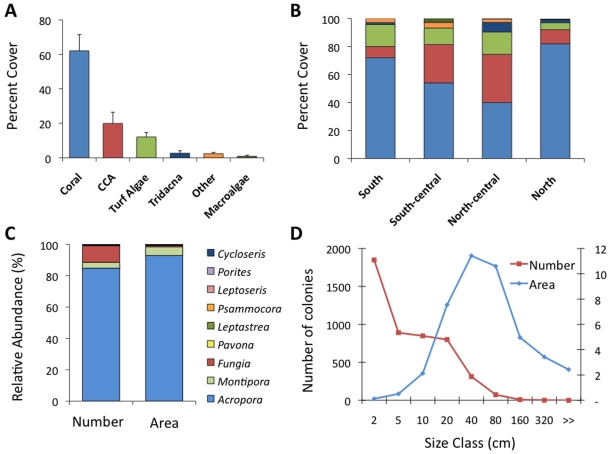
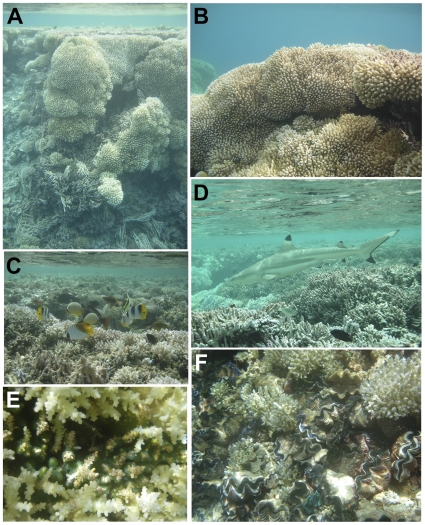
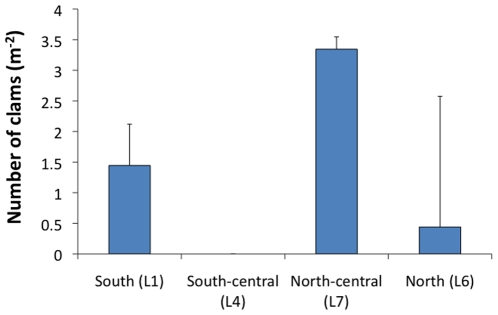
A series of surveys were carried out to characterize the physical and biological parameters of the Millennium Atoll lagoon during a research expedition in April of 2009. Millennium is a remote coral atoll in the Central Pacific belonging to the Republic of Kiribati, and a member of the Southern Line Islands chain. The atoll is among the few remaining coral reef ecosystems that are relatively pristine. The lagoon is highly enclosed, and was characterized by reticulate patch and line reefs throughout the center of the lagoon as well as perimeter reefs around the rim of the atoll. The depth reached a maximum of 33.3 m in the central region of the lagoon, and averaged between 8.8 and 13.7 m in most of the pools. The deepest areas were found to harbor large platforms of Favia matthaii, which presumably provided a base upon which the dominant corals (Acropora spp.) grew to form the reticulate reef structure. The benthic algal communities consisted mainly of crustose coralline algae (CCA), microfilamentous turf algae and isolated patches of Halimeda spp. and Caulerpa spp. Fish species richness in the lagoon was half of that observed on the adjacent fore reef. The lagoon is likely an important nursery habitat for a number of important fisheries species including the blacktip reef shark and Napoleon wrasse, which are heavily exploited elsewhere around the world but were common in the lagoon at Millennium. The lagoon also supports an abundance of giant clams (Tridacna maxima). Millennium lagoon provides an excellent reference of a relatively undisturbed coral atoll. As with most coral reefs around the world, the lagoon communities of Millennium may be threatened by climate change and associated warming, acidification and sea level rise, as well as sporadic local resource exploitation which is difficult to monitor and enforce because of the atoll's remote location. While the remote nature of Millennium has allowed it to remain one of the few nearly pristine coral reef ecosystems in the world, it is imperative that this ecosystem receives protection so that it may survive for future generations.
在 2009 年 4 月的一次研究考察中,进行了一系列调查,以描述千年环礁湖的物理和生物参数。千年环礁是中太平洋基里巴斯共和国的一个偏远珊瑚环礁,是南莱恩群岛链的成员。该环礁是为数不多的相对原始的珊瑚礁生态系统之一。泻湖高度封闭,泻湖中心区域的特征是网状斑块和线状珊瑚礁,以及环礁边缘的周边珊瑚礁。泻湖中心区域的最大深度达到 33.3 米,在大多数水池中平均深度在 8.8 至 13.7 米之间。最深的区域发现有大量的 Favia matthaii 大型平台,这些平台可能为优势珊瑚(Acropora spp.)提供了生长的基础,形成了网状珊瑚礁结构。底栖藻类群落主要由皮层珊瑚藻(CCA)、微丝状草皮藻和孤立的 Halimeda spp. 和 Caulerpa spp. 斑块组成。泻湖中的鱼类丰富度是相邻前礁的一半。泻湖可能是许多重要渔业物种的重要育苗栖息地,包括黑鳍礁鲨和拿破仑濑鱼,这些物种在世界各地的其他地方都被大量开发利用,但在千年泻湖却很常见。泻湖还支持大量的巨型蛤蜊(Tridacna maxima)。千年泻湖为相对未受干扰的珊瑚环礁提供了一个极好的参考。与世界各地的大多数珊瑚礁一样,千年泻湖的群落可能受到气候变化以及相关的变暖、酸化和海平面上升的威胁,以及零星的局部资源开发的威胁,由于环礁的偏远位置,很难对其进行监测和执行。虽然千年环礁的偏远性质使其成为世界上为数不多的几乎原始珊瑚礁生态系统之一,但必须保护这个生态系统,以便它能够为子孙后代生存下去。