Scripps Institution of Oceanography, University of California, San Diego, La Jolla, CA, USA.
The Nature Conservancy, Honolulu, Hawaii, USA.
PeerJ. 2013 May 28;1:e81. doi: 10.7717/peerj.81. Print 2013.
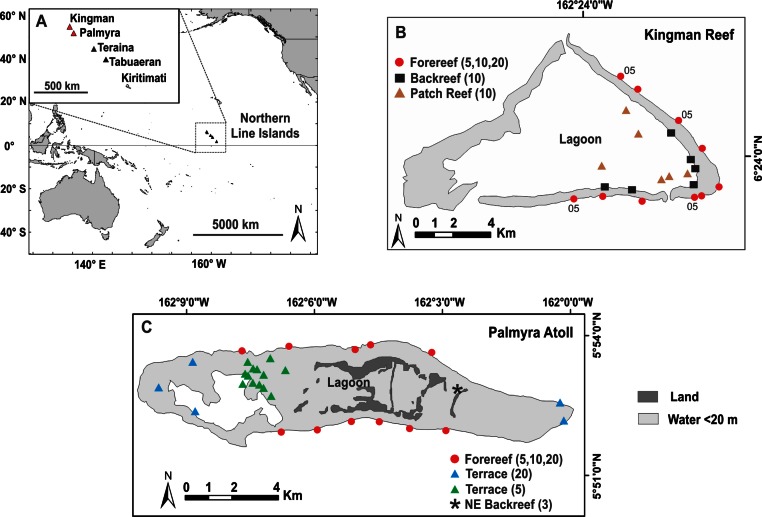
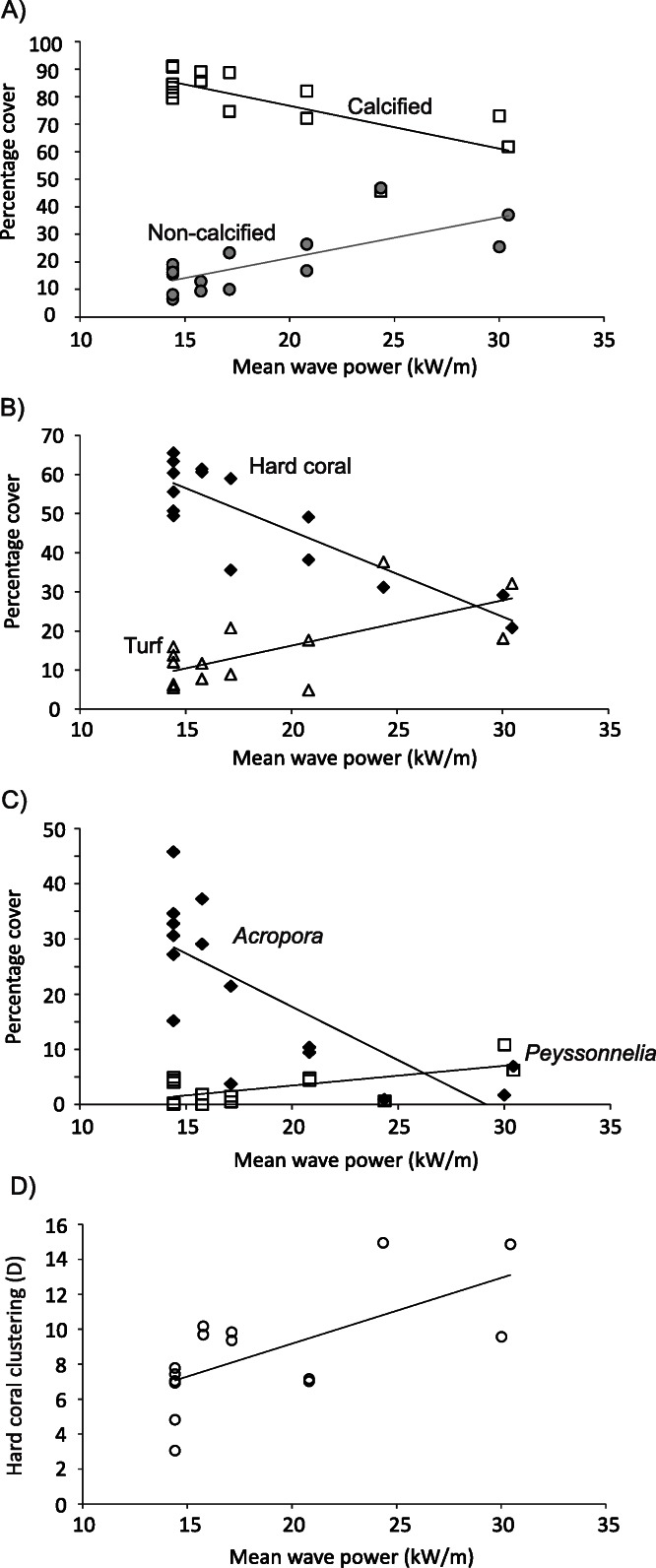
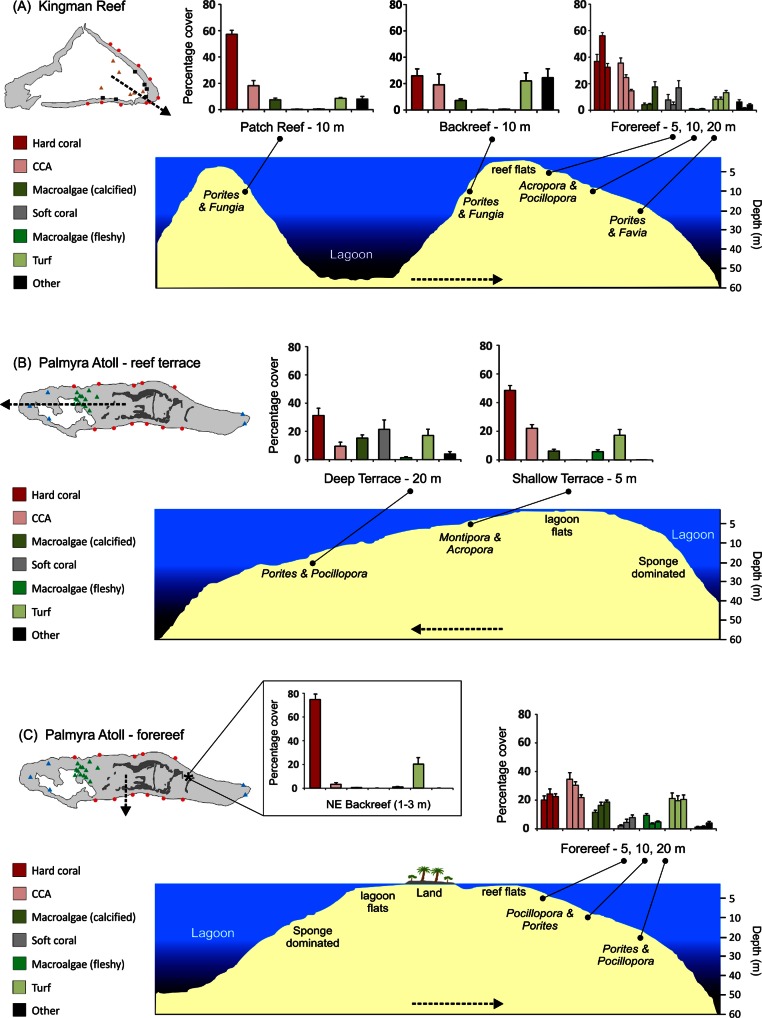
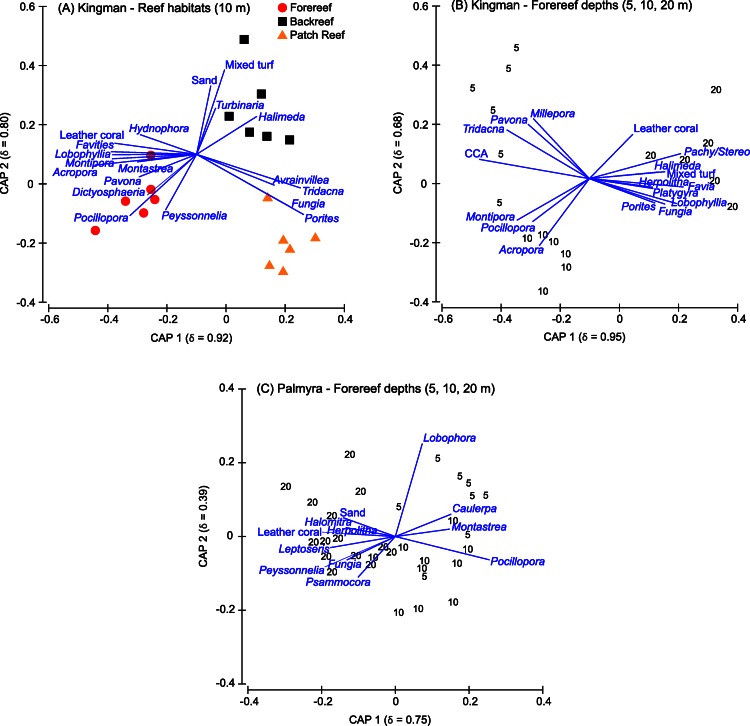
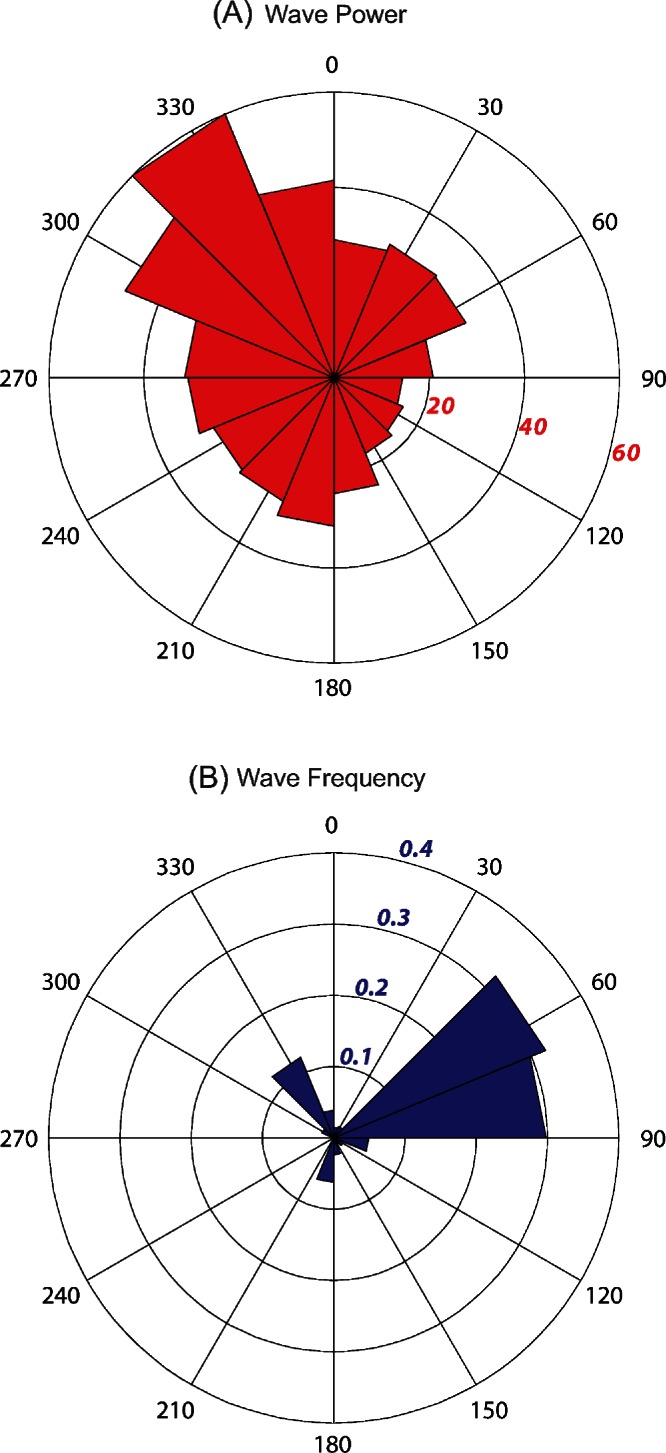
Kingman Reef and Palmyra Atoll in the central Pacific are among the most remote coral reefs on the planet. Here we describe spatial patterns in their benthic communities across reef habitats and depths, and consider these in the context of oceanographic gradients. Benthic communities at both locations were dominated by calcifying organisms (54-86% cover), namely hard corals (20-74%) and crustose coralline algae (CCA) (10-36%). While turf algae were relatively common at both locations (8-22%), larger fleshy macroalgae were virtually absent at Kingman (<1%) and rare at Palmyra (0.7-9.3%). Hard coral cover was higher, but with low diversity, in more sheltered habitats such as Palmyra's backreef and Kingman's patch reefs. Almost exclusive dominance by slow-growing Porites on Kingman's patch reefs provides indirect evidence of competitive exclusion, probably late in a successional sequence. In contrast, the more exposed forereef habitats at both Kingman and Palmyra had higher coral diversity and were characterized by fast-growing corals (e.g., Acropora and Pocillopora), indicative of more dynamic environments. In general at both locations, soft coral cover increased with depth, likely reflecting increasingly efficient heterotrophic abilities. CCA and fleshy macroalgae cover decreased with depth, likely due to reduced light. Cover of other calcified macroalgae, predominantly Halimeda, increased with depth. This likely reflects the ability of many calcifying macroalgae to efficiently harvest light at deeper depths, in combination with an increased nutrient supply from upwelling promoting growth. At Palmyra, patterns of hard coral cover with depth were inconsistent, but cover peaked at mid-depths at Kingman. On Kingman's forereef, benthic community composition was strongly related to wave energy, with hard coral cover decreasing and becoming more spatially clustered with increased wave energy, likely as a result of physical damage leading to patches of coral in localized shelter. In contrast, the cover of turf algae at Kingman was positively related to wave energy, reflecting their ability to rapidly colonize newly available space. No significant patterns with wave energy were observed on Palmyra's forereef, suggesting that a more detailed model is required to study biophysical coupling there. Kingman, Palmyra, and other remote oceanic reefs provide interesting case studies to explore biophysical influences on benthic ecology and dynamics.
太平洋中部的金曼礁和帕尔米拉环礁是地球上最偏远的珊瑚礁之一。在这里,我们描述了它们在礁生境和深度上的底栖生物群落的空间模式,并结合海洋梯度对此进行了考虑。这两个地方的底栖生物群落都以钙化生物为主(占 54-86%),即硬珊瑚(占 20-74%)和壳状珊瑚藻(CCA)(占 10-36%)。虽然在这两个地方的藻类(8-22%)都比较常见,但大型肉质大型藻类在金曼礁(<1%)和帕尔米拉环礁(0.7-9.3%)几乎不存在。硬珊瑚的覆盖率较高,但在较避风的生境中,如帕尔米拉环礁的后礁和金曼礁的补丁礁,多样性较低。金曼礁的补丁礁上主要由生长缓慢的多孔珊瑚占据,这间接证明了可能是在演替序列的后期发生了竞争排斥。相比之下,金曼礁和帕尔米拉环礁较暴露的前礁生境具有更高的珊瑚多样性,其特征是生长迅速的珊瑚(如 Acropora 和 Pocillopora),表明这些环境更具活力。总的来说,在这两个地方,软珊瑚的覆盖率随着深度的增加而增加,这可能反映了它们越来越有效的异养能力。CCA 和肉质大型藻类的覆盖率随着深度的增加而减少,这可能是由于光照减少所致。其他钙化大型藻类(主要是 Halimeda)的覆盖率随着深度的增加而增加。这可能反映了许多钙化大型藻类在更深的深度能够有效地收集光,同时由于上升流促进了生长,增加了养分供应。在帕尔米拉环礁,硬珊瑚覆盖率随深度的变化模式不一致,但在金曼礁,硬珊瑚覆盖率在中层达到峰值。在金曼礁的前礁,底栖生物群落的组成与波浪能量密切相关,硬珊瑚的覆盖率随着波浪能量的增加而降低,并且变得更加空间聚集,这可能是由于物理损伤导致局部遮蔽处的珊瑚斑块。相比之下,金曼礁的藻类覆盖率与波浪能量呈正相关,反映了它们快速占领新可用空间的能力。在帕尔米拉环礁的前礁没有观察到与波浪能量相关的显著模式,这表明需要更详细的模型来研究那里的生物物理耦合。金曼礁、帕尔米拉环礁和其他偏远的海洋珊瑚礁为探索生物物理因素对底栖生态和动态的影响提供了有趣的案例研究。