Department of Biological Sciences, University of Cyprus, Nicosia, Cyprus.
PLoS One. 2010 Jun 8;5(6):e10976. doi: 10.1371/journal.pone.0010976.
HIV-1 genotypic drug resistance is an important threat to the success of antiretroviral therapy and transmitted resistance has reached 9% prevalence in Europe. Studies have demonstrated that HIV-1 DNA load in peripheral blood mononuclear cells (PBMC) have a predictive value for disease progression, independently of CD4 counts and plasma viral load.
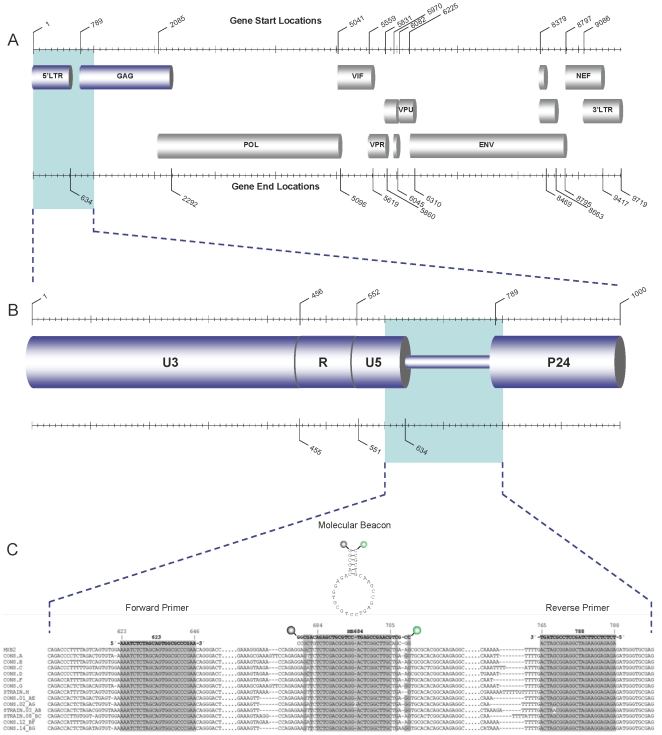
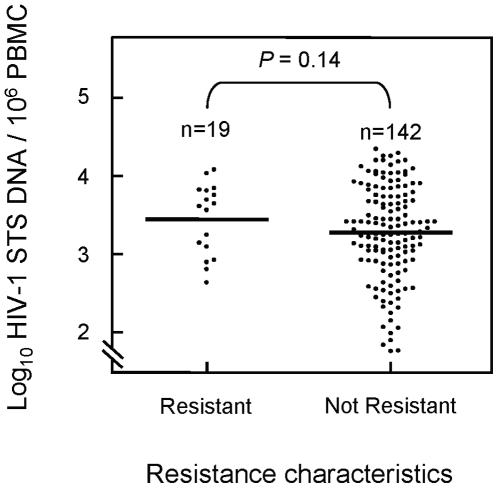
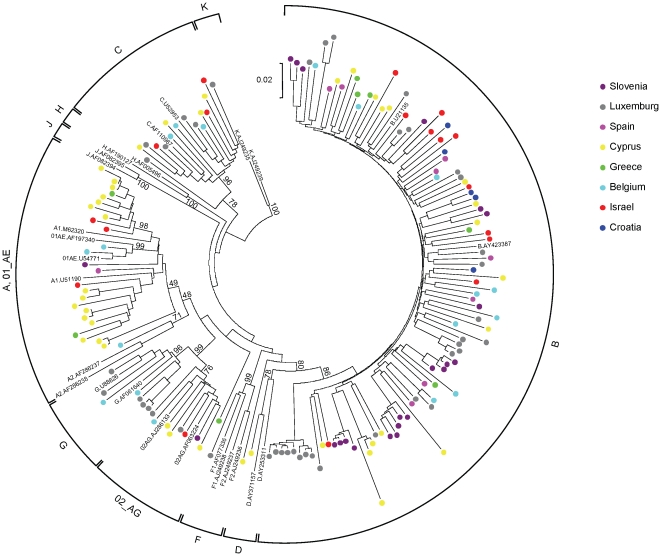
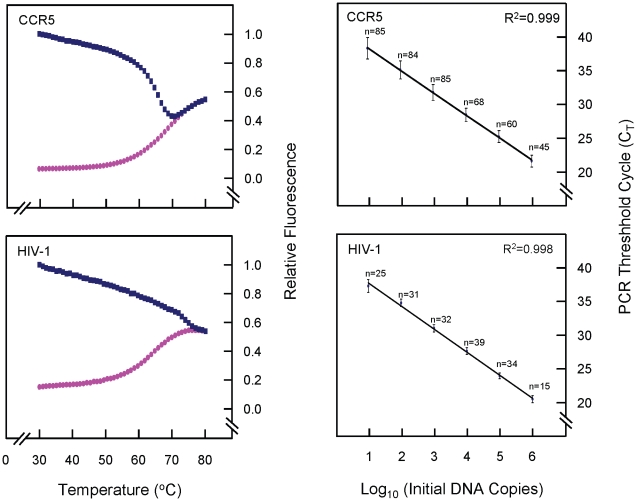
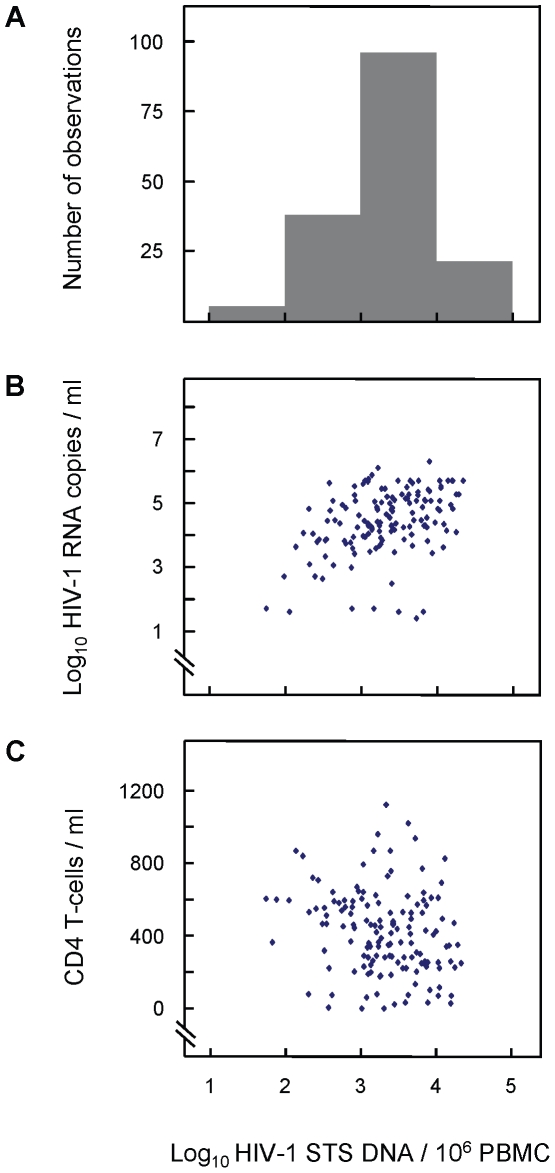
METHODOLOGY/PRINCIPAL FINDINGS: Molecular-beacon-based real-time PCR was used to measure HIV-1 second template switch (STS) DNA in PBMC in newly-diagnosed HIV-1 patients across Europe. These patients were representative for the HIV-1 epidemic in the participating countries and were carrying either drug-resistant or sensitive viral strains. The assay design was improved from a previous version to specifically detect M-group HIV-1 and human CCR5 alleles. The findings resulted in a median of 3.32 log(10) HIV-1 copies/10(6) PBMC and demonstrated for the first time no correlation between cellular HIV-1 DNA load and transmitted drug-resistance. A weak association between cellular HIV-1 DNA levels with plasma viral RNA load and CD4(+) T-cell counts was also reconfirmed. Co-receptor tropism for 91% of samples, whether or not they conferred resistance, was CCR5. A comparison of pol sequences derived from RNA and DNA, resulted in a high similarity between the two.
CONCLUSIONS/SIGNIFICANCE: An improved molecular-beacon-based real-time PCR assay is reported for the measurement of HIV-1 DNA in PBMC and has investigated the association between cellular HIV-1 DNA levels and transmitted resistance to antiretroviral therapy in newly-diagnosed patients from across Europe. The findings show no correlation between these two parameters, suggesting that transmitted resistance does not impact disease progression in HIV-1 infected individuals. The CCR5 co-receptor tropism predominance implies that both resistant and non-resistant strains behave similarly in early infection. Furthermore, a correlation found between RNA- and DNA-derived sequences in the pol region suggests that genotypic drug-resistance testing could be carried out on either template.
HIV-1 基因型耐药性是抗逆转录病毒治疗成功的重要威胁,在欧洲,传播耐药性已达到 9%的流行率。研究表明,外周血单个核细胞(PBMC)中的 HIV-1 DNA 载量对疾病进展具有预测价值,独立于 CD4 计数和血浆病毒载量。
方法/主要发现:使用基于分子信标的实时 PCR 测量欧洲新诊断的 HIV-1 患者的 PBMC 中的 HIV-1 第二模板转换(STS)DNA。这些患者代表了参与国家的 HIV-1 流行情况,携带耐药或敏感的病毒株。该检测设计是在前一版本的基础上进行了改进,专门用于检测 M 群 HIV-1 和人类 CCR5 等位基因。结果显示中位数为 3.32 log(10) HIV-1 拷贝/10(6) PBMC,并首次证明细胞 HIV-1 DNA 载量与传播耐药性之间无相关性。还再次证实了细胞 HIV-1 DNA 水平与血浆病毒 RNA 载量和 CD4(+) T 细胞计数之间的弱相关性。91%的样本(无论是否具有耐药性)的共受体嗜性均为 CCR5。对源自 RNA 和 DNA 的 pol 序列进行比较,结果表明两者之间高度相似。
结论/意义:报告了一种用于测量 PBMC 中 HIV-1 DNA 的改进的基于分子信标的实时 PCR 检测方法,并研究了新诊断的来自欧洲各地的患者中细胞 HIV-1 DNA 水平与抗逆转录病毒治疗传播耐药性之间的关联。研究结果表明这两个参数之间没有相关性,这表明传播耐药性不会影响 HIV-1 感染个体的疾病进展。CCR5 共受体嗜性优势表明,在早期感染中,耐药和非耐药株的行为相似。此外,在 pol 区域中发现 RNA 和 DNA 衍生序列之间存在相关性表明,可以在任一模板上进行基因型耐药性检测。