Department of Internal Medicine (Nephrology) and Molecular Biology, University of Texas Southwestern Medical Center, Dallas, TX 75390, USA.
Dev Dyn. 2010 Jul;239(7):2014-23. doi: 10.1002/dvdy.22340.
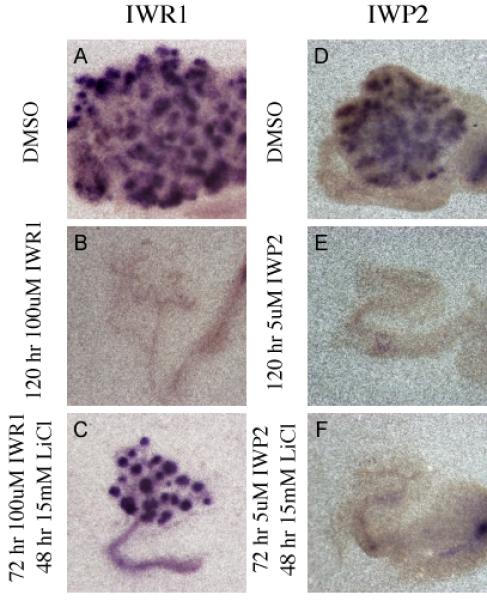
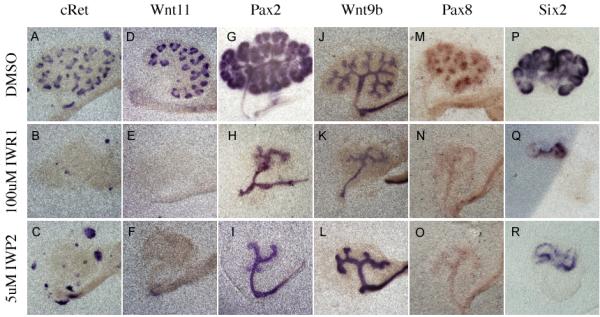
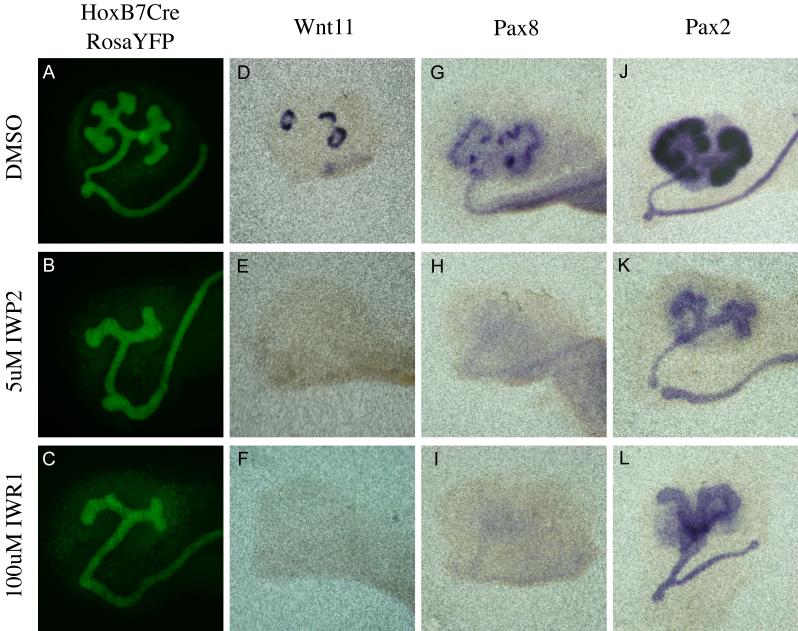
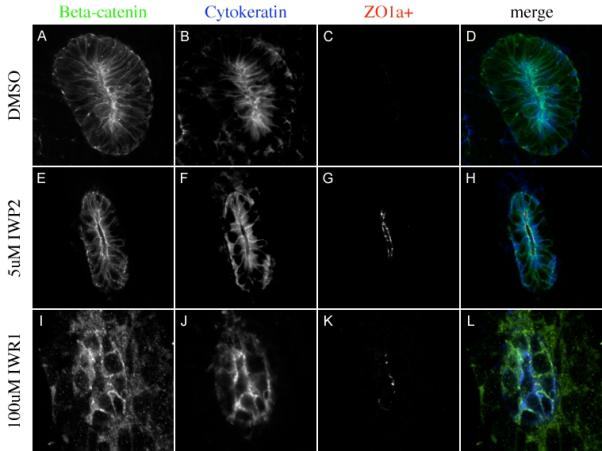
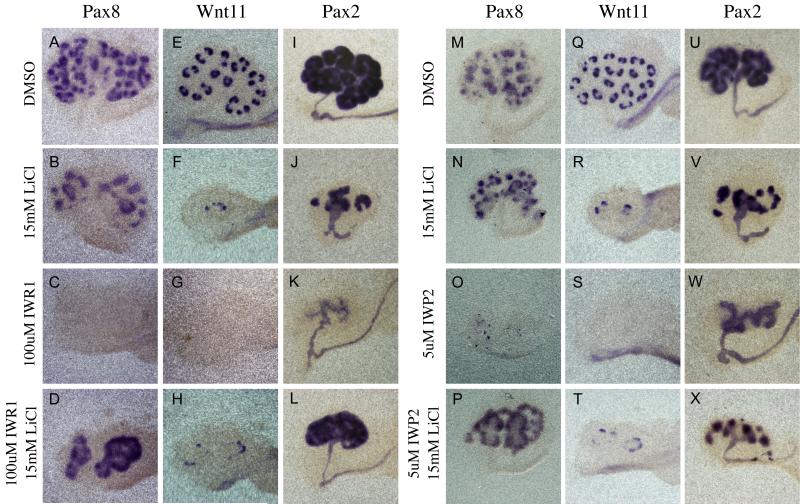
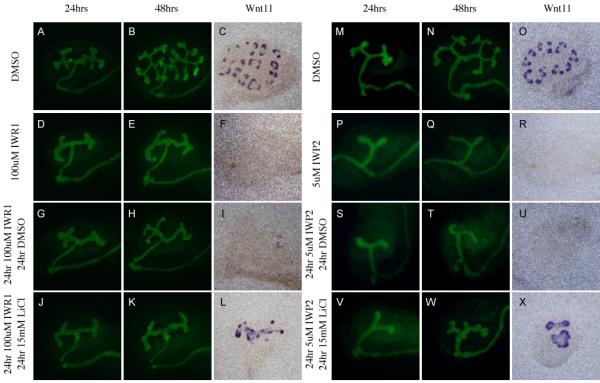
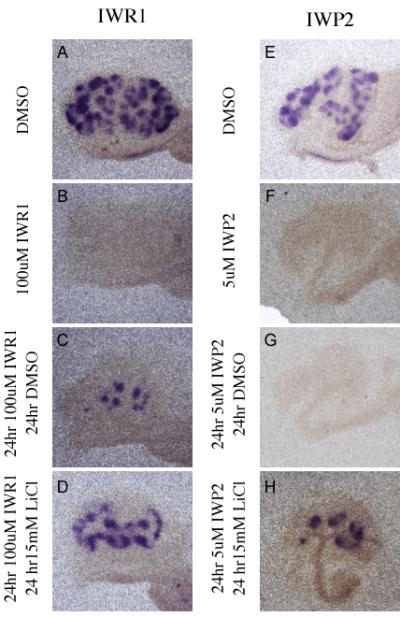
Recent studies using small molecule antagonists have revealed that the poly(ADP-ribose) polymerases (PARPs) Tankyrase 1 and 2 are critical regulators of canonical Wnt signaling in some cellular contexts. However, the absence of any activity during zebrafish embryogenesis suggested that the tankyrases may not be general/core components of the Wnt pathway. Here, we show that Tnks1 and 2 are broadly expressed during mouse development and are essential during kidney and lung development. In the kidney, blockage of tankyrase activity phenocopies the effect of blocking production of all Wnt ligands. Tankyrase inhibition can be rescued by activation of beta-catenin demonstrating its specificity for the Wnt pathway. In addition, treatment with tankyrase inhibitors appears to be completely reversible in some cell types. These studies suggest that the tankyrases are core components of the canonical Wnt pathway and their inhibitors should enjoy broad usage as antagonists of Wnt signaling.
最近的研究使用小分子拮抗剂表明,多聚(ADP-核糖)聚合酶(PARPs)Tankyrase 1 和 2 是某些细胞环境中经典 Wnt 信号的关键调节剂。然而,在斑马鱼胚胎发生过程中没有任何活性表明,Tankyrase 可能不是 Wnt 途径的一般/核心成分。在这里,我们表明 Tnks1 和 2 在小鼠发育过程中广泛表达,并且在肾脏和肺发育过程中是必需的。在肾脏中,阻断 Tankyrase 活性可模拟阻断所有 Wnt 配体产生的效果。Tankyrase 抑制可以通过激活β-连环蛋白得到挽救,这表明其对 Wnt 途径的特异性。此外,在某些细胞类型中,Tankyrase 抑制剂的治疗似乎是完全可逆的。这些研究表明,Tankyrase 是经典 Wnt 途径的核心成分,它们的抑制剂应该作为 Wnt 信号的拮抗剂广泛使用。