Center of Neurosciences, University of Freiburg, Freiburg, Germany.
Glia. 2010 Oct;58(13):1553-69. doi: 10.1002/glia.21029.
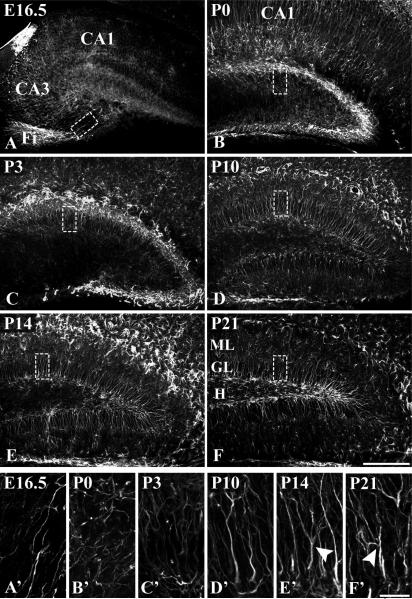
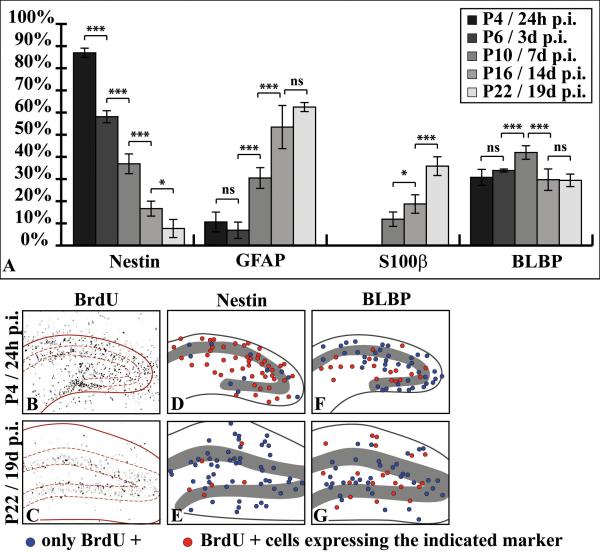
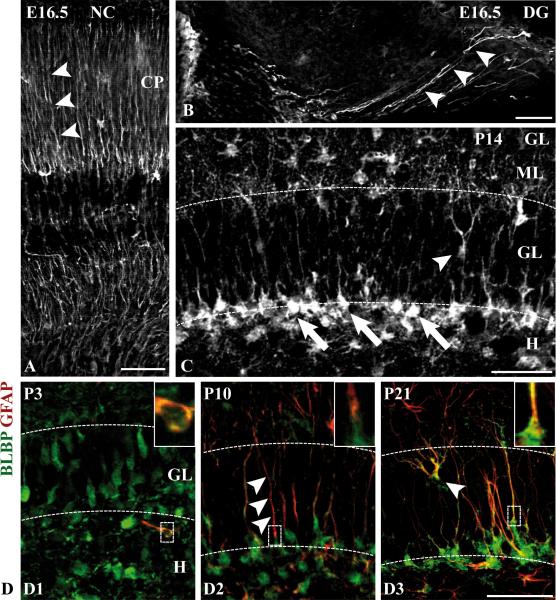
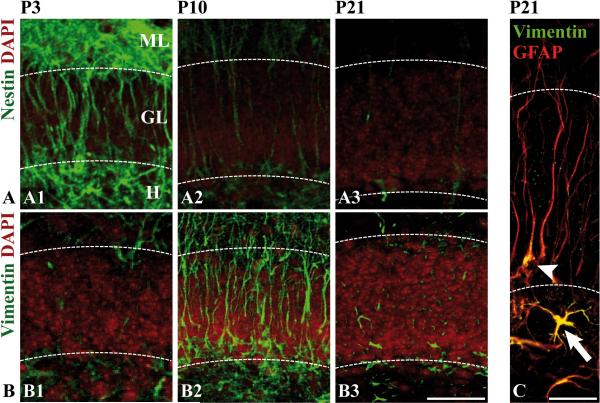
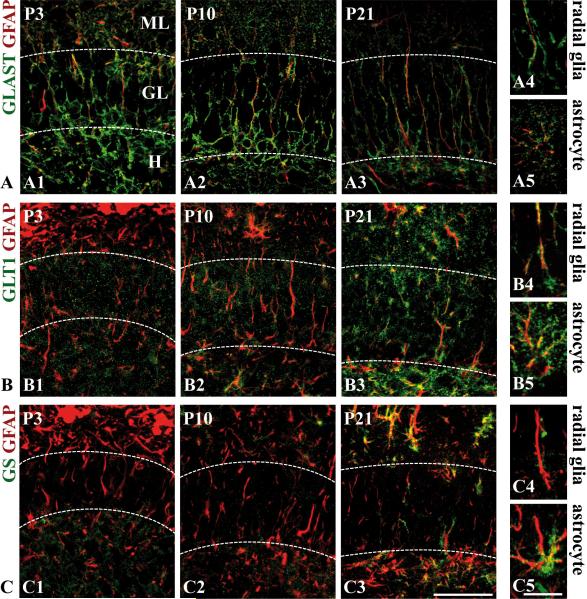
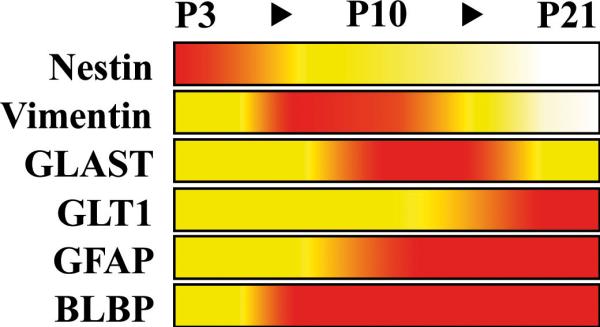
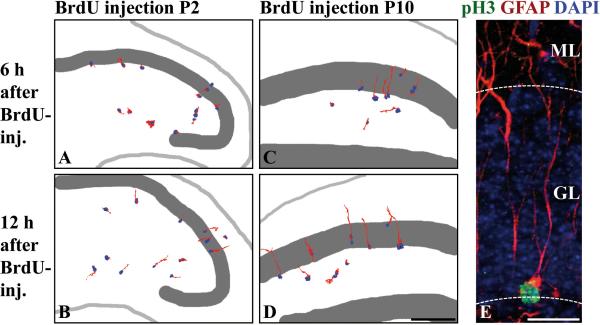
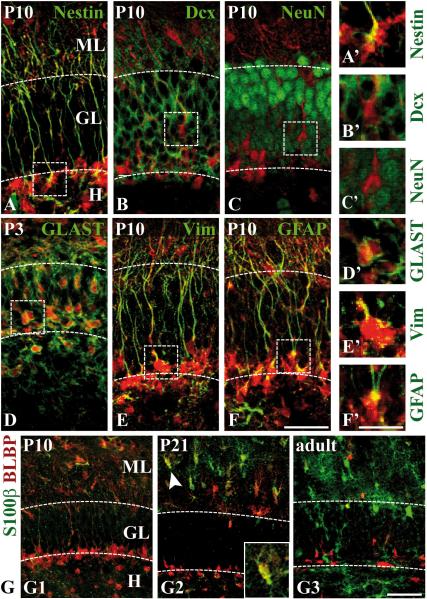
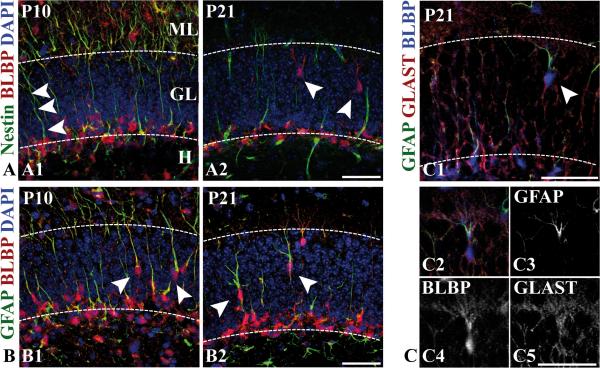
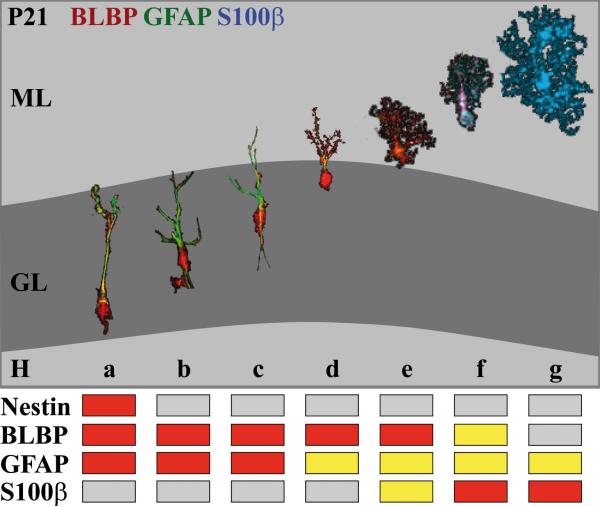
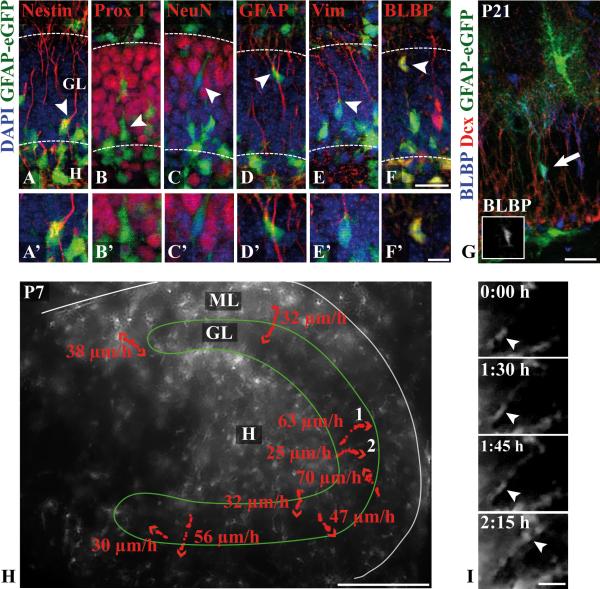
The dentate gyrus is a brain region where neurons are continuously born throughout life. In the adult, the role of its radial glia in neurogenesis has attracted much attention over the past years; however, little is known about the generation and differentiation of glial cells and their relationship to radial glia during the ontogenetic development of this brain structure. Here, we combine immunohistochemical phenotyping using antibodies against glial marker proteins with BrdU birthdating to characterize the development of the secondary radial glial scaffold in the dentate gyrus and its potential to differentiate into astrocytes. We demonstrate that the expression of brain lipid-binding protein, GLAST, and glial fibrillary acidic protein (GFAP) characterizes immature differentiating cells confined to an astrocytic fate in the early postnatal dentate gyrus. On the basis of our studies, we propose a model where immature astrocytes migrate radially through the granule cell layer to adopt their final positions in the molecular layer of the dentate gyrus. Time-lapse imaging of acute hippocampal slices from hGFAP-eGFP transgenic mice provides direct evidence for such a migration mode of differentiating astroglial cells in the developing dentate gyrus.
齿状回是一个在整个生命过程中神经元持续产生的脑区。在成年期,其放射状胶质细胞在神经发生中的作用在过去几年中引起了广泛关注;然而,关于该脑结构在发生发育过程中神经胶质细胞的产生和分化及其与放射状胶质细胞的关系,人们知之甚少。在这里,我们结合使用针对神经胶质标记蛋白的抗体进行免疫组织化学表型分析,并结合 BrdU 示踪技术,以表征齿状回中二级放射状胶质支架的发育及其分化为星形胶质细胞的潜力。我们证明,脑脂质结合蛋白、GLAST 和神经胶质原纤维酸性蛋白 (GFAP) 的表达特征是局限于早期出生后齿状回中星形胶质细胞命运的未成熟分化细胞。基于我们的研究,我们提出了一个模型,其中未成熟的星形胶质细胞通过颗粒细胞层径向迁移,以采用其在齿状回分子层中的最终位置。来自 hGFAP-eGFP 转基因小鼠的急性海马切片的延时成像提供了直接证据,证明了发育中的齿状回中分化星形胶质细胞的这种迁移模式。