Laboratoire d'Hematologie Experimentale, Institut Jules Bordet, Université Libre de Bruxelles, Brussels, Belgium.
BMC Cancer. 2010 Jun 17;10:298. doi: 10.1186/1471-2407-10-298.
The proto-oncogene Src is an important non-receptor protein tyrosine kinase involved in signaling pathways that control cell adhesion, growth, migration and differentiation. It negatively regulates osteoblast activity, and, as such, its inhibition is a potential means to prevent bone loss. Dasatinib is a new dual Src/Bcr-Abl tyrosine kinase inhibitor initially developed for the treatment of chronic myeloid leukemia. It has also shown promising results in preclinical studies in various solid tumors. However, its effects on the differentiation of human osteoblasts have never been examined.
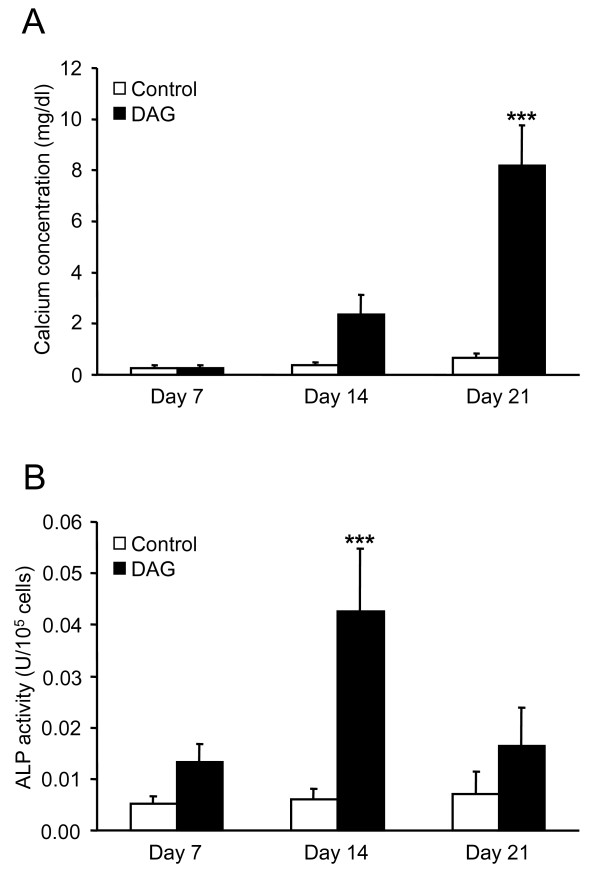
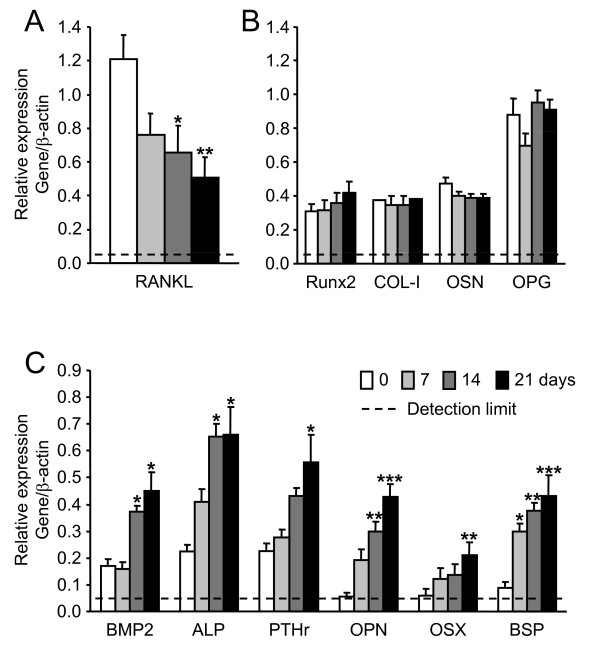
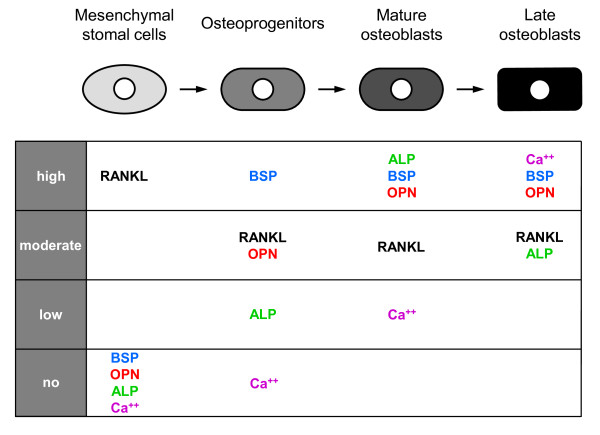
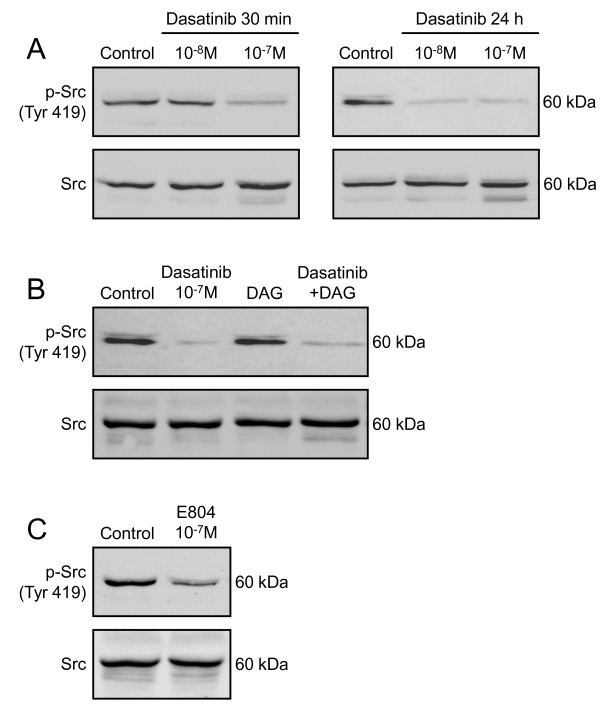
We evaluated the effects of dasatinib on bone marrow-derived mesenchymal stromal cells (MSC) differentiation into osteoblasts, in the presence or absence of a mixture of dexamethasone, ascorbic acid and beta-glycerophosphate (DAG) for up to 21 days. The differentiation kinetics was assessed by evaluating mineralization of the extracellular matrix, alkaline phosphatase (ALP) activity, and expression of osteoblastic markers (receptor activator of nuclear factor kappa B ligand [RANKL], bone sialoprotein [BSP], osteopontin [OPN]).
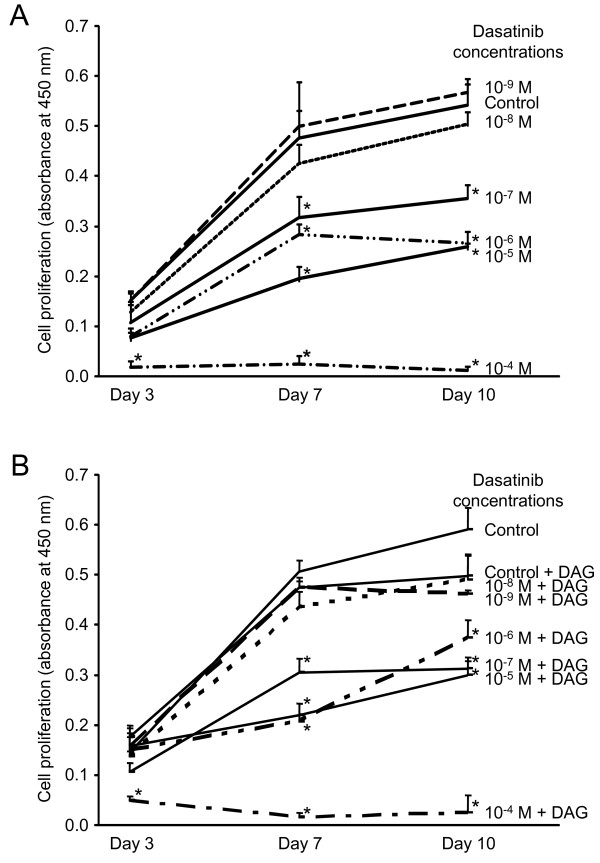
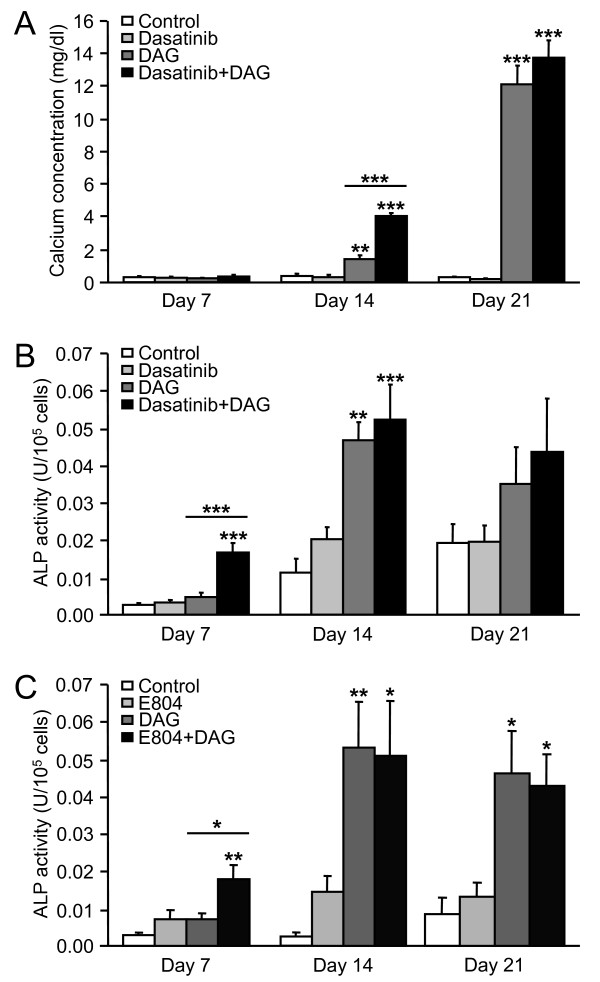
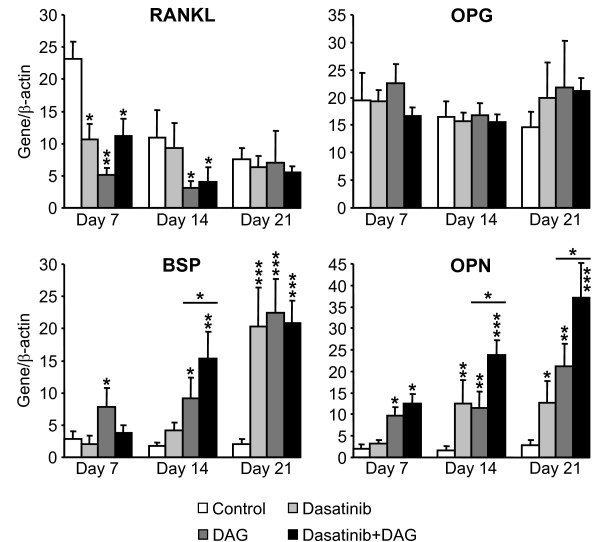
Dasatinib significantly increased the activity of ALP and the level of calcium deposition in MSC cultured with DAG after, respectively, 7 and 14 days; it upregulated the expression of BSP and OPN genes independently of DAG; and it markedly downregulated the expression of RANKL gene and protein (decrease in RANKL/OPG ratio), the key factor that stimulates osteoclast differentiation and activity.
Our results suggest a dual role for dasatinib in both (i) stimulating osteoblast differentiation leading to a direct increase in bone formation, and (ii) downregulating RANKL synthesis by osteoblasts leading to an indirect inhibition of osteoclastogenesis. Thus, dasatinib is a potentially interesting candidate drug for the treatment of osteolysis through its dual effect on bone metabolism.
原癌基因 Src 是一种重要的非受体蛋白酪氨酸激酶,参与控制细胞黏附、生长、迁移和分化的信号通路。它负调控成骨细胞活性,因此其抑制作用可能是预防骨质流失的一种手段。达沙替尼是一种新的Src/Bcr-Abl 双重酪氨酸激酶抑制剂,最初开发用于治疗慢性髓性白血病。在各种实体瘤的临床前研究中也显示出良好的效果。然而,其对人成骨细胞分化的影响从未被研究过。
我们评估了达沙替尼对骨髓间充质基质细胞(MSC)向成骨细胞分化的影响,在存在或不存在地塞米松、抗坏血酸和β-甘油磷酸(DAG)混合物的情况下,最多培养 21 天。通过评估细胞外基质的矿化、碱性磷酸酶(ALP)活性和骨形成标志物(核因子κB 受体激活剂配体[RANKL]、骨涎蛋白[BSP]、骨桥蛋白[OPN])的表达来评估分化动力学。
达沙替尼显著增加了 DAG 培养的 MSC 中 ALP 的活性和钙沉积水平,分别在第 7 天和第 14 天;它独立于 DAG 上调 BSP 和 OPN 基因的表达;并显著下调 RANKL 基因和蛋白的表达(RANKL/OPG 比值降低),这是刺激破骨细胞分化和活性的关键因素。
我们的结果表明达沙替尼在两个方面具有双重作用:(i)刺激成骨细胞分化,直接增加骨形成;(ii)通过成骨细胞下调 RANKL 合成,间接抑制破骨细胞生成。因此,达沙替尼通过其对骨代谢的双重作用,是治疗溶骨性疾病的一个有潜力的候选药物。