National Cancer Institute, Frederick, MD, USA.
Int J Cancer. 2011 Apr 15;128(8):1946-54. doi: 10.1002/ijc.25522.
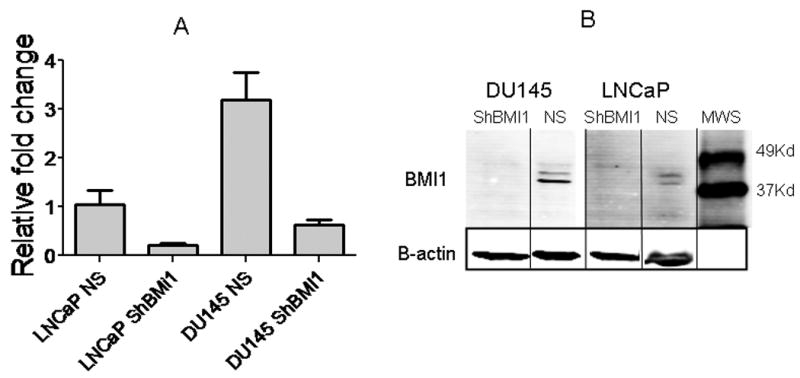
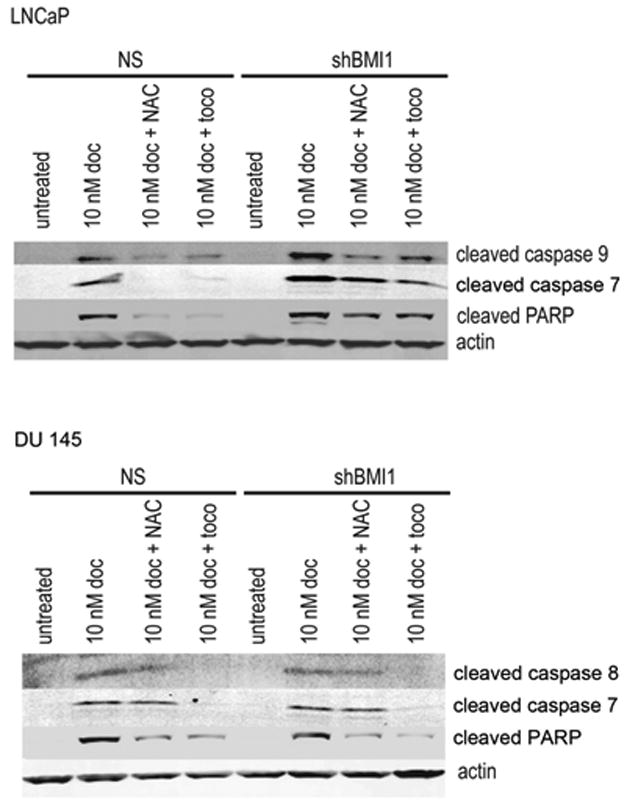
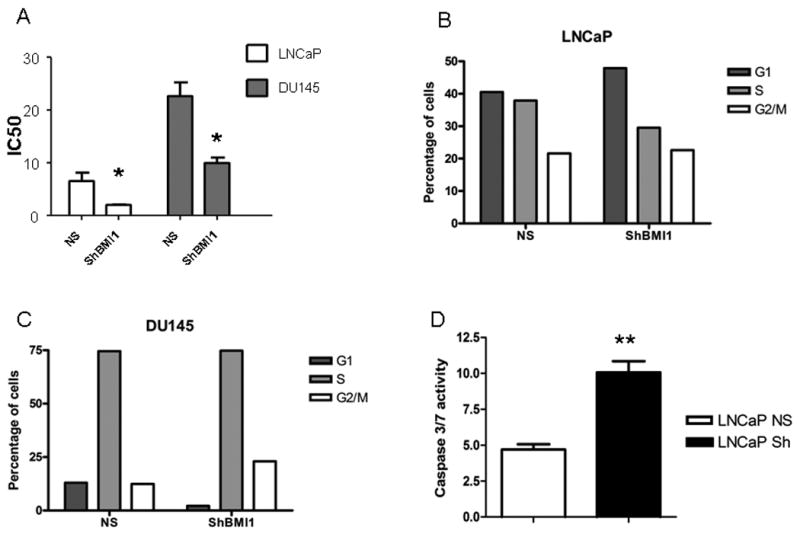
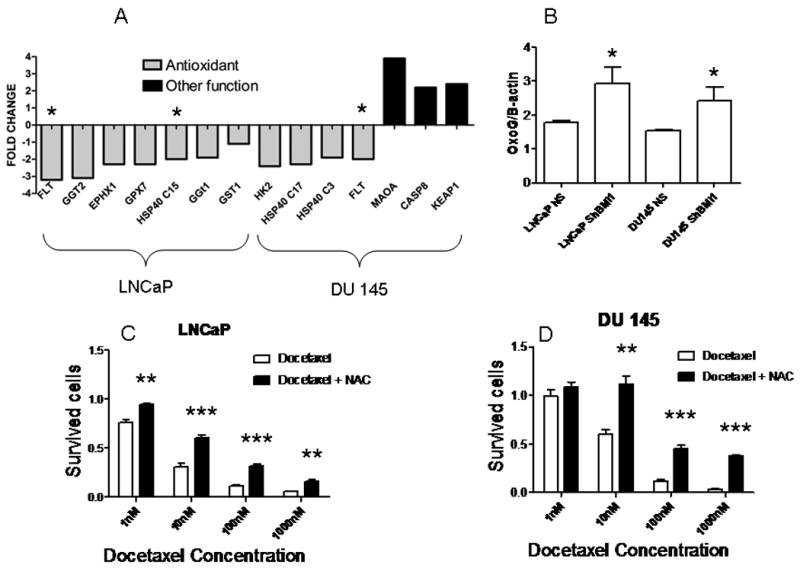
The BMI1 oncogene promotes prostate cancer (PC) progression. High B-cell-specific Moloney murine leukemia virus integration site 1 (BMI1) expression predicts poor prognosis in PC patients. Recent evidence suggests that BMI1 may also play a role in docetaxel chemoresistance. However, mechanisms and clinical significance of BMI1-related chemoresistance have not been investigated. For this purpose, BMI1 was silenced in 2 PC cell lines (LNCaP and DU 145). Cell proliferation and apoptosis after docetaxel treatment were measured. Guanine oxidation was assessed by in-cell western. Global gene expression analysis was performed on BMI1 silenced cells. Oncomine database was used to compare in vitro data with gene expression in PC samples. BMI1 silencing had no effect on cell proliferation but significantly enhanced docetaxel-induced antitumor activity. Gene expression analysis demonstrated that BMI1 silencing downregulates a set of antioxidant genes. Docetaxel treatment increased guanine oxidation, whereas the antioxidant N-acetyl cysteine rescued docetaxel-induced cell death. Examination of clinical datasets revealed a positive correlation of BMI1 and antioxidant gene expression. BMI1-controlled antioxidant genes were predictive of poor prognosis in PC patients. In conclusion, BMI1 enhances antioxidant response, thereby allowing PC survival after docetaxel-based chemotherapy. BMI1-controlled antioxidant genes are overexpressed in aggressive PC and should be tested as predictors of chemotherapy failure.
BMI1 癌基因促进前列腺癌(PC)的进展。高 B 细胞特异性 Moloney 鼠白血病病毒整合位点 1(BMI1)的表达预示着 PC 患者的预后不良。最近的证据表明,BMI1 也可能在多西紫杉醇化疗耐药中发挥作用。然而,BMI1 相关化疗耐药的机制和临床意义尚未得到研究。为此,我们在 2 种 PC 细胞系(LNCaP 和 DU145)中沉默了 BMI1。在多西紫杉醇处理后测量细胞增殖和凋亡。通过细胞内 western 法评估鸟嘌呤氧化。对沉默 BMI1 的细胞进行全基因表达分析。Oncomine 数据库用于将体外数据与 PC 样本中的基因表达进行比较。BMI1 沉默对细胞增殖没有影响,但显著增强了多西紫杉醇诱导的抗肿瘤活性。基因表达分析表明,BMI1 沉默下调了一组抗氧化基因。多西紫杉醇处理增加了鸟嘌呤氧化,而抗氧化剂 N-乙酰半胱氨酸则挽救了多西紫杉醇诱导的细胞死亡。对临床数据集的检查显示 BMI1 和抗氧化基因表达呈正相关。BMI1 控制的抗氧化基因可预测 PC 患者的预后不良。总之,BMI1 增强了抗氧化反应,从而使 PC 在基于多西紫杉醇的化疗后得以存活。在侵袭性 PC 中过度表达 BMI1 控制的抗氧化基因,应作为化疗失败的预测因子进行测试。