Fischer Alexandra, Ten Hove Michiel, Sebag-Montefiore Liam, Wagner Helga, Clarke Kieran, Watkins Hugh, Lygate Craig A, Neubauer Stefan
Department of Cardiovascular Medicine, Wellcome Trust Centre for Human Genetics, University of Oxford, Roosevelt Drive, Oxford, UK.
BMC Dev Biol. 2010 Jun 22;10:70. doi: 10.1186/1471-213X-10-70.
It is well established that the immature myocardium preferentially utilises non-oxidative energy-generating pathways. It exhibits low energy-transfer capacity via the creatine kinase (CK) shuttle, reflected in phosphocreatine (PCr), total creatine and CK levels that are much lower than those of adult myocardium. The mechanisms leading to gradually increasing energy transfer capacity during maturation are poorly understood. Creatine is not synthesised in the heart, but taken up exclusively by the action of the creatine transporter protein (CrT). To determine whether this transporter is ontogenically regulated, the present study serially examined CrT gene expression pattern, together with creatine uptake kinetics and resulting myocardial creatine levels, in rats over the first 80 days of age.
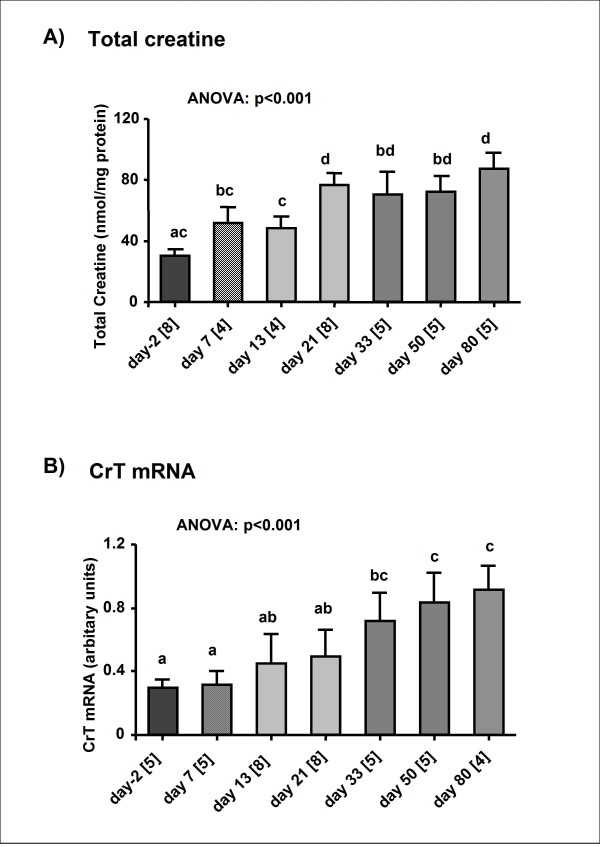
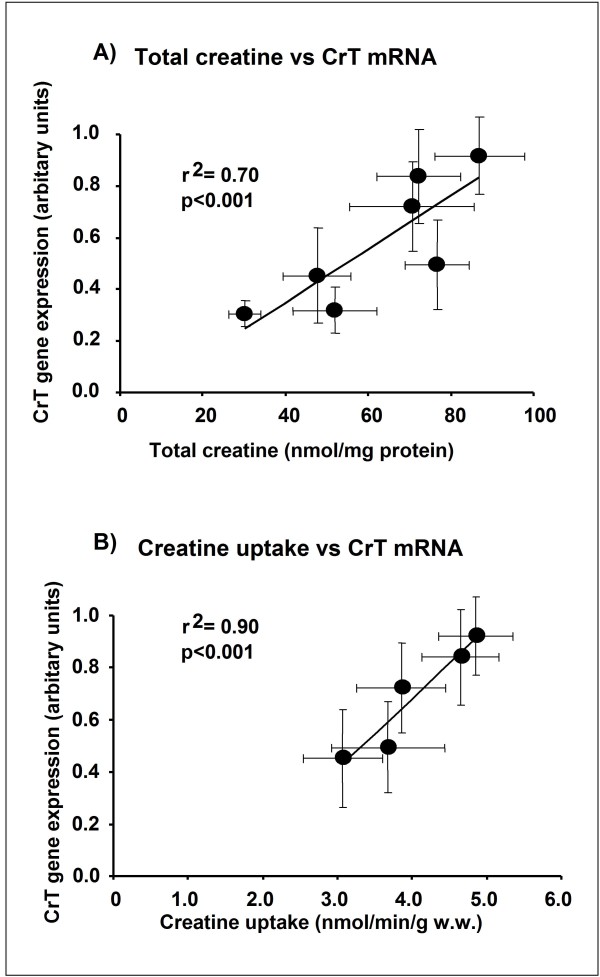
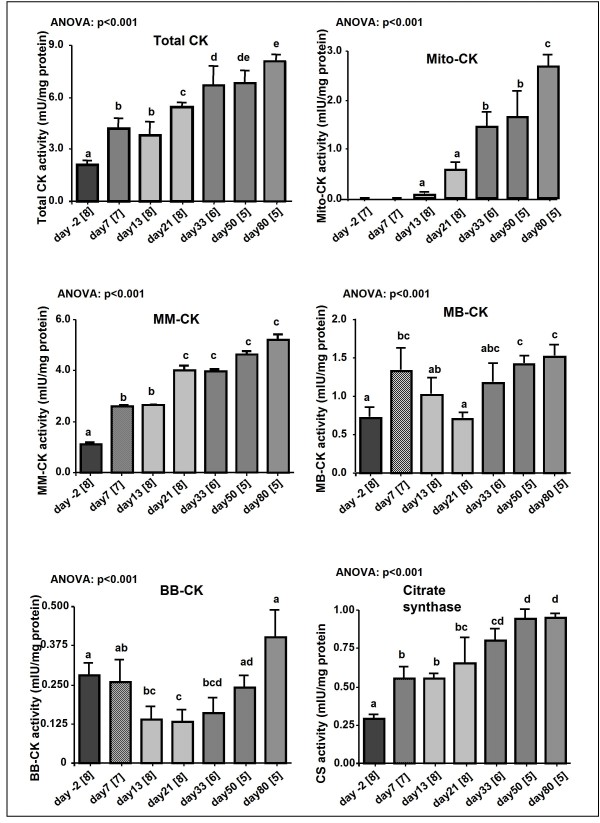
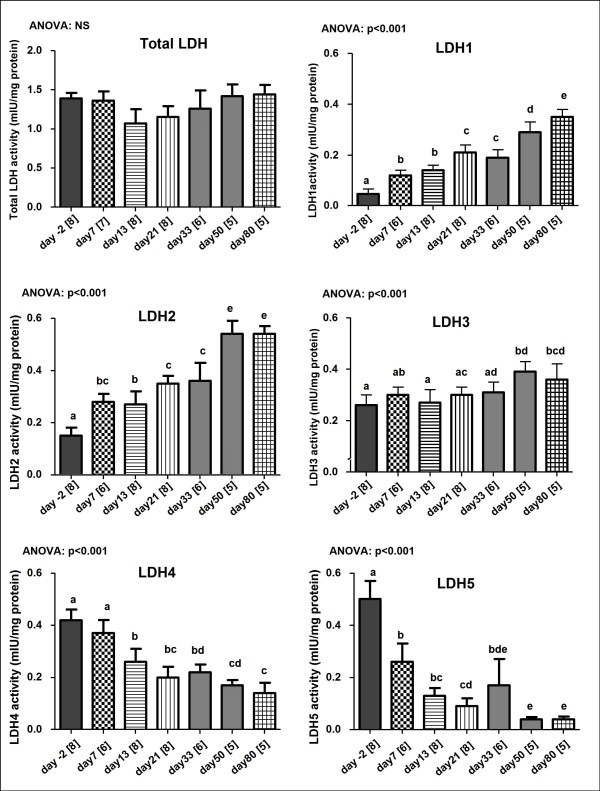
Rats were studied during the late prenatal period (-2 days before birth) and 7, 13, 21, 33, 50 and 80 days after birth. Activity of cardiac citrate synthase, creatine kinase and its isoenzymes as well as lactate dehydrogenase (LDH) and its isoenzymes demonstrated the well-described shift from anaerobic towards aerobic metabolism. mRNA levels of CrT in the foetal rat hearts, as determined by real-time PCR, were about 30% of the mRNA levels in the adult rat heart and gradually increased during development. Creatine uptake in isolated perfused rat hearts increased significantly from 3.0 nmol/min/gww at 13 days old to 4.9 nmol/min/gww in 80 day old rats. Accordingly, total creatine content in hearts, measured by HPLC, increased steadily during maturation (30 nmol/mg protein (-2 days) vs 87 nmol/mg protein (80 days)), and correlated closely with CrT gene expression.
The maturation-dependant alterations of CK and LDH isoenzyme activities and of mitochondrial oxidative capacity were paralleled by a progressive increase of CrT expression, creatine uptake kinetics and creatine content in the heart.
业已明确,未成熟心肌优先利用非氧化能量生成途径。其通过肌酸激酶(CK)穿梭进行能量传递的能力较低,这反映在磷酸肌酸(PCr)、总肌酸和CK水平远低于成年心肌。导致成熟过程中能量传递能力逐渐增强的机制尚不清楚。肌酸并非在心脏中合成,而是仅通过肌酸转运蛋白(CrT)的作用摄取。为确定该转运蛋白是否受个体发育调控,本研究对出生后80天内大鼠的CrT基因表达模式、肌酸摄取动力学及由此产生的心肌肌酸水平进行了系列检测。
对大鼠在产前后期(出生前2天)以及出生后7、13、21、33、50和80天进行研究。心脏柠檬酸合酶、肌酸激酶及其同工酶以及乳酸脱氢酶(LDH)及其同工酶的活性表明,从无氧代谢向有氧代谢的转变已得到充分描述。通过实时PCR测定,胎鼠心脏中CrT的mRNA水平约为成年大鼠心脏mRNA水平的30%,并在发育过程中逐渐升高。在离体灌注大鼠心脏中,肌酸摄取量从13日龄时的3.0 nmol/(min·g湿重)显著增加至80日龄大鼠的4.9 nmol/(min·g湿重)。相应地,通过高效液相色谱法测定,心脏中的总肌酸含量在成熟过程中稳步增加(出生前2天为30 nmol/mg蛋白质,80天为87 nmol/mg蛋白质),且与CrT基因表达密切相关。
CK和LDH同工酶活性以及线粒体氧化能力的成熟依赖性改变与心脏中CrT表达水平、肌酸摄取动力学和肌酸含量的逐渐增加相平行。