Departamento de Biologia Celular, IB - Universidade de Brasília Campus Universitário Darcy Ribeiro, Asa Norte, CEP 70910-900, Brasília DF, Brazil.
BMC Plant Biol. 2010 Jun 24;10:127. doi: 10.1186/1471-2229-10-127.
Breeding programs are usually reluctant to evaluate and use germplasm accessions other than the elite materials belonging to their advanced populations. The concept of core collections has been proposed to facilitate the access of potential users to samples of small sizes, representative of the genetic variability contained within the gene pool of a specific crop. The eventual large size of a core collection perpetuates the problem it was originally proposed to solve. The present study suggests that, in addition to the classic core collection concept, thematic core collections should be also developed for a specific crop, composed of a limited number of accessions, with a manageable size.
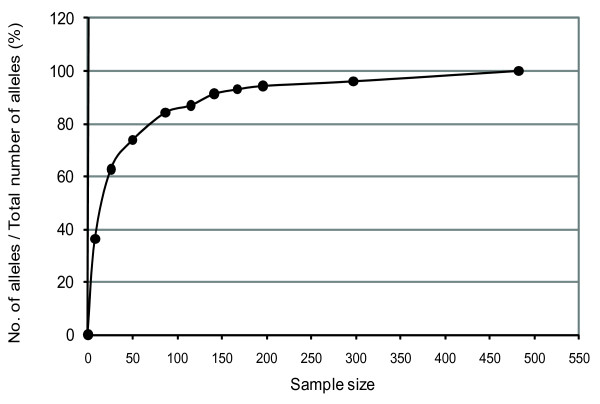
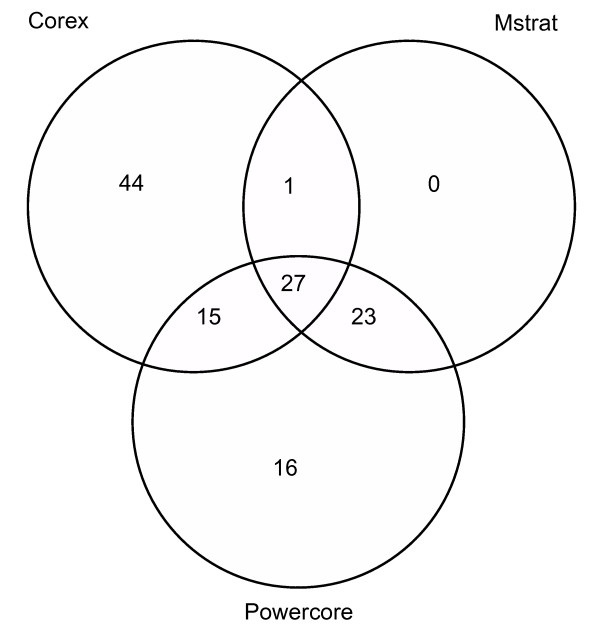
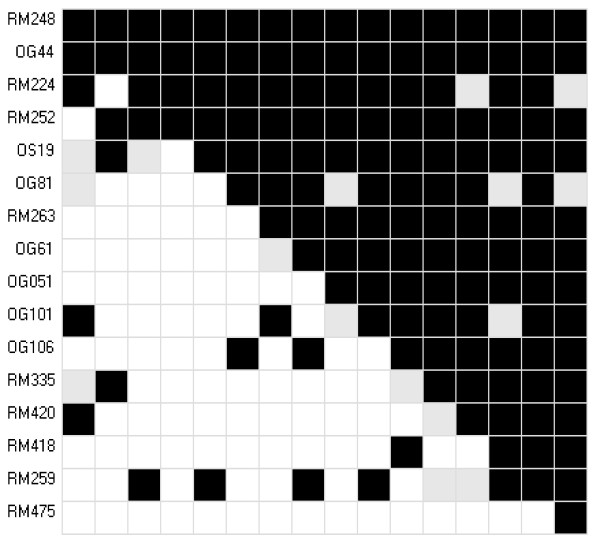
The thematic core collection obtained meets the minimum requirements for a core sample - maintenance of at least 80% of the allelic richness of the thematic collection, with, approximately, 15% of its size. The method was compared with other methodologies based on the M strategy, and also with a core collection generated by random sampling. Higher proportions of retained alleles (in a core collection of equal size) or similar proportions of retained alleles (in a core collection of smaller size) were detected in the two methods based on the M strategy compared to the proposed methodology. Core sub-collections constructed by different methods were compared regarding the increase or maintenance of phenotypic diversity. No change on phenotypic diversity was detected by measuring the trait "Weight of 100 Seeds", for the tested sampling methods. Effects on linkage disequilibrium between unlinked microsatellite loci, due to sampling, are discussed.
Building of a thematic core collection was here defined by prior selection of accessions which are diverse for the trait of interest, and then by pairwise genetic distances, estimated by DNA polymorphism analysis at molecular marker loci. The resulting thematic core collection potentially reflects the maximum allele richness with the smallest sample size from a larger thematic collection. As an example, we used the development of a thematic core collection for drought tolerance in rice. It is expected that such thematic collections increase the use of germplasm by breeding programs and facilitate the study of the traits under consideration. The definition of a core collection to study drought resistance is a valuable contribution towards the understanding of the genetic control and the physiological mechanisms involved in water use efficiency in plants.
选育计划通常不愿意评估和使用不属于其优良种群的种质资源。核心种质库的概念被提出来方便潜在用户获取小样本量的代表性材料,这些样本能够代表特定作物基因库中的遗传变异性。然而,核心种质库最终的大样本量会使它原本要解决的问题恶化。本研究表明,除了经典的核心种质库概念,还应该针对特定作物开发主题核心种质库,由数量有限、规模可控的材料组成。
获得的主题核心种质库满足核心样本的最低要求-保持主题库至少 80%的等位基因丰富度,样本量约为其的 15%。该方法与其他基于 M 策略的方法进行了比较,也与随机抽样生成的核心库进行了比较。与其他方法相比,基于 M 策略的两种方法检测到保留等位基因的比例更高(在大小相等的核心库中)或保留等位基因的比例相似(在较小的核心库中)。不同方法构建的核心亚库在表型多样性的增加或保持方面进行了比较。在所测试的抽样方法中,通过测量“百粒重”性状,没有发现表型多样性的变化。还讨论了由于抽样导致的不连锁微卫星位点间连锁不平衡的变化。
主题核心种质库的构建是通过对感兴趣性状的多样性进行预先选择,然后通过分子标记位点的 DNA 多态性分析来估计成对遗传距离来定义的。由此产生的主题核心种质库潜在地反映了从较大的主题种质库中用最小样本量获得的最大等位基因丰富度。例如,我们使用开发耐旱性主题核心库来研究水稻。预计这种主题集合将增加选育计划对种质资源的利用,并有助于研究所考虑的性状。定义一个核心集合来研究抗旱性是对理解植物水分利用效率的遗传控制和生理机制的有价值的贡献。