School of Kinesiology, University of Michigan Ann Arbor, MI, USA.
Front Syst Neurosci. 2010 Jun 7;4:17. doi: 10.3389/fnsys.2010.00017. eCollection 2010.
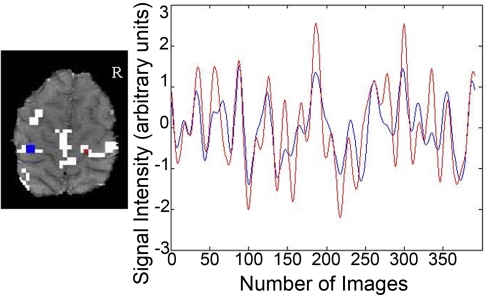
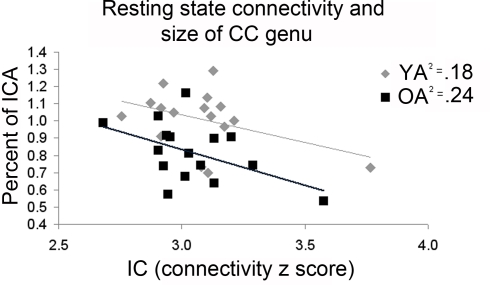
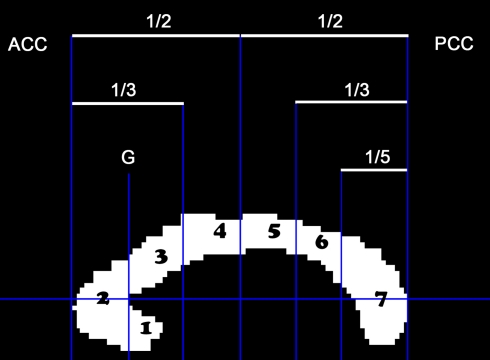
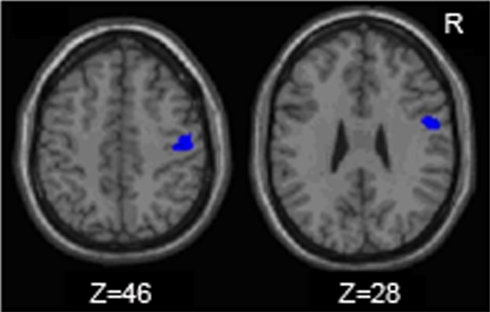
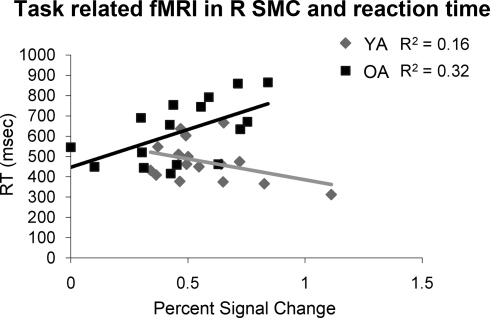
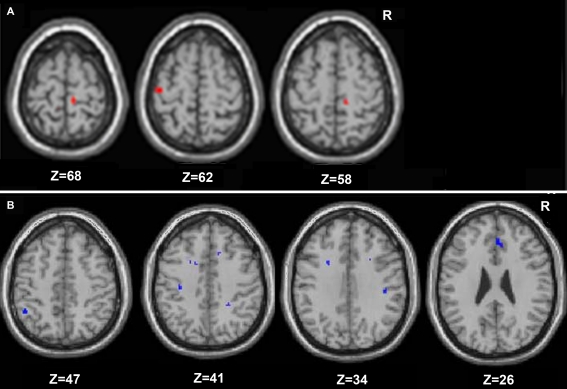
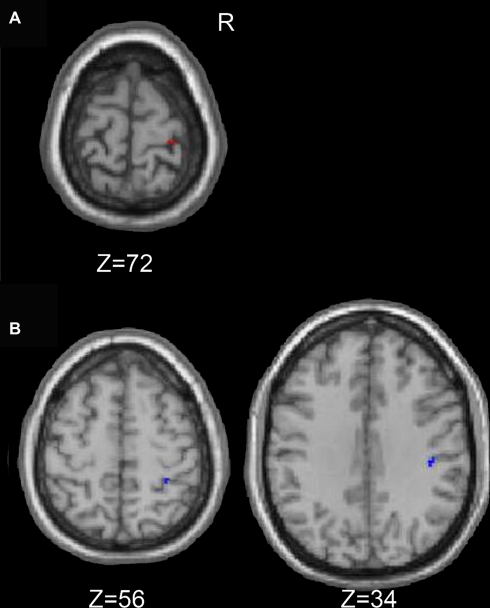
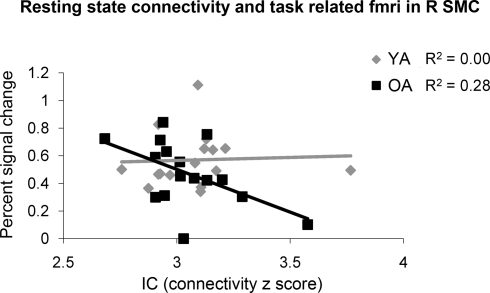
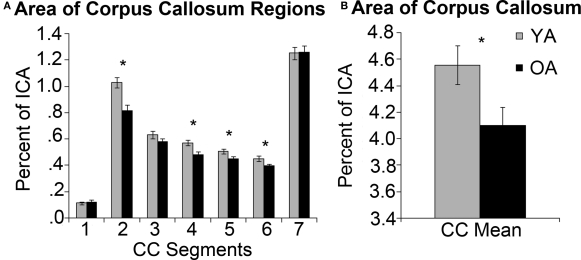
Older adults show less lateralized task-related brain activity than young adults. One potential mechanism of this increased activation is that age-related degeneration of the corpus callosum (CC) may alter the balance of inhibition between the two hemispheres. To determine whether age differences in interhemispheric connectivity affect functional brain activity in older adults, we used magnetic resonance imaging (MRI) to assess resting functional connectivity and functional activation during a simple motor task. We found that older adults had smaller CC area compared to young adults. Older adults exhibited greater recruitment of ipsilateral primary motor cortex (M1), which was associated with longer reaction times. Additionally, recruitment of ipsilateral M1 in older adults was correlated with reduced resting interhemispheric connectivity and a larger CC. We suggest that reduced interhemispheric connectivity reflects a loss of the ability to inhibit the non-dominant hemisphere during motor task performance for older adults, which has a negative impact on performance.
老年人的大脑活动在任务相关方面比年轻人表现出更少的侧化。这种激活增加的一个潜在机制是,胼胝体(CC)的年龄相关退化可能会改变两个半球之间的抑制平衡。为了确定半球间连接的年龄差异是否会影响老年人的大脑功能活动,我们使用磁共振成像(MRI)来评估静息状态下的功能连接和在简单运动任务期间的功能激活。我们发现,与年轻人相比,老年人的 CC 面积更小。老年人表现出同侧初级运动皮层(M1)更大的募集,这与更长的反应时间有关。此外,老年人同侧 M1 的募集与静息状态下半球间连接减少和 CC 增大有关。我们认为,半球间连接的减少反映了老年人在运动任务表现期间抑制非优势半球的能力丧失,这对表现有负面影响。