Suprabha T, Roy Haizel G, Thomas Jesty, Praveen Kumar K, Mathew Suresh
School of Chemical Sciences, Mahatma Gandhi University, Kottayam, 686 560 Kerala India.
Nanoscale Res Lett. 2008 Nov 26;4(2):144-152. doi: 10.1007/s11671-008-9214-5.
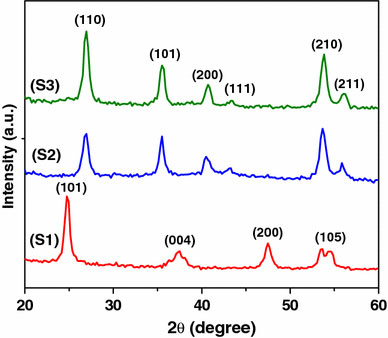
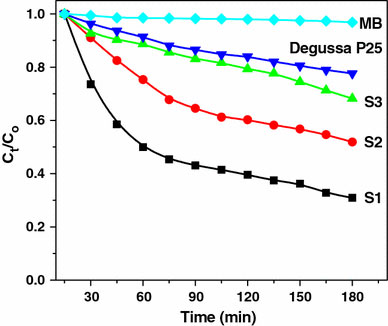
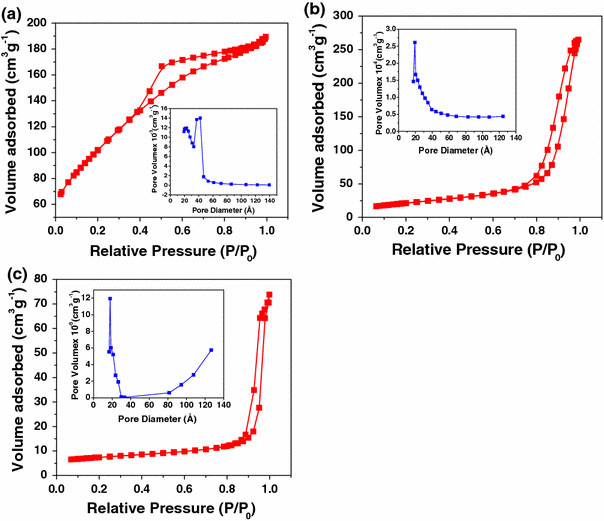
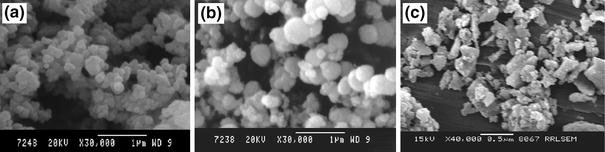
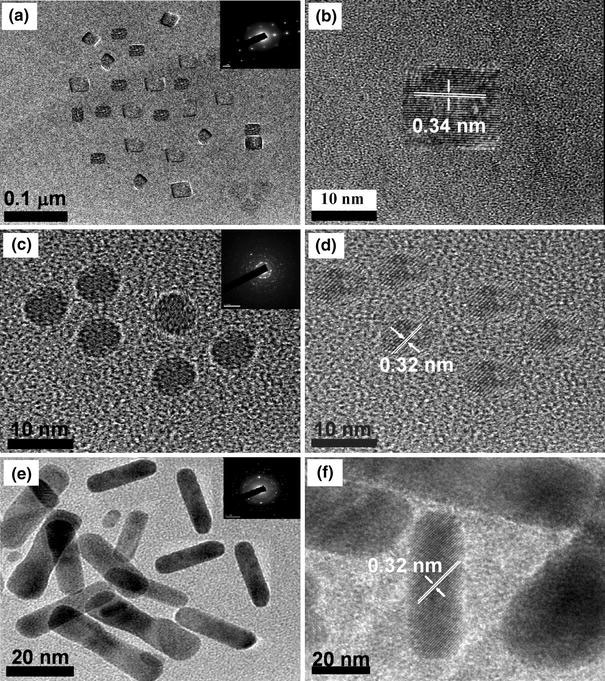
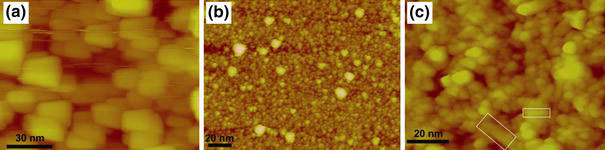
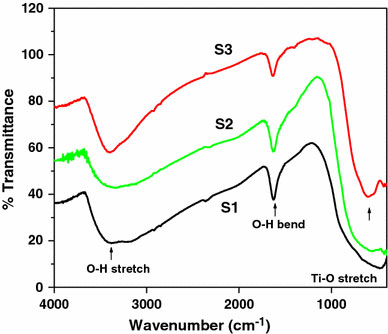
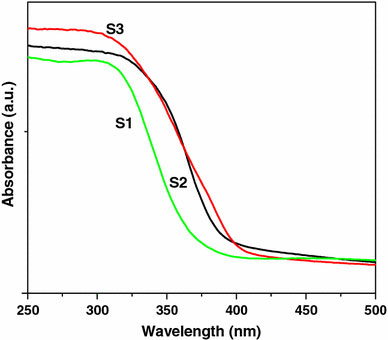
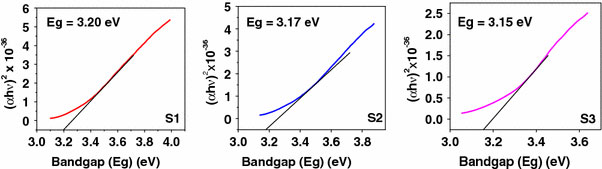
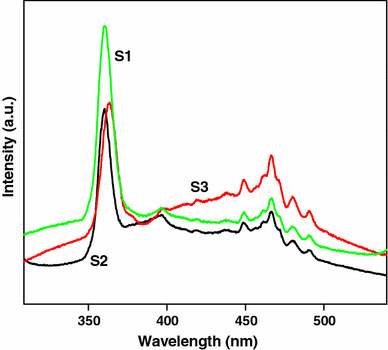
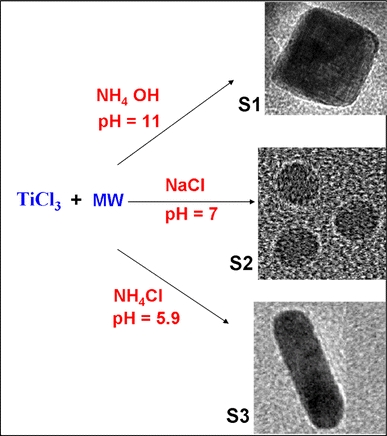
TiO(2) nanostructures with fascinating morphologies like cubes, spheres, and rods were synthesized by a simple microwave irradiation technique. Tuning of different morphologies was achieved by changing the pH and the nature of the medium or the precipitating agent. As-synthesized titania nanostructures were characterized by X-ray diffraction (XRD), UV-visible spectroscopy, infrared spectroscopy (IR), BET surface area, photoluminescence (PL), scanning electron microscopy (SEM) and transmission electron microscopy (TEM), and atomic force microscopy (AFM) techniques. Photocatalytic dye degradation studies were conducted using methylene blue under ultraviolet light irradiation. Dye degradation ability for nanocubes was found to be superior to the spheres and the rods and can be attributed to the observed high surface area of nanocubes. As-synthesized titania nanostructures have shown higher photocatalytic activity than the commercial photocatalyst Degussa P25 TiO(2).
通过一种简单的微波辐射技术合成了具有如立方体、球体和棒状等迷人形态的TiO₂纳米结构。通过改变pH值、介质性质或沉淀剂来实现对不同形态的调控。所合成的二氧化钛纳米结构通过X射线衍射(XRD)、紫外可见光谱、红外光谱(IR)、BET表面积、光致发光(PL)、扫描电子显微镜(SEM)、透射电子显微镜(TEM)和原子力显微镜(AFM)技术进行表征。在紫外光照射下使用亚甲基蓝进行光催化染料降解研究。发现纳米立方体的染料降解能力优于球体和棒状结构,这可归因于观察到的纳米立方体的高表面积。所合成的二氧化钛纳米结构显示出比商业光催化剂Degussa P25 TiO₂更高的光催化活性。