
使用交变磁场加速阿司匹林的水解
Accelerated Hydrolysis of Aspirin Using Alternating Magnetic Fields.
作者信息
Reinscheid Uwe M
机构信息
Max-Planck-Institute for Biophysical Chemistry, Am Fassberg 11, 37077 Göttingen, Germany.
出版信息
Nanoscale Res Lett. 2009 May 7;4(8):854-857. doi: 10.1007/s11671-009-9332-8.
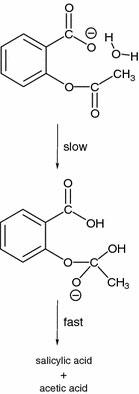
The major problem of current drug-based therapy is selectivity. As in other areas of science, a combined approach might improve the situation decisively. The idea is to use the pro-drug principle together with an alternating magnetic field as physical stimulus, which can be applied in a spatially and temporarily controlled manner. As a proof of principle, the neutral hydrolysis of aspirin in physiological phosphate buffer of pH 7.5 at 40 degrees C was chosen. The sensor and actuator system is a commercially available gold nanoparticle (NP) suspension which is approved for animal usage, stable in high concentrations and reproducibly available. Applying the alternating magnetic field of a conventional NMR magnet system accelerated the hydrolysis of aspirin in solution.
当前基于药物的治疗方法的主要问题在于选择性。与其他科学领域一样,采用联合方法可能会决定性地改善这种情况。其思路是将前药原理与交变磁场作为物理刺激相结合,交变磁场可以在空间和时间上进行可控应用。作为原理验证,选择了阿司匹林在40℃的pH 7.5生理磷酸盐缓冲液中的中性水解反应。传感器和执行器系统是一种市售的金纳米颗粒(NP)悬浮液,已获动物使用批准,在高浓度下稳定且可重复获得。施加传统核磁共振磁体系统的交变磁场加速了溶液中阿司匹林的水解。


 Zotero 插件