Ciofani Gianni, Raffa Vittoria, Menciassi Arianna, Cuschieri Alfred
Nanoscale Res Lett. 2008 Nov 25;4(2):113-121. doi: 10.1007/s11671-008-9210-9.
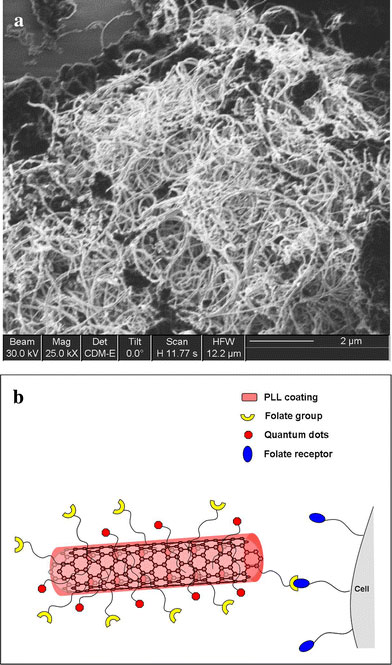
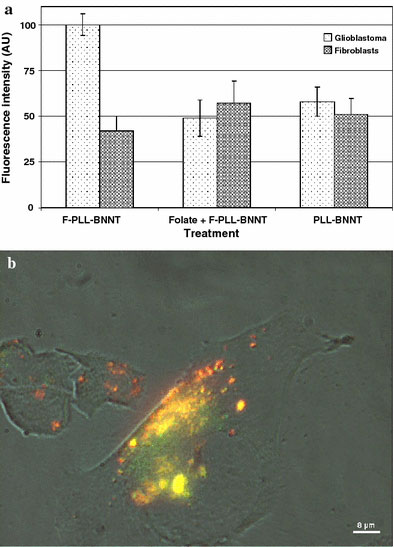
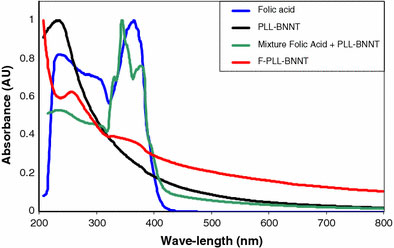
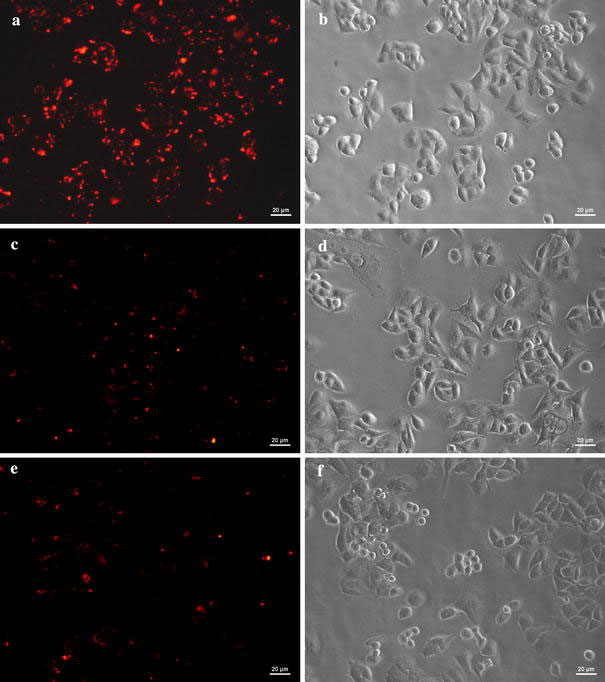
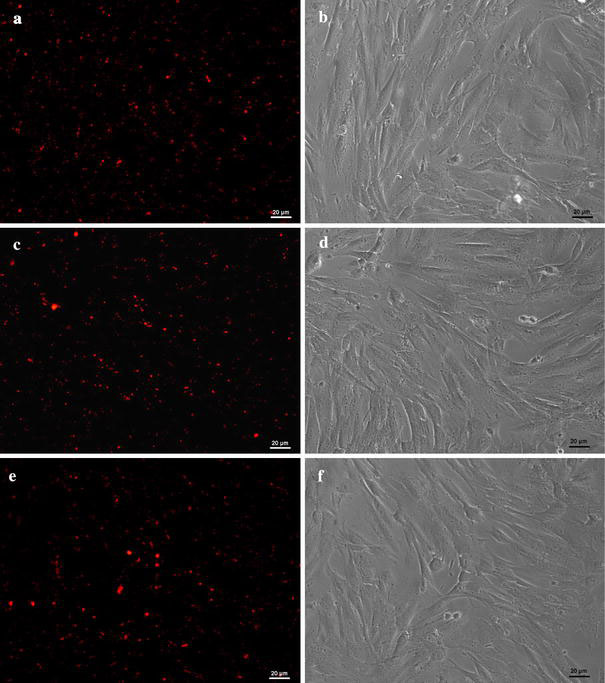
Boron neutron capture therapy (BNCT) is increasingly being used in the treatment of several aggressive cancers, including cerebral glioblastoma multiforme. The main requirement for this therapy is selective targeting of tumor cells by sufficient quantities of (10)B atoms required for their capture/irradiation with low-energy thermal neutrons. The low content of boron targeting species in glioblastoma multiforme accounts for the difficulty in selective targeting of this very malignant cerebral tumor by this radiation modality. In the present study, we have used for the first time boron nitride nanotubes as carriers of boron atoms to overcome this problem and enhance the selective targeting and ablative efficacy of BNCT for these tumors. Following their dispersion in aqueous solution by noncovalent coating with biocompatible poly-l-lysine solutions, boron nitride nanotubes were functionalized with a fluorescent probe (quantum dots) to enable their tracking and with folic acid as selective tumor targeting ligand. Initial in vitro studies have confirmed substantive and selective uptake of these nanovectors by glioblastoma multiforme cells, an observation which confirms their potential clinical application for BNCT therapy for these malignant cerebral tumors.
硼中子俘获疗法(BNCT)越来越多地用于治疗几种侵袭性癌症,包括多形性胶质母细胞瘤。这种疗法的主要要求是通过足够数量的硼原子选择性地靶向肿瘤细胞,这些硼原子是用低能热中子进行俘获/辐照所必需的。多形性胶质母细胞瘤中硼靶向物质的含量较低,这使得通过这种放射方式选择性靶向这种非常恶性的脑肿瘤变得困难。在本研究中,我们首次使用氮化硼纳米管作为硼原子的载体来克服这个问题,并提高BNCT对这些肿瘤的选择性靶向和消融效果。在用生物相容性聚赖氨酸溶液进行非共价包被使其分散在水溶液中后,氮化硼纳米管用荧光探针(量子点)进行功能化,以便能够追踪它们,并使用叶酸作为选择性肿瘤靶向配体。初步的体外研究证实了多形性胶质母细胞瘤细胞对这些纳米载体的大量选择性摄取,这一观察结果证实了它们在这些恶性脑肿瘤的BNCT治疗中的潜在临床应用价值。