Department of Anesthesiology, Investigational Intensive Care Unit, The University of Texas Medical Branch and Shriners Burns Hospital for Children, 301 University Boulevard, Galveston, Texas 77550, USA.
Crit Care. 2010;14(4):R129. doi: 10.1186/cc9097. Epub 2010 Jul 5.
Different isoforms of nitric oxide synthases (NOS) and determinants of oxidative/nitrosative stress play important roles in the pathophysiology of pulmonary dysfunction induced by acute lung injury (ALI) and sepsis. However, the time changes of these pathogenic factors are largely undetermined.
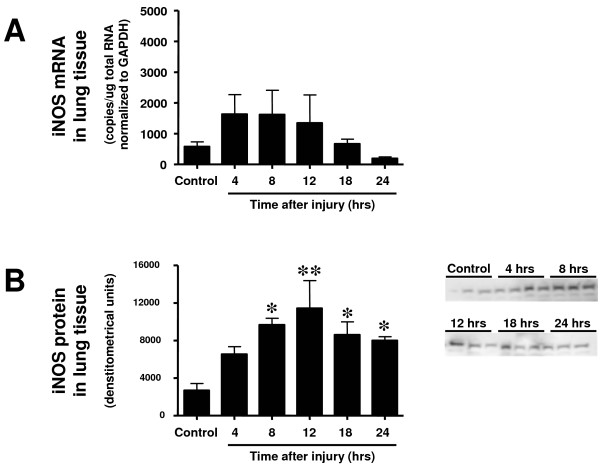
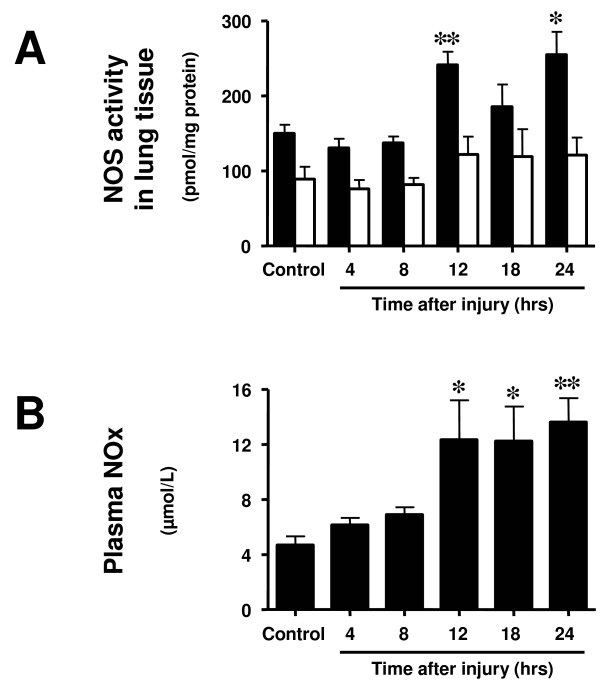
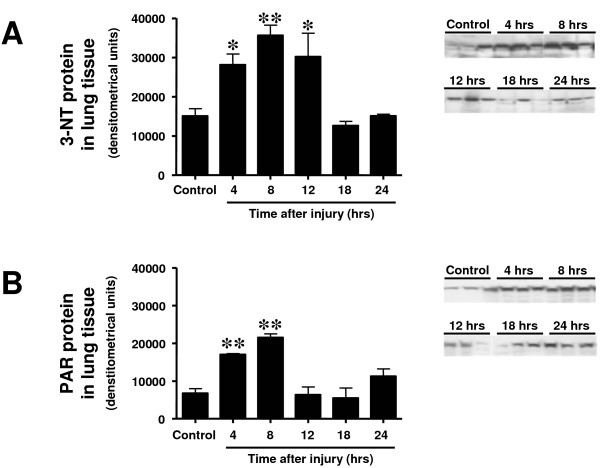
Twenty-four chronically instrumented sheep were subjected to inhalation of 48 breaths of cotton smoke and instillation of live Pseudomonas aeruginosa into both lungs and were euthanized at 4, 8, 12, 18, and 24 hours post-injury. Additional sheep received sham injury and were euthanized after 24 hrs (control). All animals were mechanically ventilated and fluid resuscitated. Lung tissue was obtained at the respective time points for the measurement of neuronal, endothelial, and inducible NOS (nNOS, eNOS, iNOS) mRNA and their protein expression, calcium-dependent and -independent NOS activity, 3-nitrotyrosine (3-NT), and poly(ADP-ribose) (PAR) protein expression.
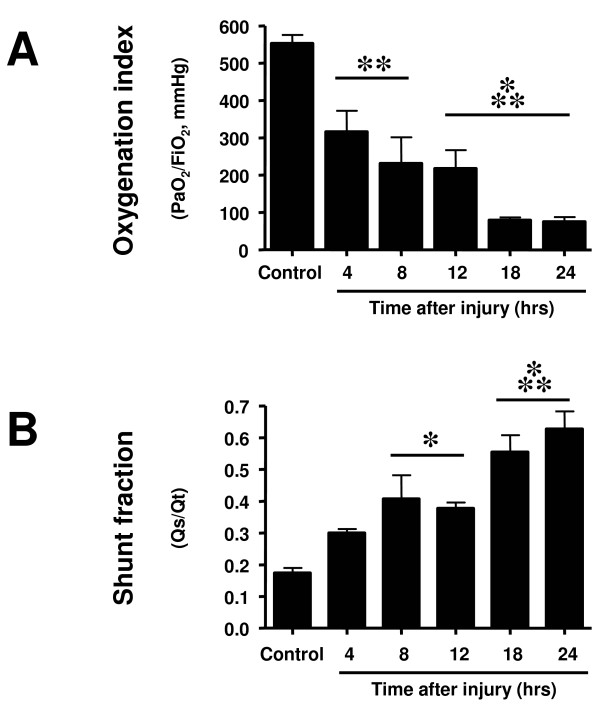
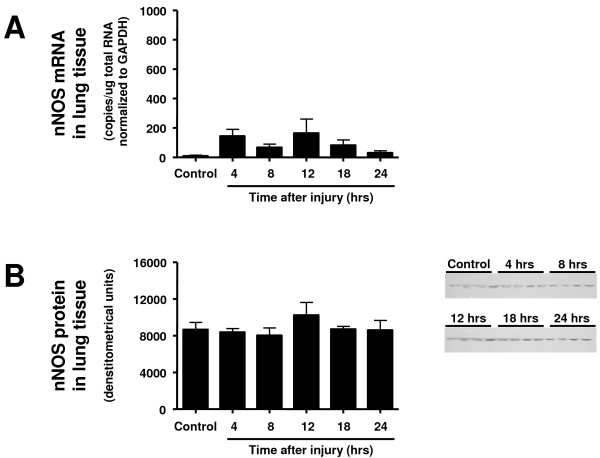
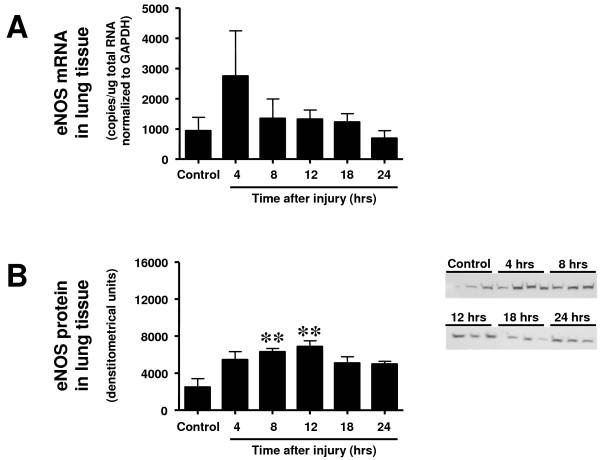
The injury induced severe pulmonary dysfunction as indicated by a progressive decline in oxygenation index and concomitant increase in pulmonary shunt fraction. These changes were associated with an early and transient increase in eNOS and an early and profound increase in iNOS expression, while expression of nNOS remained unchanged. Both 3-NT, a marker of protein nitration, and PAR, an indicator of DNA damage, increased early but only transiently.
Identification of the time course of the described pathogenetic factors provides important additional information on the pulmonary response to ALI and sepsis in the ovine model. This information may be crucial for future studies, especially when considering the timing of novel treatment strategies including selective inhibition of NOS isoforms, modulation of peroxynitrite, and PARP.
不同亚型的一氧化氮合酶(NOS)和氧化/硝化应激的决定因素在急性肺损伤(ALI)和败血症引起的肺功能障碍的病理生理学中发挥重要作用。然而,这些致病因素的时间变化在很大程度上尚未确定。
24 只慢性仪器化绵羊吸入 48 次棉花烟雾,并将活铜绿假单胞菌注入双肺,在损伤后 4、8、12、18 和 24 小时处死。另外一些绵羊接受假损伤,并在 24 小时后处死(对照)。所有动物均进行机械通气和液体复苏。在相应的时间点获取肺组织,以测量神经元型、内皮型和诱导型 NOS(nNOS、eNOS、iNOS)mRNA 及其蛋白表达、钙依赖性和非钙依赖性 NOS 活性、3-硝基酪氨酸(3-NT)和多聚(ADP-核糖)(PAR)蛋白表达。
损伤导致严重的肺功能障碍,表现为氧合指数逐渐下降,同时肺分流分数增加。这些变化与 eNOS 的早期和短暂增加以及 iNOS 表达的早期和深刻增加有关,而 nNOS 的表达保持不变。3-NT,一种蛋白质硝化的标志物,和 PAR,一种 DNA 损伤的指标,早期增加但仅短暂增加。
描述的致病因素的时间进程的确定为绵羊模型中 ALI 和败血症引起的肺反应提供了重要的附加信息。这些信息对于未来的研究可能至关重要,特别是当考虑到新型治疗策略的时机时,包括选择性抑制 NOS 同工型、调节过氧亚硝酸盐和 PARP。