Psychiatry Research Unit, Faculty of Health Sciences, Ben-Gurion University of the Negev, and Mental Health Center, Beersheva, Israel.
Behav Brain Funct. 2010 Jul 8;6:40. doi: 10.1186/1744-9081-6-40.
Schizophrenia is associated with rare copy-number (CN) mutations. Screening for such alleles genome-wide, though comprehensive, cannot study in-depth the causality of particular loci, therefore cannot provide the functional interpretation for the disease etiology. We hypothesized that CN mutations in the SELENBP1 locus could associate with the disorder and that these mutations could alter the gene product's activity in patients.
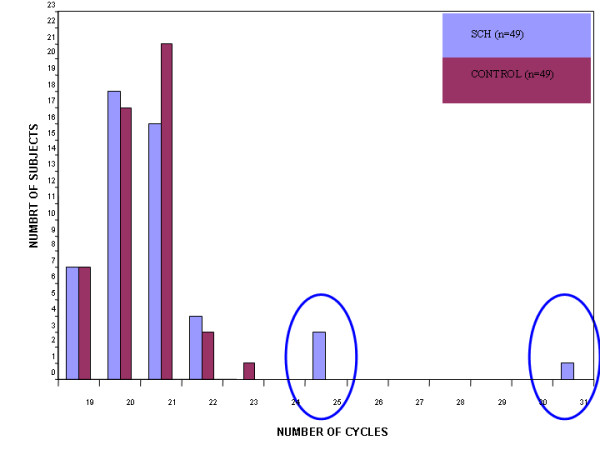
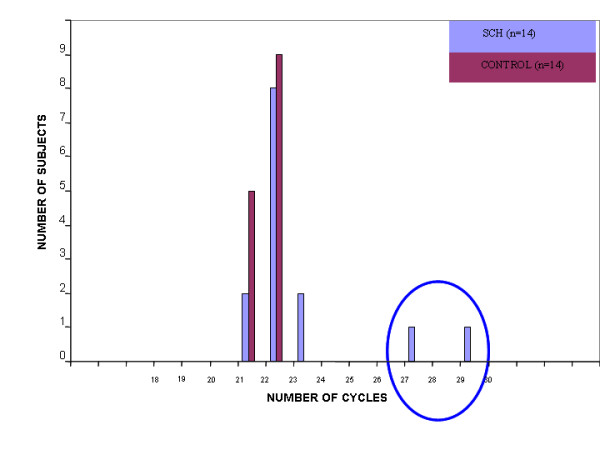
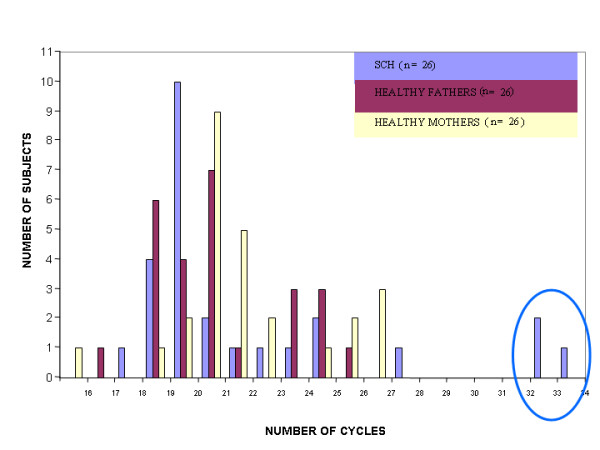
We analyzed SELENBP1 CN variation (CNV) in blood DNA from 49 schizophrenia patients and 49 controls (cohort A). Since CN of genes may vary among tissues, we investigated SELENBP1 CN in age- sex- and postmortem interval-matched cerebellar DNA samples from 14 patients and 14 controls (cohort B). Since CNV may either be de-novo or inherited we analyzed CNV of the SELENBP1 locus in blood DNA from 26 trios of schizophrenia probands and their healthy parents (cohort C). SELENBP1 mRNA levels were measured by real-time PCR.
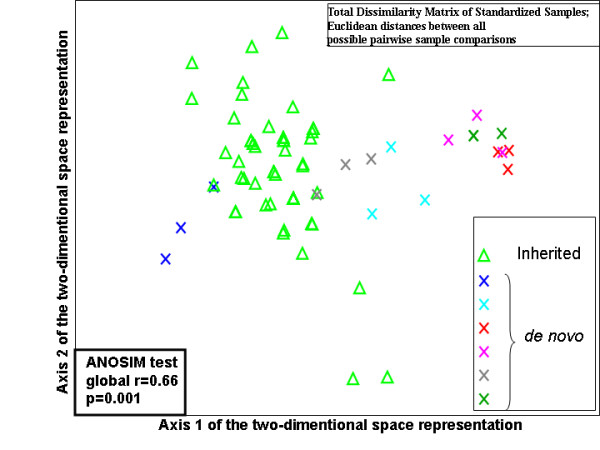
In cohort A reduced CN of the SELENBP1 locus was found in four patients but in none of the controls. In cohort B we found reduced CN of the SELENBP1 locus in two patients but in none of the controls. In cohort C three patients exhibited drastic CN reduction, not present in their parents, indicating de-novo mutation. A reduction in SELENBP1 mRNA levels in the postmortem cerebellar samples of schizophrenia patients was found.
We report a focused study of CN mutations in the selenium binding-protein1 (SELENBP1) locus previously linked with schizophrenia. We provide evidence for recurrence of decreased CN of the SELENBP1 locus in three unrelated patients' cohorts but not in controls, raising the possibility of functional involvement of these mutations in the etiology of the disease.
精神分裂症与罕见的拷贝数(CN)突变有关。尽管全面筛选基因组范围内的这些等位基因可以进行全面研究,但不能深入研究特定基因座的因果关系,因此不能为疾病病因提供功能解释。我们假设 SELENBP1 基因座的 CN 突变可能与该疾病有关,并且这些突变可能改变患者中基因产物的活性。
我们分析了来自 49 名精神分裂症患者和 49 名对照者(队列 A)的血液 DNA 中的 SELENBP1 CN 变异(CNV)。由于基因的 CN 可能会在组织间发生变化,因此我们研究了 14 名患者和 14 名对照者(队列 B)年龄、性别和死后间隔相匹配的小脑 DNA 样本中的 SELENBP1 CN。由于 CNV 可能是从头发生的或遗传的,因此我们分析了来自 26 个精神分裂症先证者及其健康父母的血液 DNA 中的 SELENBP1 基因座的 CNV(队列 C)。通过实时 PCR 测量 SELENBP1 mRNA 水平。
在队列 A 中,发现四个患者的 SELENBP1 基因座 CN 减少,但对照组均未发现。在队列 B 中,我们发现两个患者的 SELENBP1 基因座 CN 减少,但对照组均未发现。在队列 C 中,三个患者表现出明显的 CN 减少,其父母均未发现,表明存在从头突变。在精神分裂症患者死后小脑样本中发现 SELENBP1 mRNA 水平降低。
我们报告了一项针对先前与精神分裂症相关的硒结合蛋白 1(SELENBP1)基因座 CN 突变的重点研究。我们提供了三个不相关的患者队列中 SELENBP1 基因座 CN 减少的重现证据,但在对照组中没有,这增加了这些突变在疾病病因中的功能参与的可能性。