Institute of Parasitology, Justus Liebig University Giessen, Rudolf-Buchheim-Str. 2, 35392 Giessen, Germany.
Vet Res. 2010 Sep-Oct;41(5):70. doi: 10.1051/vetres/2010041. Epub 2010 Jul 12.
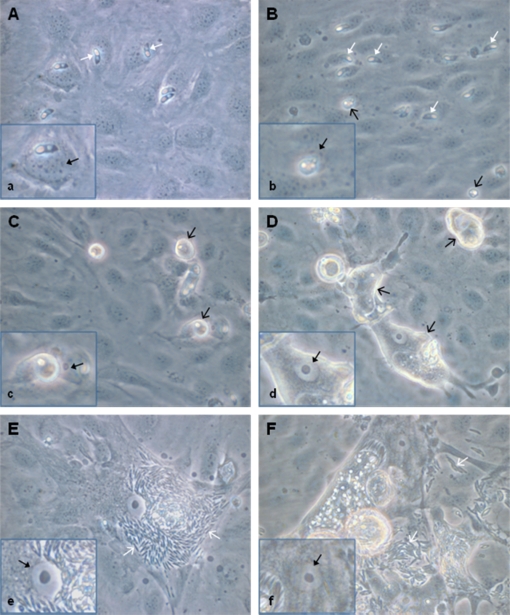
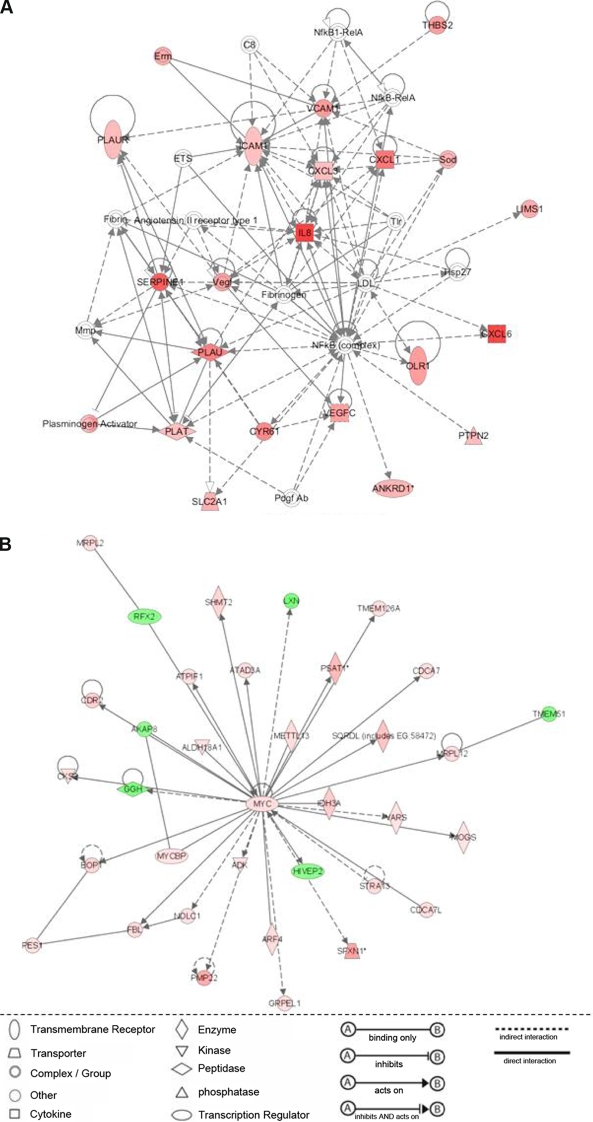
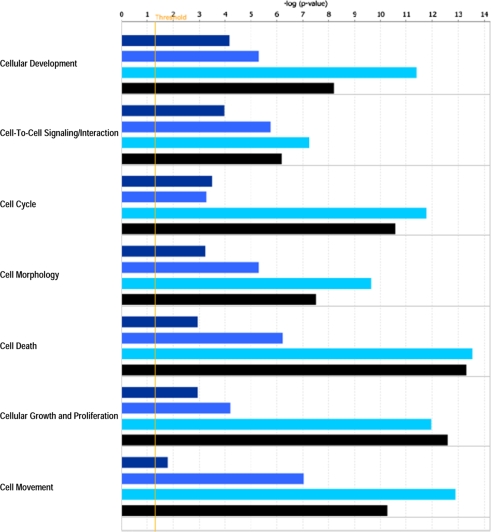
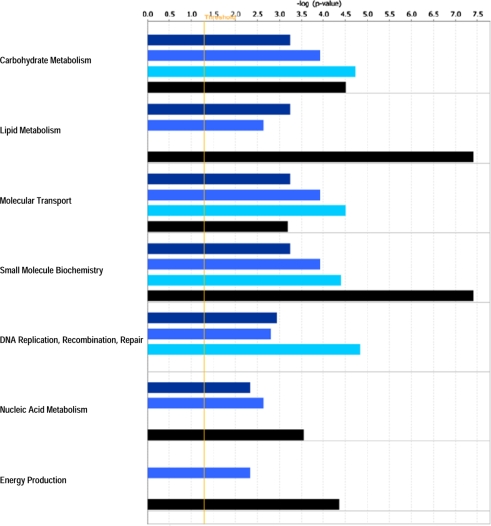
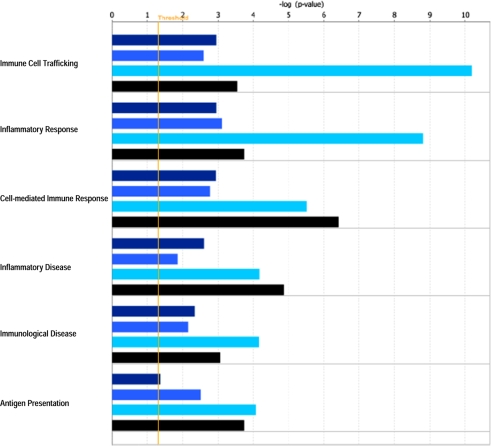
Within its life cycle Eimeria bovis undergoes a long lasting intracellular development into large macromeronts in endothelial cells. Since little is known about the molecular basis of E. bovis-triggered host cell regulation we applied a microarray-based approach to define transcript variation in bovine endothelial cells early after sporozoite invasion (4 h post inoculation (p.i.)), during trophozoite establishment (4 days p.i.), during early parasite proliferation (8 days p.i.) and towards macromeront maturation (14 days p.i.). E. bovis infection led to significant changes in the abundance of many host cell gene transcripts. As infection progressed, the number of regulated genes increased such that 12, 45, 175 and 1184 sequences were modulated at 4 h, 4, 8 and 14 days p.i., respectively. These genes significantly interfered with several host cell functions, networks and canonical pathways, especially those involved in cellular development, cell cycle, cell death, immune response and metabolism. The correlation between stage of infection and the number of regulated genes involved in different aspects of metabolism suggest parasite-derived exploitation of host cell nutrients. The modulation of genes involved in cell cycle arrest and host cell apoptosis corresponds to morphological in vitro findings and underline the importance of these aspects for parasite survival. Nevertheless, the increasing numbers of modulated transcripts associated with immune responses also demonstrate the defensive capacity of the endothelial host cell. Overall, this work reveals a panel of novel candidate genes involved in E. bovis-triggered host cell modulation, providing a valuable tool for future work on this topic.
在其生命周期内,牛艾美球虫经历了一个持久的细胞内发育过程,在血管内皮细胞中形成大型大配子体。由于对牛艾美球虫引发的宿主细胞调控的分子基础知之甚少,我们应用基于微阵列的方法来定义在孢子入侵后早期(感染后 4 小时(p.i.))、滋养体建立期间(感染后 4 天(p.i.))、早期寄生虫增殖期间(感染后 8 天(p.i.))和向大配子体成熟期间(感染后 14 天(p.i.))牛血管内皮细胞中的转录变异。牛艾美球虫感染导致宿主细胞基因转录本丰度发生显著变化。随着感染的进展,调节基因的数量增加,以至于在 4 h、4、8 和 14 天 p.i.时分别有 12、45、175 和 1184 个序列被调节。这些基因显著干扰了宿主细胞的许多功能、网络和经典途径,特别是那些涉及细胞发育、细胞周期、细胞死亡、免疫反应和代谢的途径。感染阶段与参与不同代谢方面的调节基因数量之间的相关性表明寄生虫对宿主细胞营养物质的利用。参与细胞周期阻滞和宿主细胞凋亡的基因的调节与体外形态学发现相对应,强调了这些方面对寄生虫生存的重要性。然而,与免疫反应相关的调节转录本数量的增加也证明了内皮宿主细胞的防御能力。总的来说,这项工作揭示了一组参与牛艾美球虫触发的宿主细胞调节的新候选基因,为该主题的未来工作提供了有价值的工具。