Crop Research Institute, Shandong Academy of Agricultural Sciences, Jinan, Shandong, China.
BMC Plant Biol. 2010 Jul 11;10:141. doi: 10.1186/1471-2229-10-141.
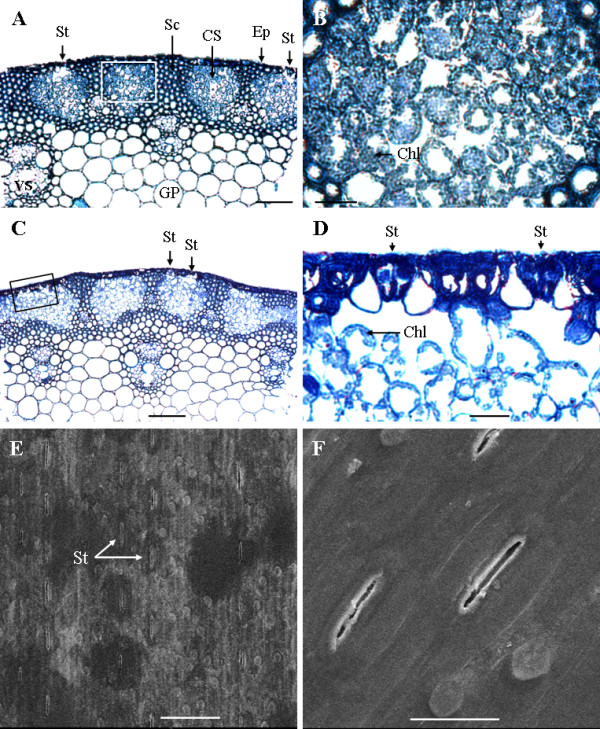
In wheat (Triticum aestivum L), the flag leaf has been thought of as the main source of assimilates for grain growth, whereas the peduncle has commonly been thought of as a transporting organ. The photosynthetic characteristics of the exposed peduncle have therefore been neglected. In this study, we investigated the anatomical traits of the exposed peduncle during wheat grain ontogenesis, and we compared the exposed peduncle to the flag leaf with respect to chloroplast ultrastructure, photosystem II (PSII) quantum yield, and phosphoenolpyruvate carboxylase (PEPCase; EC 4.1.1.31) activity.
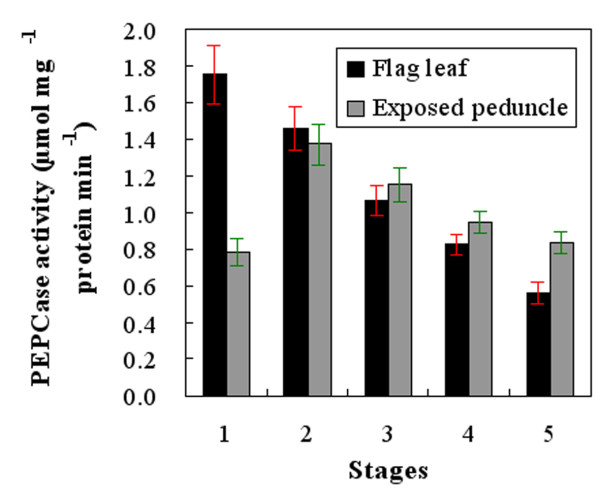
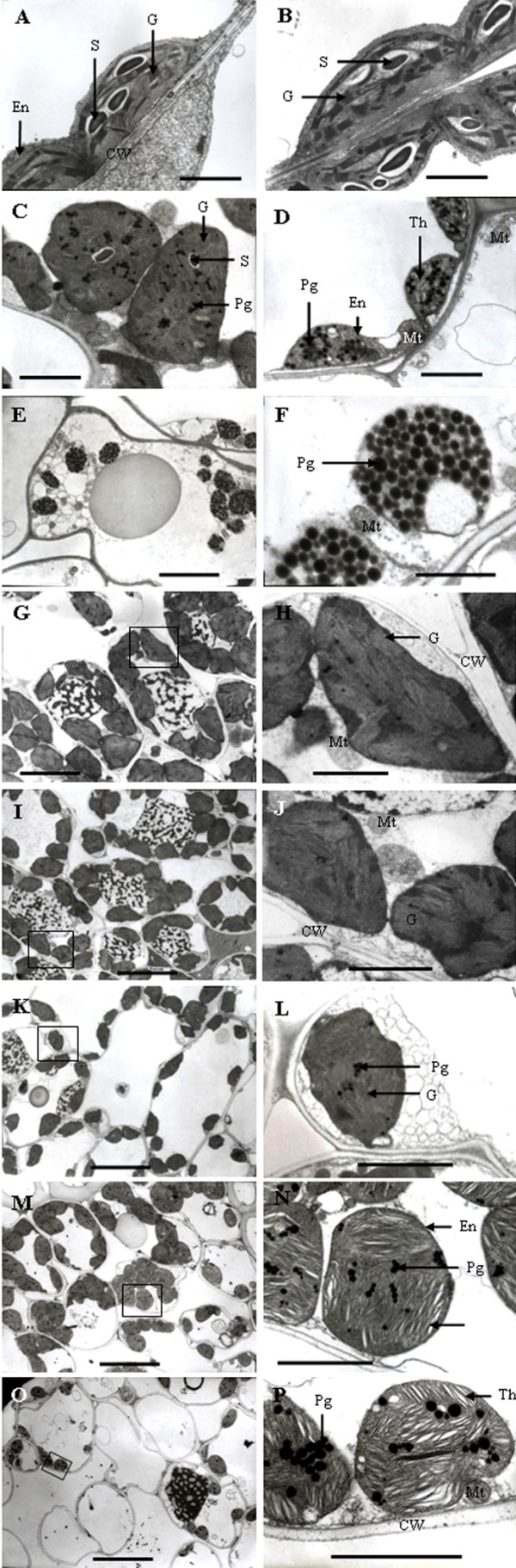
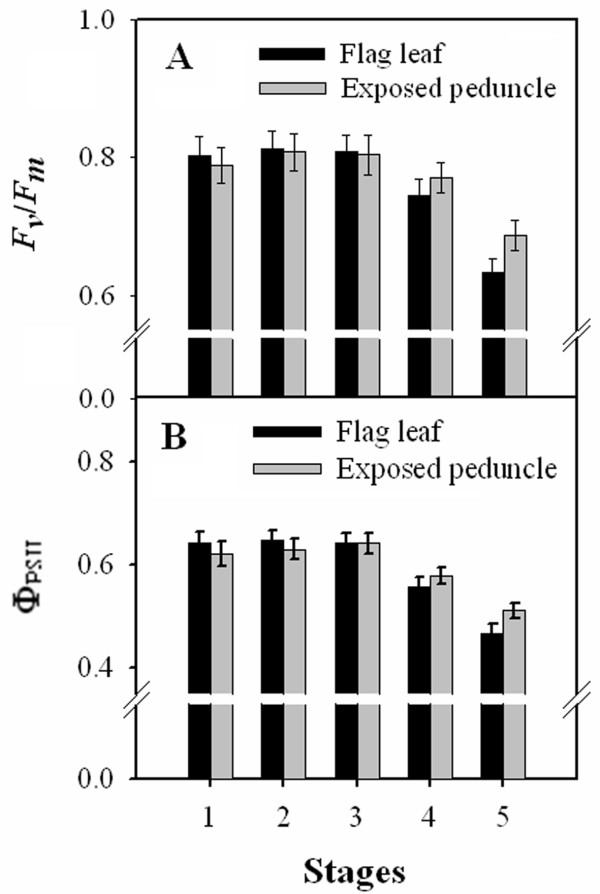
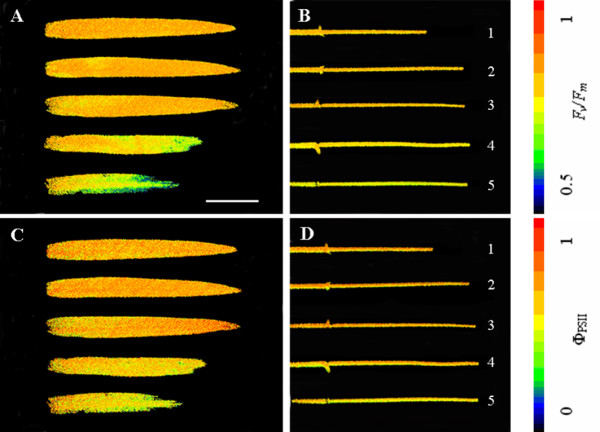
Transmission electron microscope observations showed well-developed chloroplasts with numerous granum stacks at grain-filling stages 1, 2 and 3 in both the flag leaf and the exposed peduncle. In the exposed peduncle, the membranes constituting the thylakoids were very distinct and plentiful, but in the flag leaf, there was a sharp breakdown at stage 4 and complete disintegration of the thylakoid membranes at stage 5. PSII quantum yield assays revealed that the photosynthetic efficiency remained constant at stages 1, 2 and 3 and then declined in both organs. However, the decline occurred more dramatically in the flag leaf than in the exposed peduncle. An enzyme assay showed that at stages 1 and 2 the PEPCase activity was lower in the exposed peduncle than in the flag leaf; but at stages 3, 4 and 5 the value was higher in the exposed peduncle, with a particularly significant difference observed at stage 5. Subjecting the exposed part of the peduncle to darkness following anthesis reduced the rate of grain growth.
Our results suggest that the exposed peduncle is a photosynthetically active organ that produces photosynthates and thereby makes a crucial contribution to grain growth, particularly during the late stages of grain-filling.
在小麦(Triticum aestivum L)中,旗叶一直被认为是籽粒生长的主要同化源,而穗颈通常被认为是运输器官。因此,暴露穗颈的光合特性被忽视了。本研究调查了小麦籽粒发育过程中暴露穗颈的解剖特征,并比较了暴露穗颈与旗叶的叶绿体超微结构、光系统 II(PSII)量子产量和磷酸烯醇丙酮酸羧化酶(PEPCase;EC 4.1.1.31)活性。
透射电子显微镜观察显示,在籽粒灌浆阶段 1、2 和 3,旗叶和暴露穗颈中均有大量的类囊体垛。在暴露穗颈中,组成类囊体的膜非常明显且丰富,但在旗叶中,在阶段 4 时膜急剧分解,在阶段 5 时完全解体。PSII 量子产量测定表明,在两个器官中,光合作用效率在阶段 1、2 和 3 时保持不变,然后下降。然而,在旗叶中下降更为明显。酶测定表明,在阶段 1 和 2 时,暴露穗颈中的 PEPCase 活性低于旗叶;但在阶段 3、4 和 5 时,暴露穗颈中的活性较高,在阶段 5 时差异尤为显著。在开花后将穗颈的暴露部分置于黑暗中会降低籽粒生长速度。
我们的结果表明,暴露穗颈是一个具有光合活性的器官,它产生光合产物,因此对籽粒生长,特别是在灌浆后期,做出了至关重要的贡献。