Department of Pharmaceutical Technology and Biopharmacy, University of Groningen, The Netherlands.
AAPS J. 2010 Dec;12(4):569-75. doi: 10.1208/s12248-010-9215-z. Epub 2010 Jul 13.
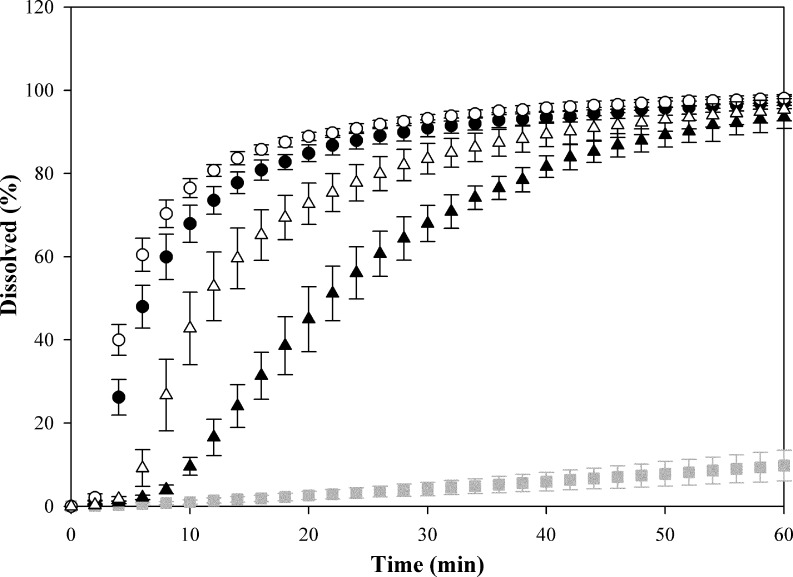
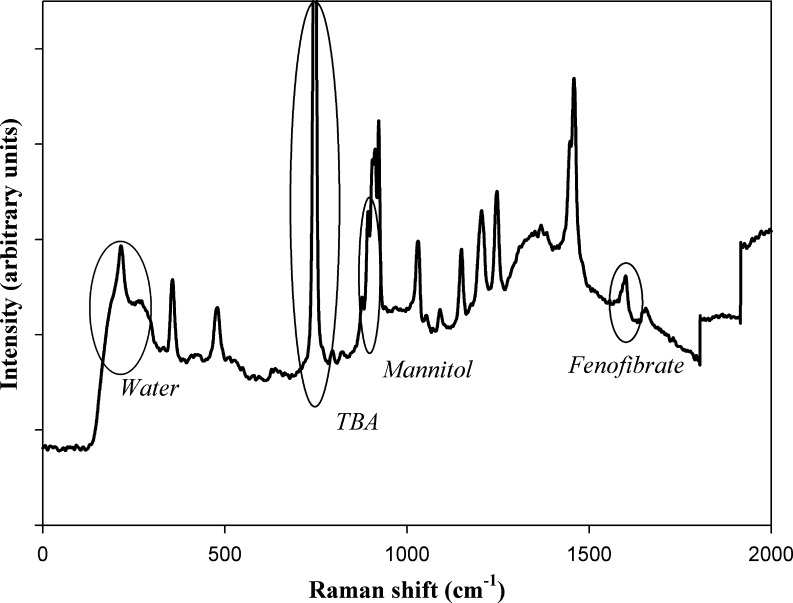
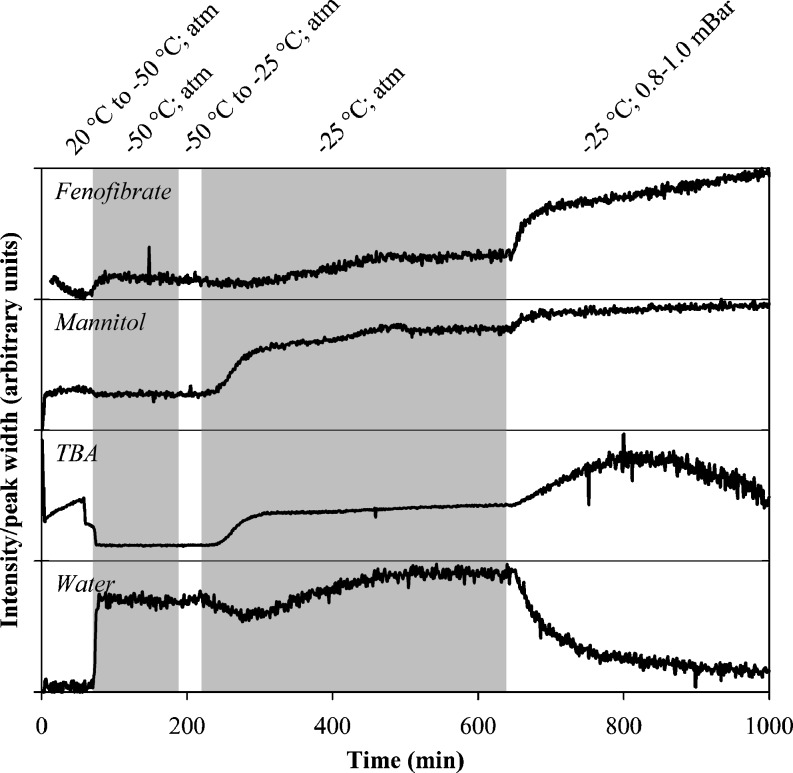
We developed a novel process, "controlled crystallization during freeze-drying" to produce drug nanocrystals of poorly water-soluble drugs. This process involves freeze-drying at a relatively high temperature of a drug and a matrix material from a mixture of tertiary butyl alcohol and water, resulting in drug nanocrystals incorporated in a matrix. The aim of this study was to elucidate the mechanisms that determine the size of the drug crystals. Fenofibrate was used as a model lipophilic drug. To monitor the crystallization during freeze-drying, a Raman probe was placed just above the sample in the freeze-dryer. These in-line Raman spectroscopy measurements clearly revealed when the different components crystallized during freeze-drying. The solvents crystallized only during the freezing step, while the solutes only crystallized after the temperature was increased, but before drying started. Although the solutes crystallized only after the freezing step, both the freezing rate and the shelf temperature were critical parameters that determined the final crystal size. At a higher freezing rate, smaller interstitial spaces containing the freeze-concentrated fraction were formed, resulting in smaller drug crystals (based on dissolution data). On the other hand, when the solutes crystallized at a lower shelf temperature, the degree of supersaturation is higher, resulting in a higher nucleation rate and consequently more and therefore smaller crystals. In conclusion, for the model drug fenofibrate, a high freezing rate and a relatively low crystallization temperature resulted in the smallest crystals and therefore the highest dissolution rate.
我们开发了一种新的工艺,“冷冻干燥过程中的控制结晶”,用于生产难溶性药物的药物纳米晶体。该工艺涉及在相对较高的温度下,从叔丁醇和水的混合物中冷冻干燥药物和基质材料,从而在基质中形成药物纳米晶体。本研究的目的是阐明决定药物晶体尺寸的机制。非诺贝特被用作模型亲脂性药物。为了监测冷冻干燥过程中的结晶,在冷冻干燥器中,将拉曼探头放置在样品上方。这些在线拉曼光谱测量清楚地揭示了冷冻干燥过程中不同成分何时结晶。溶剂仅在冷冻步骤中结晶,而溶质仅在温度升高后但在干燥开始之前结晶。尽管溶质仅在冷冻步骤后结晶,但冷冻速率和货架温度都是决定最终晶体尺寸的关键参数。在较高的冷冻速率下,形成了含有冷冻浓缩部分的较小间隙空间,从而产生了较小的药物晶体(基于溶解数据)。另一方面,当溶质在较低的货架温度下结晶时,过饱和度更高,导致成核速率更高,从而形成更多且更小的晶体。总之,对于模型药物非诺贝特,高冷冻速率和相对较低的结晶温度导致最小的晶体,从而具有最高的溶解速率。