School of Life Sciences, Kingston University, Kingston-upon Thames, UK, KT1 2EE.
Ann Clin Microbiol Antimicrob. 2010 Jul 21;9:20. doi: 10.1186/1476-0711-9-20.
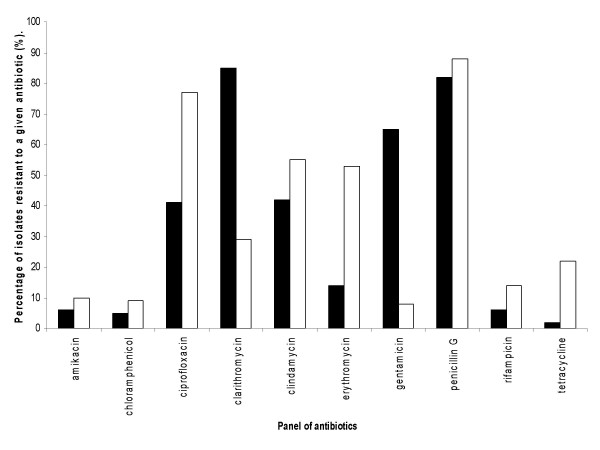
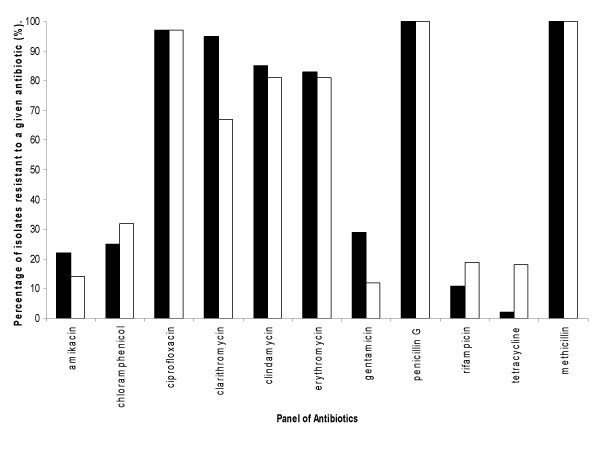
Antibiotic resistance is an increasing problem in isolates of Staphylococcus aureus (S. aureus) worldwide. In 2001 The National Health Service in the UK introduced a mandatory bacteraemia surveillance scheme for the reporting of S. aureus and methicillin-resistant S. aureus (MRSA). This surveillance initiative reports on the percentage of isolates that are methicillin resistant. However, resistance to other antibiotics is not currently reported and therefore the scale of emerging resistance is currently unclear in the UK. In this study, multiple antibiotic resistance (MAR) profiles against fourteen antimicrobial drugs were investigated for 705 isolates of S. aureus collected from two European study sites in the UK (London) and Malta.
All isolates were susceptible to linezolid, teicoplanin and vancomycin. Multiple antibiotic resistance profiles from both countries were determined, a total of forty-two and forty-five profiles were seen in the UK cohort (MRSA and MSSA respectively) and comparatively, sixty-two and fifty-two profiles were shown in the Maltese group. The largest MAR profile contained six antibiotics (penicillin G, methicillin, erythromycin, ciprofloxacin, clindamycin and clarithromycin) and was observed in the MRSA isolates in both the UK and Maltese cohorts.
The data presented here suggests that the monitoring of changing resistance profiles locally in maintaining treatment efficacy to resistant pathogens.
金黄色葡萄球菌(S. aureus)的抗生素耐药性是一个日益严重的问题,在全球范围内。2001 年,英国国民保健署(NHS)推出了一项强制性血培养监测计划,用于报告金黄色葡萄球菌和耐甲氧西林金黄色葡萄球菌(MRSA)。该监测计划报告了耐甲氧西林金黄色葡萄球菌的分离株百分比。然而,目前并未报告对其他抗生素的耐药性,因此在英国,新兴耐药性的规模尚不清楚。在这项研究中,对从英国伦敦和马耳他两个欧洲研究地点采集的 705 株金黄色葡萄球菌分离株进行了针对 14 种抗菌药物的多重抗生素耐药(MAR)谱分析。
所有分离株均对利奈唑胺、替考拉宁和万古霉素敏感。确定了来自两个国家的多重抗生素耐药谱,英国队列(MRSA 和 MSSA 分别)共观察到 42 种和 45 种谱,而马耳他组分别显示 62 种和 52 种谱。最大的 MAR 谱包含六种抗生素(青霉素 G、甲氧西林、红霉素、环丙沙星、克林霉素和克拉霉素),在英国和马耳他队列的 MRSA 分离株中均观察到。
这里呈现的数据表明,在本地监测耐药性谱的变化有助于维持对耐药病原体的治疗效果。