Mizrahi Aya, Czerniak Abraham, Ohana Patricia, Amiur Smadar, Gallula Jennifer, Matouk Imad, Abu-Lail Rasha, Birman Tatiana, Hochberg Abraham, Levy Tally
The Hebrew University of Jerusalem, Biological Chemistry, Jerusalem, 91905, Israel.
J Med Case Rep. 2010 Jul 27;4:228. doi: 10.1186/1752-1947-4-228.
Ovarian cancer ascitic fluid, which contains malignant cells, is usually present in women with an advanced stage disease. There are currently no effective therapies for the treatment of ovarian cancer ascitic fluid. We developed a new therapeutic strategy to target expression of the diphtheria toxin fragment A gene in ovarian tumor cells under the control of H19 regulatory sequences.
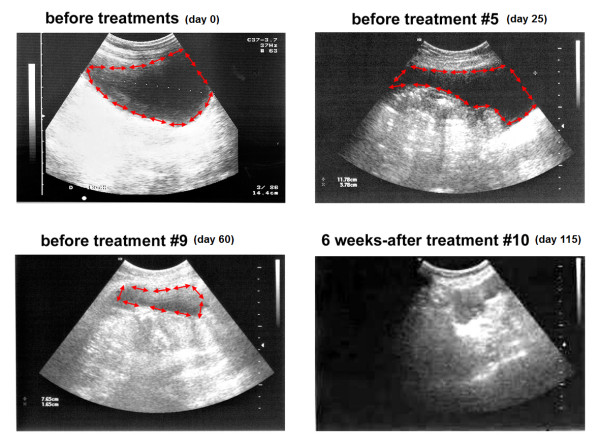
A 64-year-old Caucasian woman was diagnosed with a stage IIIc epithelial ovarian cancer. She suffered from progressive disease, accumulation of malignant ascites that needed to be drained weekly, abdominal pain, vomiting, anorexia and severe weakness. Infusion of the diphtheria toxin A chain-H19 plasmid into the peritoneum of our patient resulted in complete resolution of the ascites with minimum adverse events.
On the basis of this preliminary experience, we are currently conducting an extensive Phase I study on a larger number of patients in order to assess the safety and preliminary efficacy of this novel patient-oriented treatment approach.
卵巢癌腹水通常见于晚期疾病女性患者,其中含有恶性细胞。目前尚无治疗卵巢癌腹水的有效疗法。我们开发了一种新的治疗策略,可在H19调控序列的控制下,靶向卵巢肿瘤细胞中白喉毒素A片段基因的表达。
一名64岁的白人女性被诊断为IIIc期上皮性卵巢癌。她病情进展,恶性腹水不断积聚,每周都需要引流,伴有腹痛、呕吐、厌食和严重虚弱。向我们的患者腹腔内输注白喉毒素A链-H19质粒后,腹水完全消退,且不良事件最少。
基于这一初步经验,我们目前正在对更多患者进行广泛的I期研究,以评估这种以患者为导向的新型治疗方法的安全性和初步疗效。