School of Mechanical, Materials & Mechatronics, Institute for Superconducting & Electronic Materials, Faculty of Engineering, University of Wollongong, Wollongong, NSW, 2522, Australia.
Nanoscale Res Lett. 2010 May 23;5(8):1301-6. doi: 10.1007/s11671-010-9642-x.
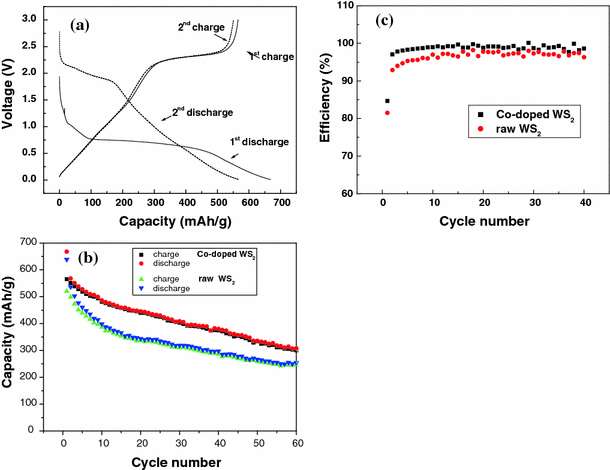
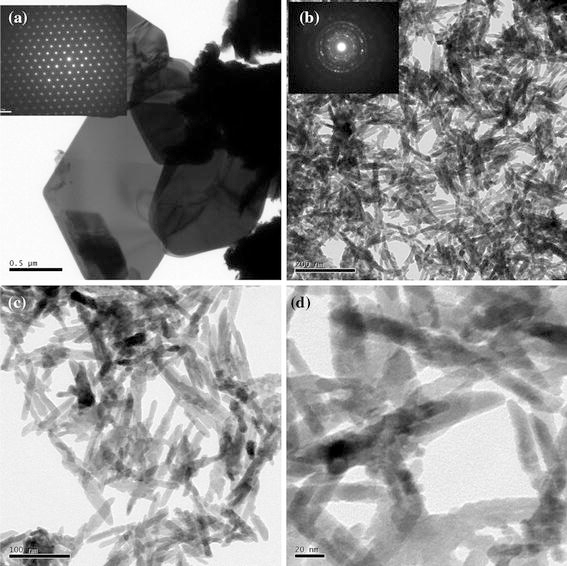
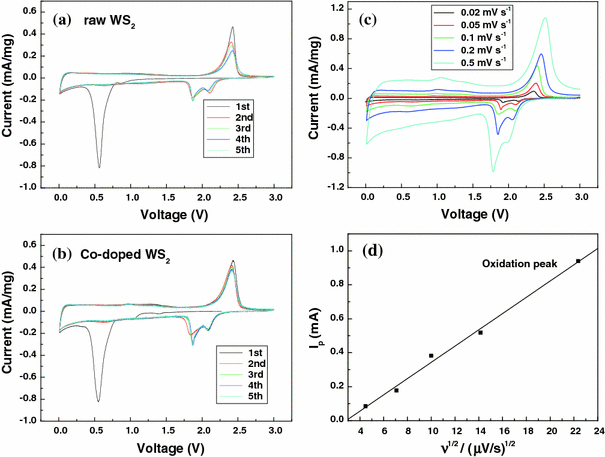
Cobalt-doped tungsten disulfide nanorods were synthesized by an approach involving exfoliation, intercalation, and the hydrothermal process, using commercial WS2 powder as the precursor and n-butyllithium as the exfoliating reagent. XRD results indicate that the crystal phase of the sample is 2H-WS2. TEM images show that the sample consists of bamboo-like nanorods with a diameter of around 20 nm and a length of about 200 nm. The Co-doped WS2 nanorods exhibit the reversible capacity of 568 mAh g-1 in a voltage range of 0.01-3.0 V versus Li/Li+. As an electrode material for the lithium battery, the Co-doped WS2 nanorods show enhanced charge capacity and cycling stability compared with the raw WS2 powder.
钴掺杂二硫化钨纳米棒通过剥离、插层和水热工艺合成,以商业 WS2 粉末为前驱体,正丁基锂为剥离剂。XRD 结果表明,样品的晶体相为 2H-WS2。TEM 图像显示,样品由直径约为 20nm、长度约为 200nm 的竹节状纳米棒组成。Co 掺杂 WS2 纳米棒在 0.01-3.0V 相对于 Li/Li+的电压范围内表现出 568mAh g-1 的可逆容量。作为锂电池的电极材料,与原始 WS2 粉末相比,Co 掺杂 WS2 纳米棒具有更高的充电容量和循环稳定性。