Department of Psychiatry, Institute of Psychiatric Research, Indiana School of Medicine, Indianapolis, USA.
Alcohol. 2010 May;44(3):245-55. doi: 10.1016/j.alcohol.2010.01.002.
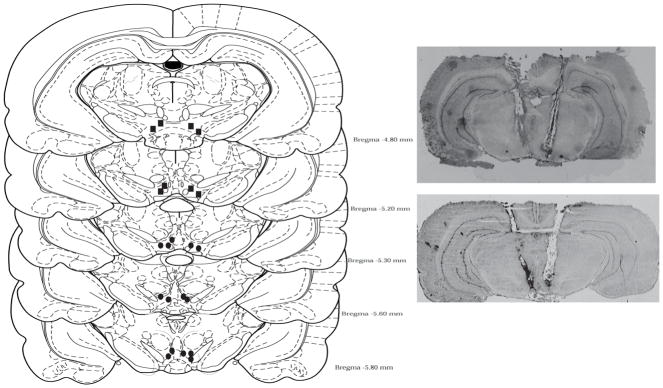
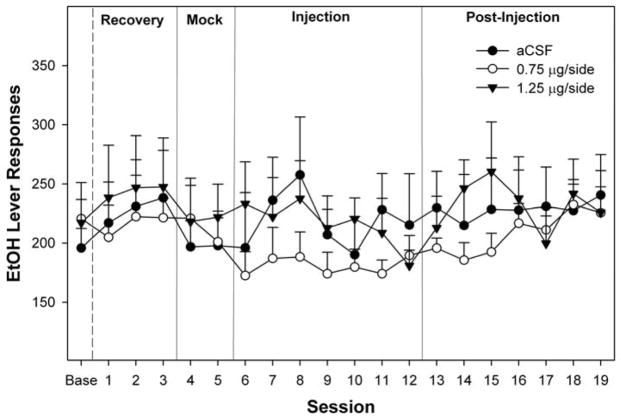
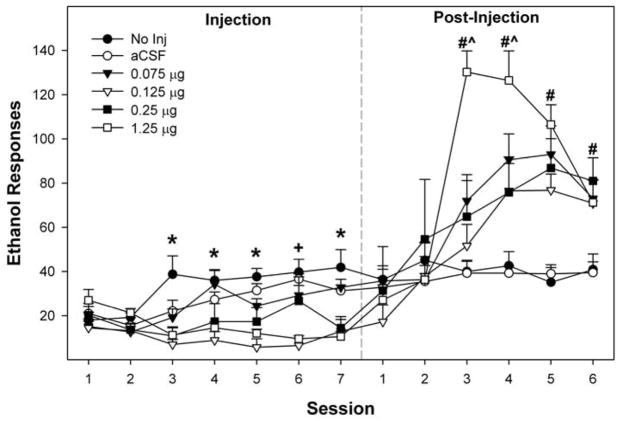
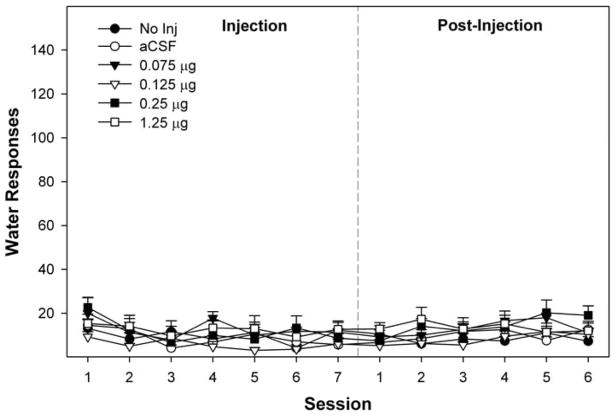
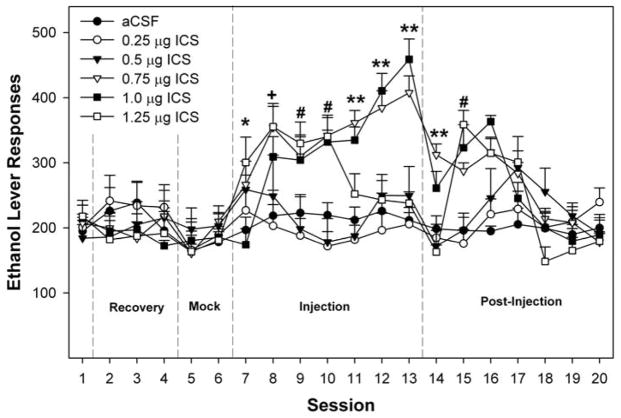
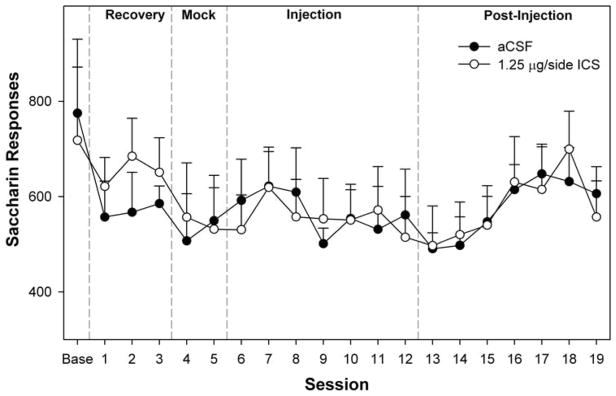
Several studies indicated the involvement of serotonin-3 ([5-hydroxy tryptamine] 5-HT(3)) receptors in regulating alcohol-drinking behavior. The objective of this study was to determine the involvement of 5-HT(3) receptors within the ventral tegmental area (VTA) in regulating ethanol self-administration by alcohol-preferring (P) rats. Standard two-lever operant chambers (Coulbourn Instruments, Allentown, PA) were used to examine the effects of seven consecutive bilateral microinfusions of ICS 205-930 (ICS), a 5-HT(3) receptor antagonist, directly into the posterior VTA on the acquisition and maintenance of 15% (vol/vol) ethanol self-administration. P rats readily acquired ethanol self-administration by the fourth session. The three highest doses (0.125, 0.25, and 1.25 microg) of ICS prevented acquisition of ethanol self-administration. During the acquisition postinjection period, all rats treated with ICS demonstrated higher responding on the ethanol lever, with the highest dose producing the greatest effect. In contrast, during the maintenance phase, the three highest doses (0.75, 1.0, and 1.25 microg) of ICS significantly increased responding on the ethanol lever; after the 7-day dosing regimen, responding on the ethanol lever returned to control levels. Microinfusion of ICS into the posterior VTA did not alter the low responding on the water lever and did not alter saccharin (0.0125% wt/v) self-administration. Microinfusion of ICS into the anterior VTA did not alter ethanol self-administration. Overall, the results of this study suggest that 5-HT(3) receptors in the posterior VTA of the P rat may be involved in regulating ethanol self-administration. In addition, chronic operant ethanol self-administration and/or repeated treatments with a 5-HT(3) receptor antagonist may alter neuronal circuitry within the posterior VTA.
几项研究表明,5-羟色胺 3([5-羟色胺] 5-HT(3))受体参与调节饮酒行为。本研究的目的是确定腹侧被盖区(VTA)内的 5-HT(3)受体在调节酒精偏爱(P)大鼠的乙醇自我给药中的作用。标准双杠操作室(Coulbourn Instruments,Allentown,PA)用于检查连续七天双侧微输注 ICS 205-930(ICS),一种 5-HT(3)受体拮抗剂,直接进入 VTA 后对 15%(体积/体积)乙醇自我给药的获得和维持的影响。P 大鼠很容易通过第四次会议获得乙醇自我给药。三个最高剂量(0.125、0.25 和 1.25μg)的 ICS 可防止乙醇自我给药的获得。在获得后的注射期,所有用 ICS 治疗的大鼠在乙醇杆上表现出更高的反应,最高剂量产生最大的效果。相比之下,在维持阶段,三个最高剂量(0.75、1.0 和 1.25μg)的 ICS 显著增加了对乙醇杆的反应;在 7 天的给药方案后,对乙醇杆的反应恢复到对照水平。ICS 微注射到 VTA 后不改变对水杆的低反应,也不改变蔗糖(0.0125%wt/v)自我给药。ICS 微注射到前 VTA 不改变乙醇自我给药。总体而言,本研究结果表明,P 大鼠 VTA 后部的 5-HT(3)受体可能参与调节乙醇自我给药。此外,慢性操作性乙醇自我给药和/或重复使用 5-HT(3)受体拮抗剂可能会改变 VTA 后部的神经元回路。