Center for Genomic Biology and Bioinformatics, The Hamner Institutes for Health Sciences, Research Triangle Park, North Carolina, United States of America.
PLoS One. 2010 Jul 29;5(7):e11850. doi: 10.1371/journal.pone.0011850.
The heat shock response is widely used as a surrogate of the general protein quality control system within the cell. This system plays a significant role in aging and many protein folding diseases as well as the responses to other physical and chemical stressors.
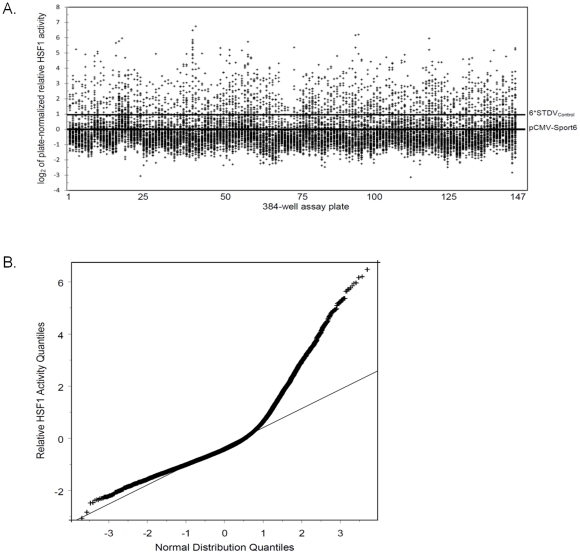
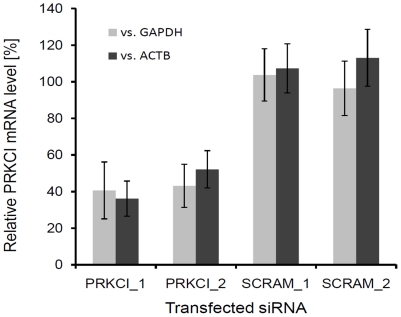
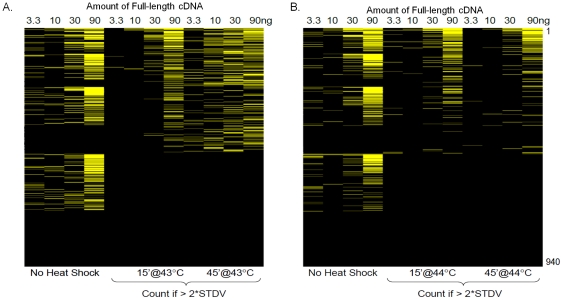
METHODS/PRINCIPAL FINDINGS: In this study, a broad-based functional genomics approach was taken to identify potential regulators of the mammalian heat shock response. In the primary screen, a total of 13724 full-length genes in mammalian expression vectors were individually co-transfected into human embryonic kidney cells together with a human HSP70B promoter driving firefly luciferase. A subset of the full-length genes that showed significant activation in the primary screen were then evaluated for their ability to hyper-activate the HSP70B under heat shock conditions. Based on the results from the secondary assay and gene expression microarray analyses, eight genes were chosen for validation using siRNA knockdown. Of the eight genes, only PRKCI showed a statistically significant reduction in the heat shock response in two independent siRNA duplexes compared to scrambled controls. Knockdown of the PRKCI mRNA was confirmed using quantitative RT-PCR. Additional studies did not show a direct physical interaction between PRKCI and HSF1.
CONCLUSIONS/SIGNIFICANCE: The results suggest that PRKCI is an indirect co-regulator of HSF1 activity and the heat shock response. Given the underlying role of HSF1 in many human diseases and the response to environmental stressors, PRKCI represents a potentially new candidate for gene-environment interactions and therapeutic intervention.
热休克反应被广泛用作细胞内一般蛋白质质量控制系统的替代物。该系统在衰老和许多蛋白质折叠疾病以及对其他物理和化学应激源的反应中起着重要作用。
方法/主要发现:在这项研究中,采用了广泛的功能基因组学方法来鉴定哺乳动物热休克反应的潜在调节因子。在初级筛选中,将哺乳动物表达载体中的总共 13724 个全长基因单独共转染到人胚肾细胞中,同时使用人类 HSP70B 启动子驱动萤火虫荧光素酶。在初级筛选中显示出显著激活的全长基因的一部分,然后评估它们在热休克条件下超激活 HSP70B 的能力。基于二次测定和基因表达微阵列分析的结果,选择了八个基因使用 siRNA 敲低进行验证。在这八个基因中,只有 PRKCI 在与对照相比,两种独立的 siRNA 双链体中,热休克反应有统计学意义的降低。使用定量 RT-PCR 证实了 PRKCI mRNA 的敲低。进一步的研究没有显示 PRKCI 与 HSF1 之间存在直接的物理相互作用。
结论/意义:结果表明 PRKCI 是 HSF1 活性和热休克反应的间接共调节因子。鉴于 HSF1 在许多人类疾病和对环境应激源的反应中的基础作用,PRKCI 代表了基因-环境相互作用和治疗干预的一个潜在新候选者。