Wellcome Trust Centre for Cell Biology, University of Edinburgh, Edinburgh EH93JR, United Kingdom.
Mol Cell Proteomics. 2010 Dec;9(12):2571-85. doi: 10.1074/mcp.M110.002915. Epub 2010 Aug 6.
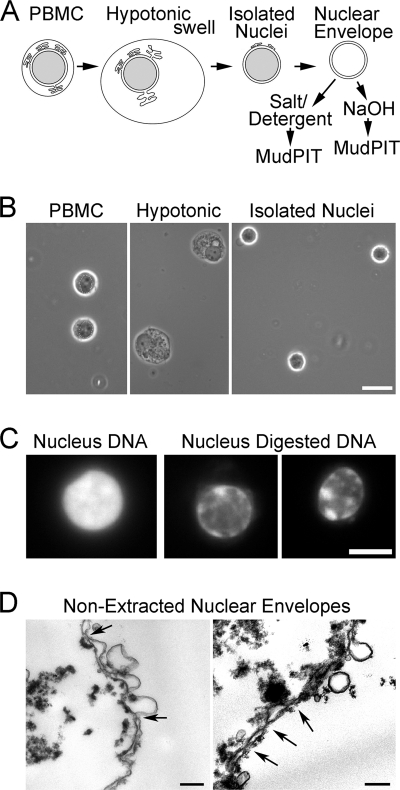
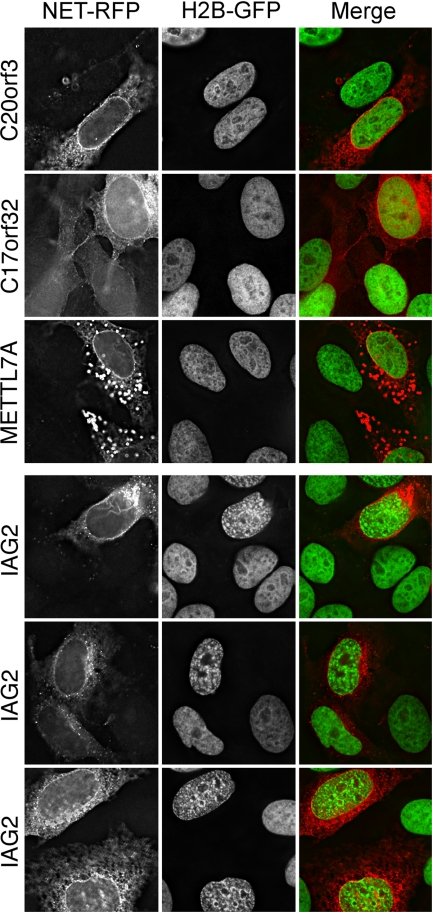
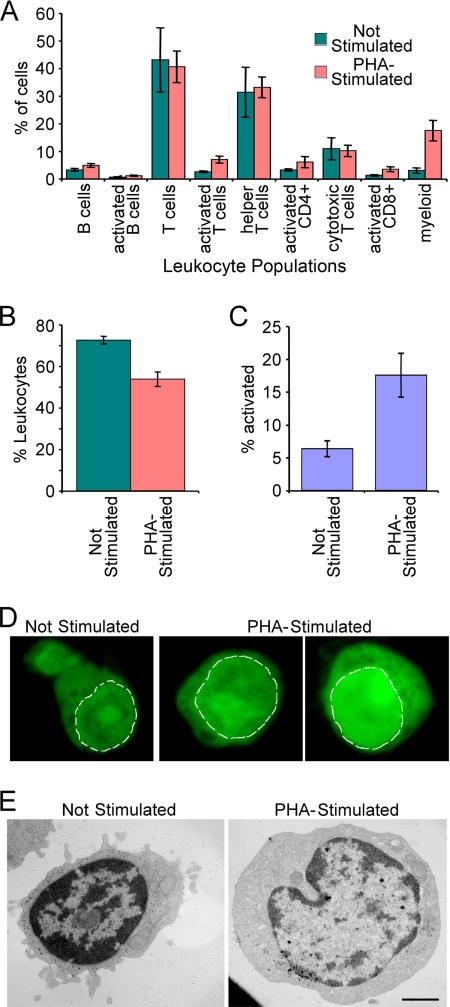
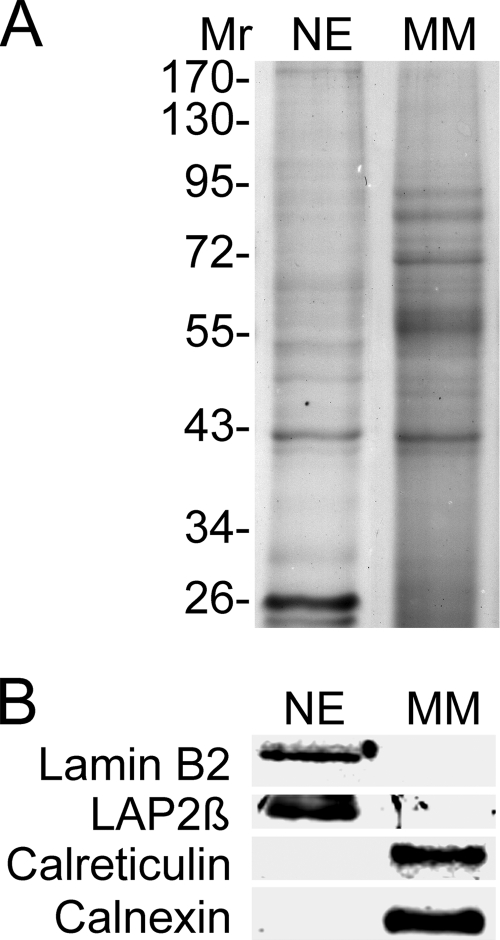
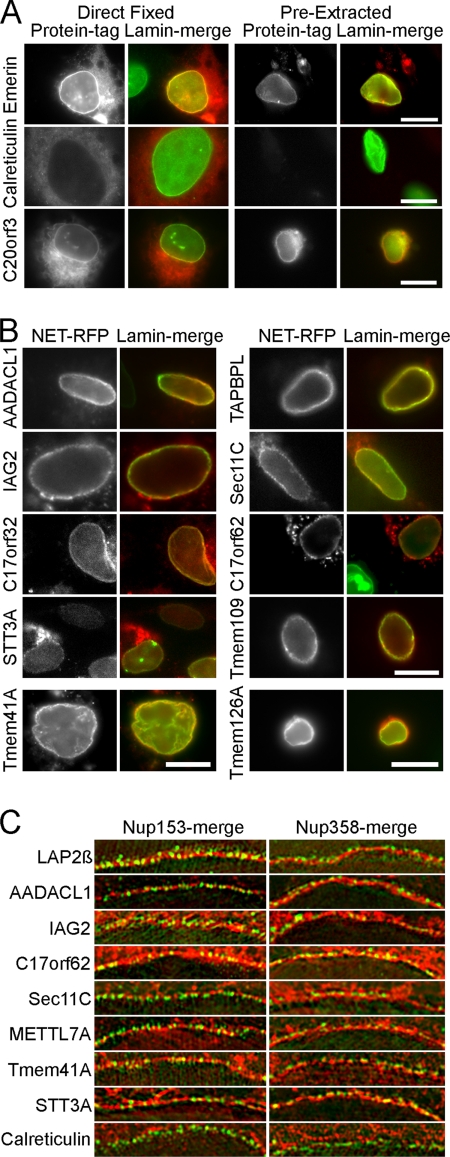
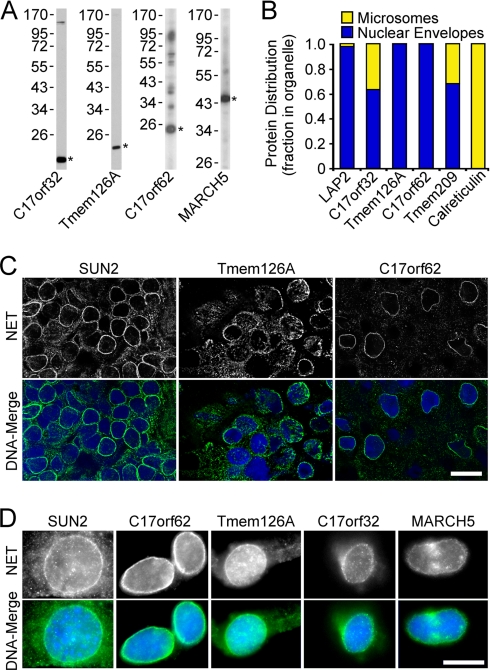
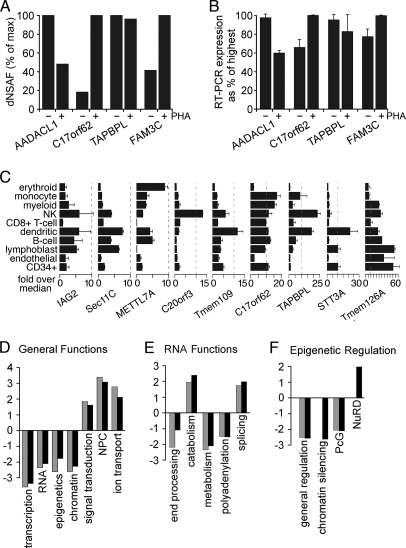
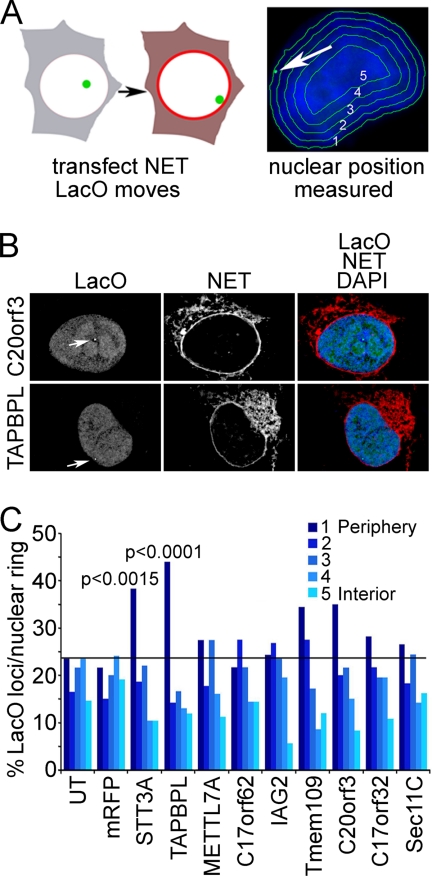
A favored hypothesis to explain the pathology underlying nuclear envelopathies is that mutations in nuclear envelope proteins alter genome/chromatin organization and thus gene expression. To identify nuclear envelope proteins that play roles in genome organization, we analyzed nuclear envelopes from resting and phytohemagglutinin-activated leukocytes because leukocytes have a particularly high density of peripheral chromatin that undergoes significant reorganization upon such activation. Thus, nuclear envelopes were isolated from leukocytes in the two states and analyzed by multidimensional protein identification technology using an approach that used expected contaminating membranes as subtractive fractions. A total of 3351 proteins were identified between both nuclear envelope data sets among which were 87 putative nuclear envelope transmembrane proteins (NETs) that were not identified in a previous proteomics analysis of liver nuclear envelopes. Nuclear envelope localization was confirmed for 11 new NETs using tagged fusion proteins and antibodies on spleen cryosections. 27% of the new proteins identified were unique to one or the other of the two leukocyte states. Differences in expression between activated and resting leukocytes were confirmed for some NETs by RT-PCR, and most of these proteins appear to only be expressed in certain types of blood cells. Several known proteins identified in both data sets have functions in chromatin organization and gene regulation. To test whether the novel NETs identified might include those that also regulate chromatin, nine were run through two screens for different chromatin effects. One screen found two NETs that can recruit a specific gene locus to the nuclear periphery, and the second found a different NET that promotes chromatin condensation. The variation in the protein milieu with pharmacological activation of the same cell population and consequences for gene regulation suggest that the nuclear envelope is a complex regulatory system with significant influences on genome organization.
一种被广泛认可的假说认为,核膜异常的病理基础是核膜蛋白的突变改变了基因组/染色质的结构,从而影响了基因表达。为了鉴定在基因组组织中发挥作用的核膜蛋白,我们分析了静止和植物血球凝集素激活的白细胞的核膜,因为白细胞的外周染色质密度特别高,在这种激活后会发生显著的重排。因此,我们从这两种状态的白细胞中分离出核膜,并使用多维蛋白质鉴定技术进行分析,该方法使用预期的污染膜作为减法分数。在两个核膜数据集之间共鉴定出 3351 种蛋白质,其中包括 87 种先前在肝脏核膜的蛋白质组学分析中未鉴定出的假定核膜跨膜蛋白 (NETs)。使用标记融合蛋白和针对脾冷冻切片的抗体,对 11 种新的 NETs 进行了核膜定位确认。在两种白细胞状态中,新鉴定的蛋白质中有 27%是独特的。通过 RT-PCR 对一些 NETs 的激活和静止白细胞之间的表达差异进行了确认,而且这些蛋白质似乎只在某些类型的血细胞中表达。在这两个数据集都鉴定出的几种已知蛋白质在染色质组织和基因调控中具有功能。为了测试新鉴定的 NETs 是否可能包括那些也调节染色质的蛋白,我们对其中 9 种蛋白进行了两种不同的染色质效应筛选。一种筛选发现了两种可以将特定基因座募集到核周的 NETs,第二种筛选发现了一种不同的 NETs,它可以促进染色质凝聚。在相同细胞群体的药理学激活中,蛋白质环境的变化及其对基因调控的影响表明,核膜是一个复杂的调节系统,对基因组组织有重要影响。