Department of Microbiology, University of Chicago, Chicago, Illinois, United States of America.
PLoS Pathog. 2010 Aug 5;6(8):e1001036. doi: 10.1371/journal.ppat.1001036.
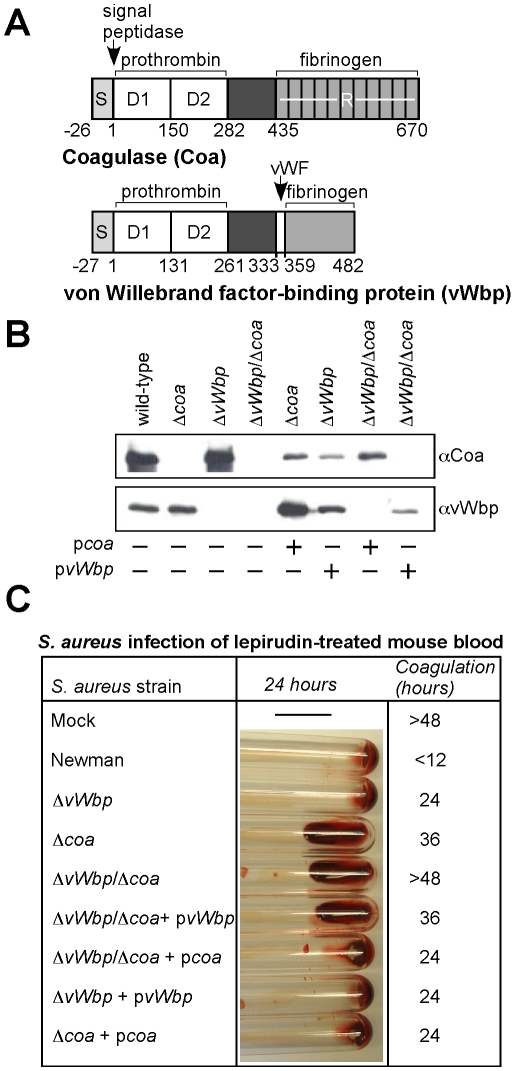
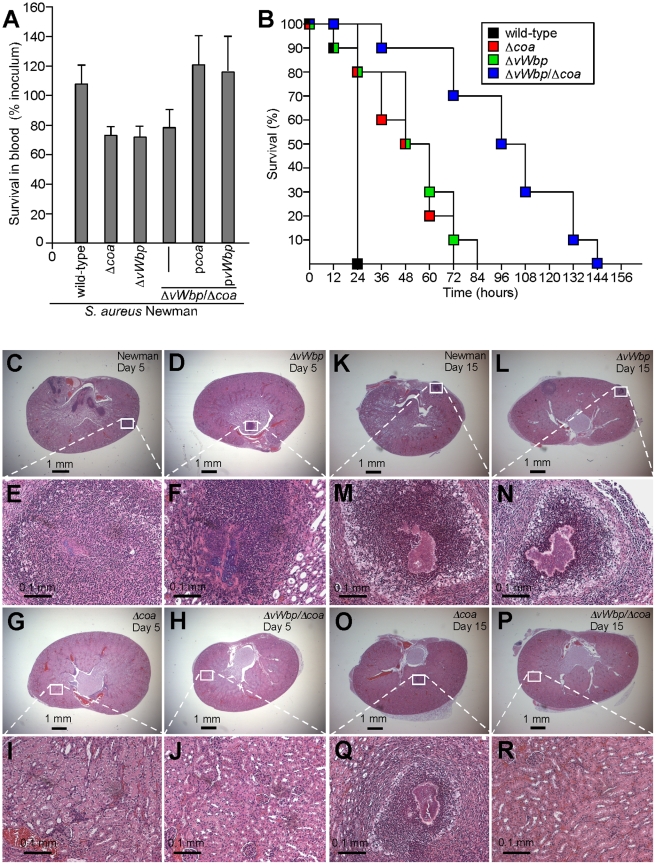
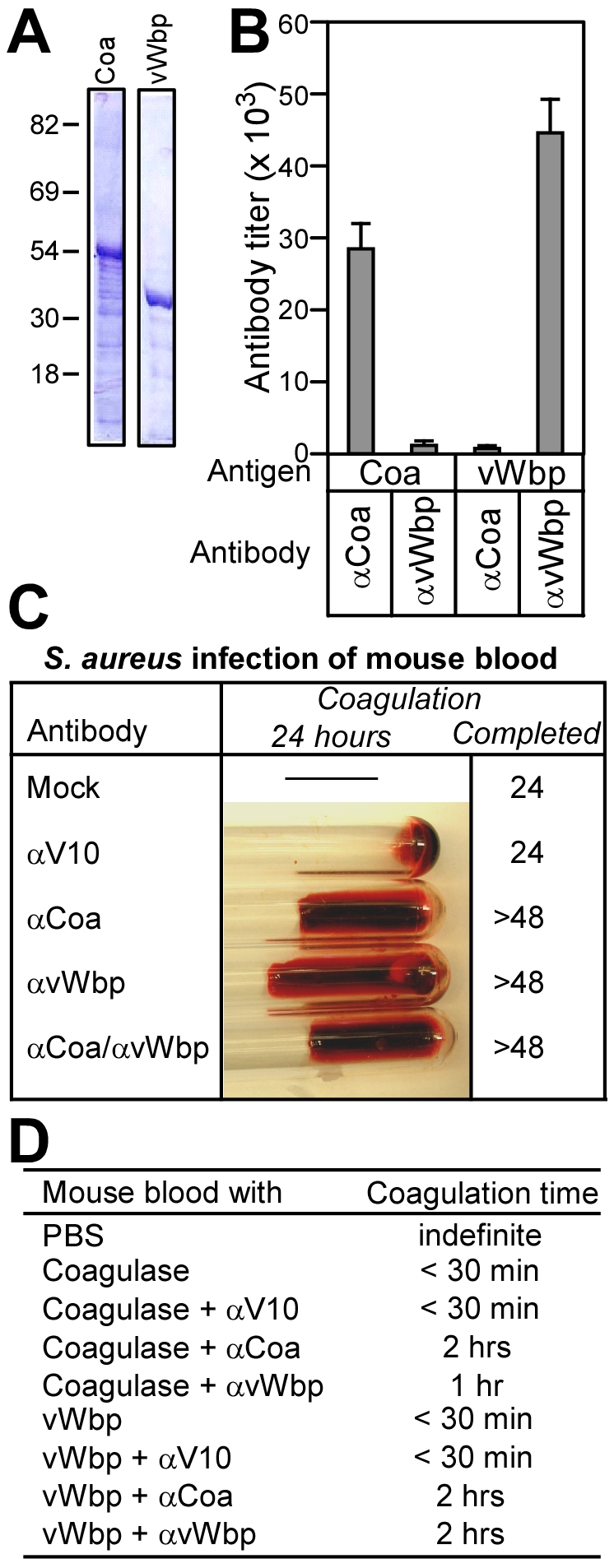
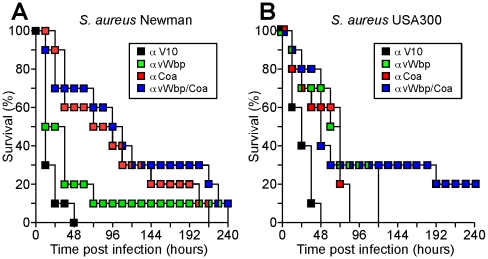
The bacterial pathogen Staphylococcus aureus seeds abscesses in host tissues to replicate at the center of these lesions, protected from host immune cells via a pseudocapsule. Using histochemical staining, we identified prothrombin and fibrin within abscesses and pseudocapsules. S. aureus secretes two clotting factors, coagulase (Coa) and von Willebrand factor binding protein (vWbp). We report here that Coa and vWbp together are required for the formation of abscesses. Coa and vWbp promote the non-proteolytic activation of prothrombin and cleavage of fibrinogen, reactions that are inhibited with specific antibody against each of these molecules. Coa and vWbp specific antibodies confer protection against abscess formation and S. aureus lethal bacteremia, suggesting that coagulases function as protective antigens for a staphylococcal vaccine.
细菌病原体金黄色葡萄球菌在宿主组织中形成脓肿,在这些病变的中心进行复制,通过假包膜免受宿主免疫细胞的侵害。我们使用组织化学染色在脓肿和假包膜中鉴定了凝血酶原和纤维蛋白。金黄色葡萄球菌分泌两种凝血因子,凝固酶(Coa)和血管性血友病因子结合蛋白(vWbp)。我们在这里报告,Coa 和 vWbp 一起是脓肿形成所必需的。Coa 和 vWbp 促进凝血酶原的非蛋白水解激活和纤维蛋白原的裂解,这些反应被针对这两种分子的特异性抗体抑制。Coa 和 vWbp 的特异性抗体赋予对抗脓肿形成和金黄色葡萄球菌致死性菌血症的保护作用,这表明凝固酶作为葡萄球菌疫苗的保护性抗原发挥作用。