Department of Thoracic and Cardiovascular Surgery, The University of Texas M. D. Anderson Cancer Center, Houston, Texas, United States of America.
PLoS One. 2010 Aug 5;5(8):e11994. doi: 10.1371/journal.pone.0011994.
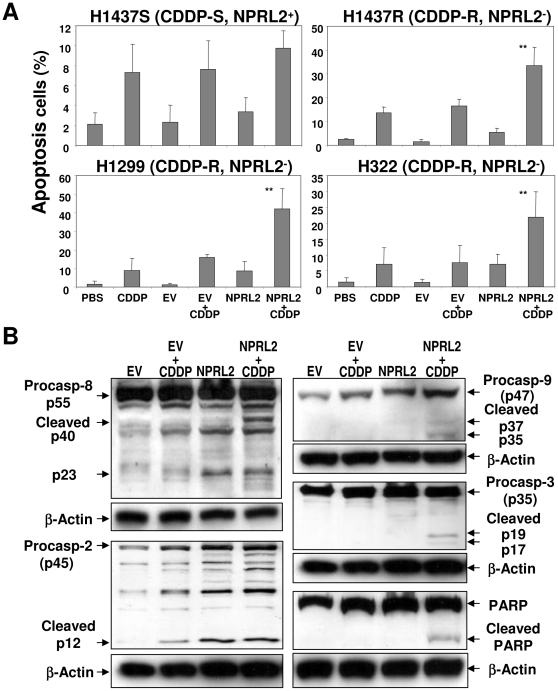
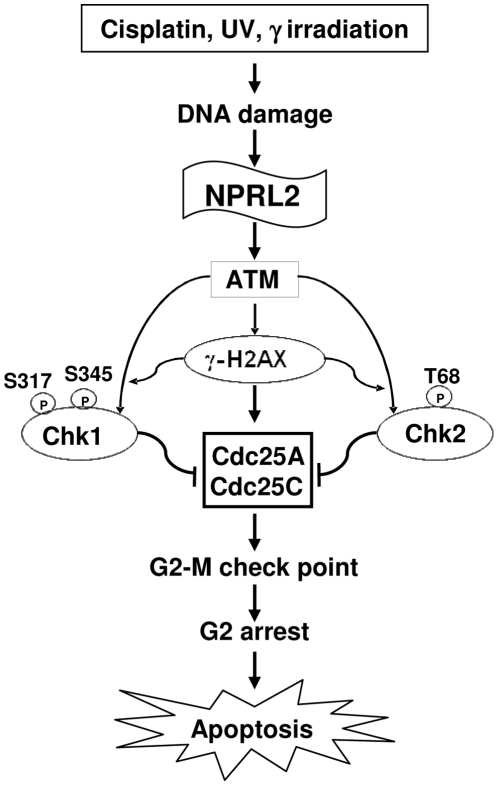
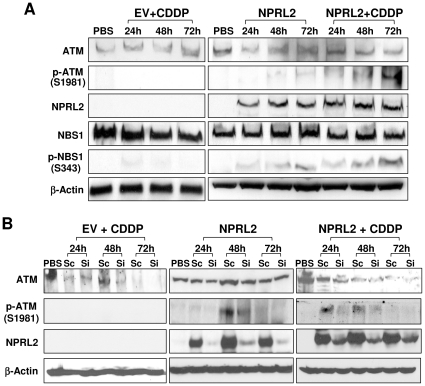
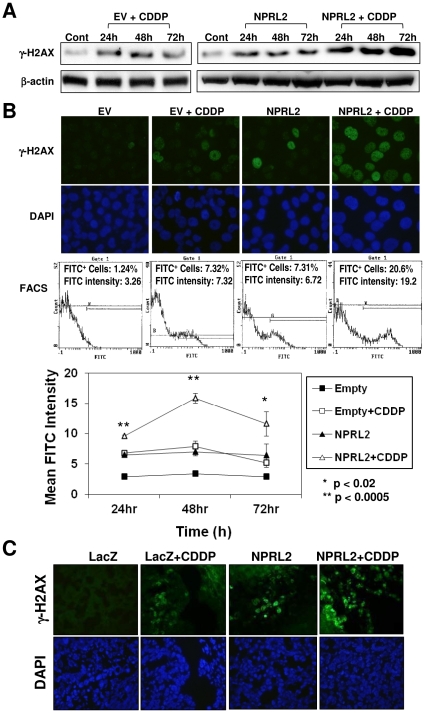
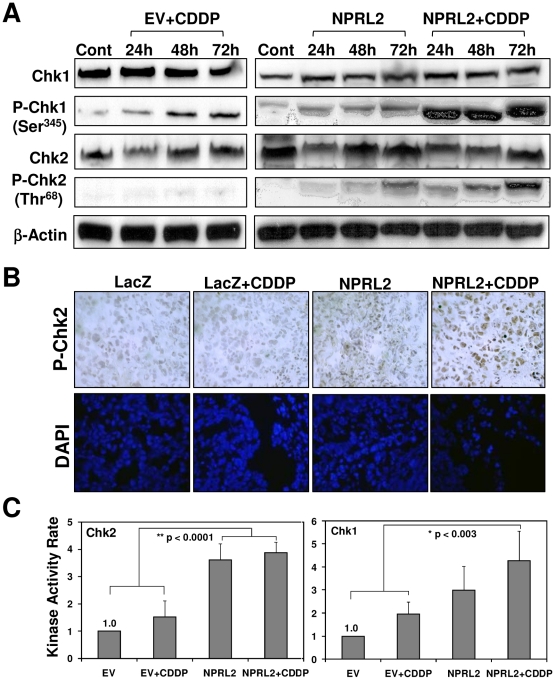
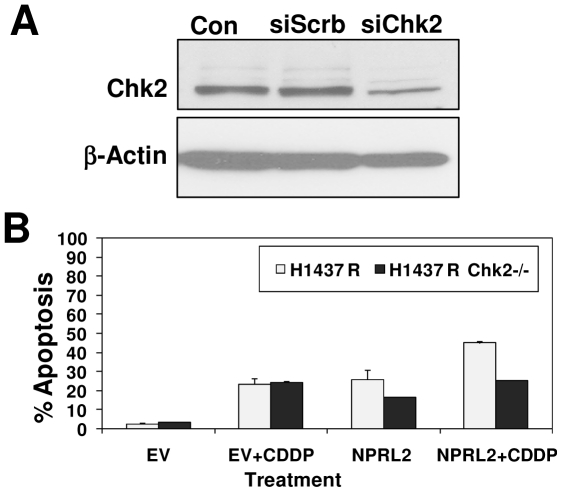
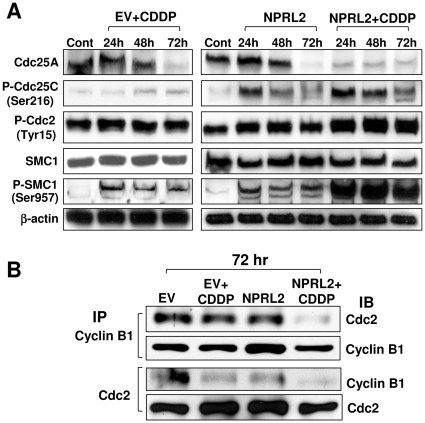
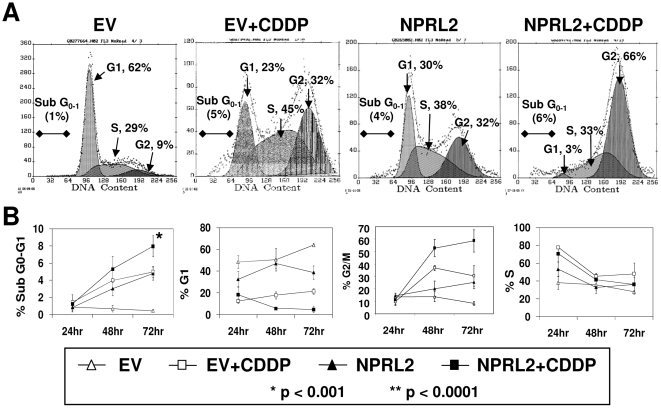
NPRL2, one of the tumor suppressor genes residing in a 120-kb homozygous deletion region of human chromosome band 3p21.3, has a high degree of amino acid sequence homology with the nitrogen permease regulator 2 (NPR2) yeast gene, and mutations of NPRL2 in yeast cells are associated with resistance to cisplatin-mediated cell killing. Previously, we showed that restoration of NPRL2 in NPRL2-negative and cisplatin-resistant cells resensitize lung cancer cells to cisplatin treatment in vitro and in vivo. In this study, we show that sensitization of non-small cell lung cancer (NSCLC) cells to cisplatin by NPRL2 is accomplished through the regulation of key components in the DNA-damage checkpoint pathway. NPRL2 can phosphorylate ataxia telangiectasia mutated (ATM) kinase activated by cisplatin and promote downstream gamma-H2AX formation in vitro and in vivo, which occurs during apoptosis concurrently with the initial appearance of high-molecular-weight DNA fragments. Moreover, this combination treatment results in higher Chk1 and Chk2 kinase activity than does treatment with cisplatin alone and can activate Chk2 in pleural metastases tumor xenograft in mice. Activated Chk1 and Chk2 increase the expression of cell cycle checkpoint proteins, including Cdc25A and Cdc25C, leading to higher levels of G2/M arrest in tumor cells treated with NPRL2 and cisplatin than in tumor cells treated with cisplatin only. Our results therefore suggest that ectopic expression of NPRL2 activates the DNA damage checkpoint pathway in cisplatin-resistant and NPRL2-negative cells; hence, the combination of NPRL2 and cisplatin can resensitize cisplatin nonresponders to cisplatin treatment through the activation of the DNA damage checkpoint pathway, leading to cell arrest in the G2/M phase and induction of apoptosis. The direct implication of this study is that combination treatment with NPRL2 and cisplatin may overcome cisplatin resistance and enhance therapeutic efficacy.
NPRL2 是一个肿瘤抑制基因,位于人类染色体 3p21.3 带的一个 120kb 纯合缺失区域,它与酵母基因氮渗透调节因子 2(NPR2)有高度的氨基酸序列同源性,酵母细胞 NPRL2 的突变与顺铂介导的细胞杀伤抗性有关。以前,我们已经表明,在 NPRL2 阴性和顺铂耐药的细胞中恢复 NPRL2 的表达,可以使肺癌细胞对顺铂治疗在体外和体内重新敏感。在这项研究中,我们表明,NPRL2 通过调节 DNA 损伤检查点途径中的关键成分使非小细胞肺癌(NSCLC)细胞对顺铂敏感。NPRL2 可以磷酸化顺铂激活的共济失调毛细血管扩张突变(ATM)激酶,并在体外和体内促进下游 γ-H2AX 的形成,这发生在凋亡的同时伴随着高分子量 DNA 片段的最初出现。此外,与单独用顺铂处理相比,这种联合治疗可导致更高的 Chk1 和 Chk2 激酶活性,并能在小鼠胸膜转移肿瘤异种移植物中激活 Chk2。激活的 Chk1 和 Chk2 增加细胞周期检查点蛋白的表达,包括 Cdc25A 和 Cdc25C,导致用 NPRL2 和顺铂处理的肿瘤细胞比只用顺铂处理的肿瘤细胞有更高水平的 G2/M 期阻滞。因此,我们的结果表明,NPRL2 的异位表达在顺铂耐药和 NPRL2 阴性细胞中激活 DNA 损伤检查点途径;因此,NPRL2 与顺铂的联合治疗可以通过激活 DNA 损伤检查点途径使顺铂无应答者对顺铂治疗重新敏感,导致细胞在 G2/M 期停滞,并诱导细胞凋亡。本研究的直接意义是,NPRL2 与顺铂的联合治疗可能克服顺铂耐药性,提高治疗效果。