Toxicity Assessment Division, Developmental Toxicology Branch, National Health and Environmental Effects Research Laboratory, (MD-67), Office of Research and Development, US Environmental Protection Agency, Research Triangle Park, NC 27711, USA.
PPAR Res. 2010;2010. doi: 10.1155/2010/690907. Epub 2010 Jul 26.
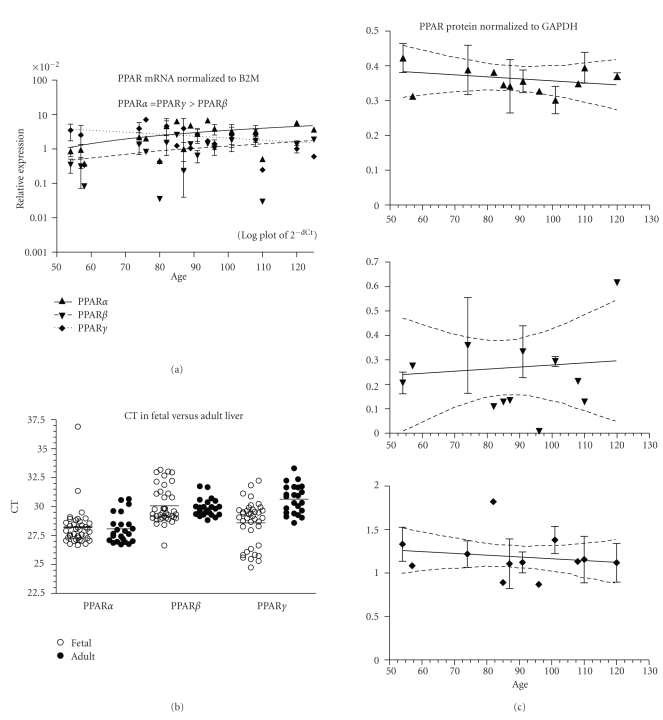
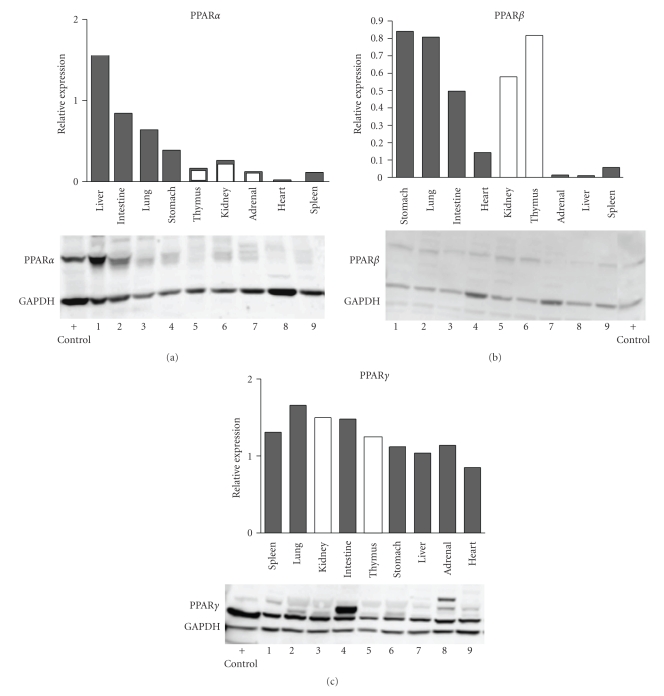
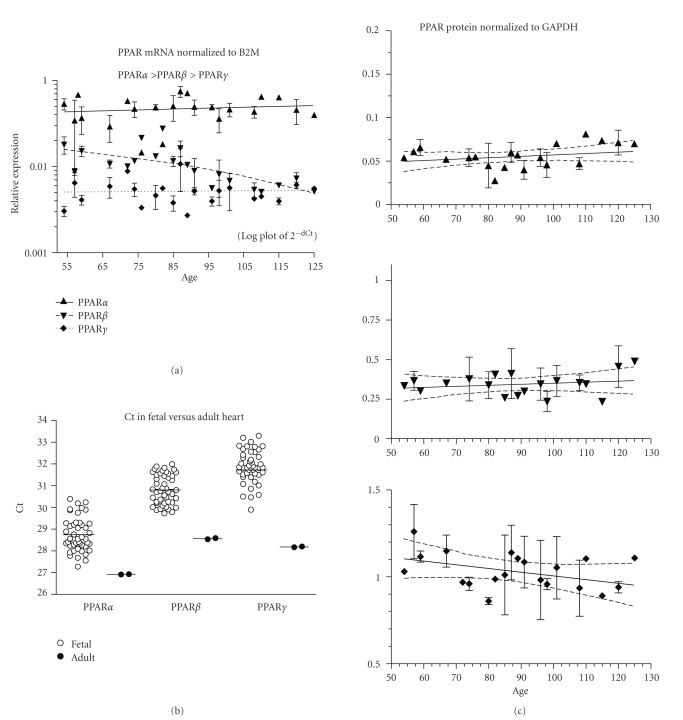
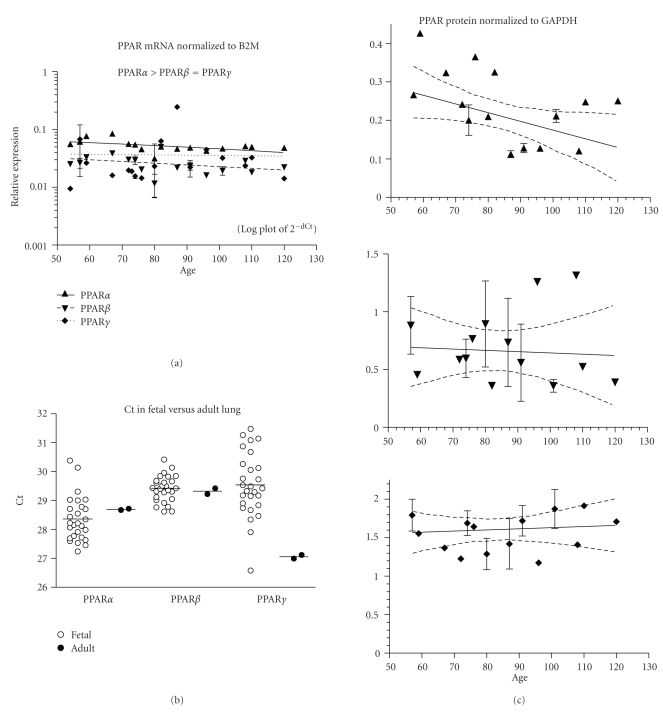
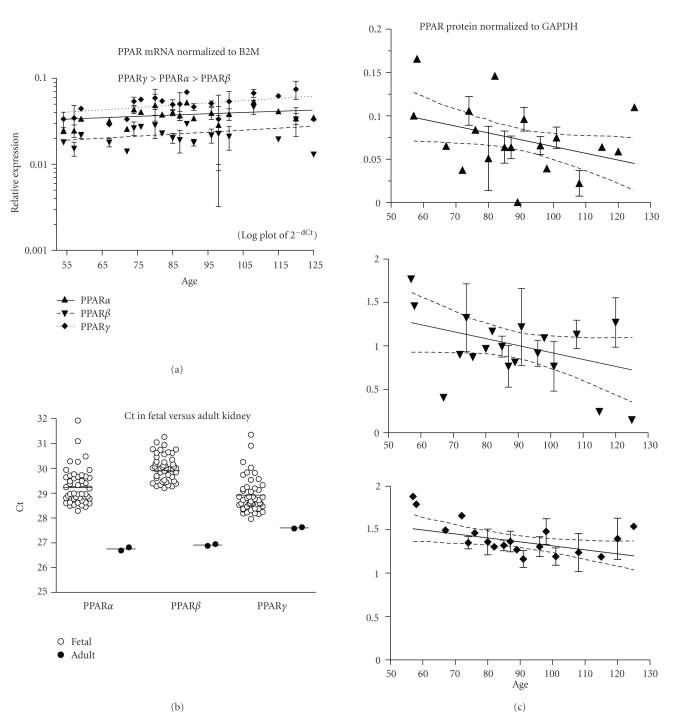
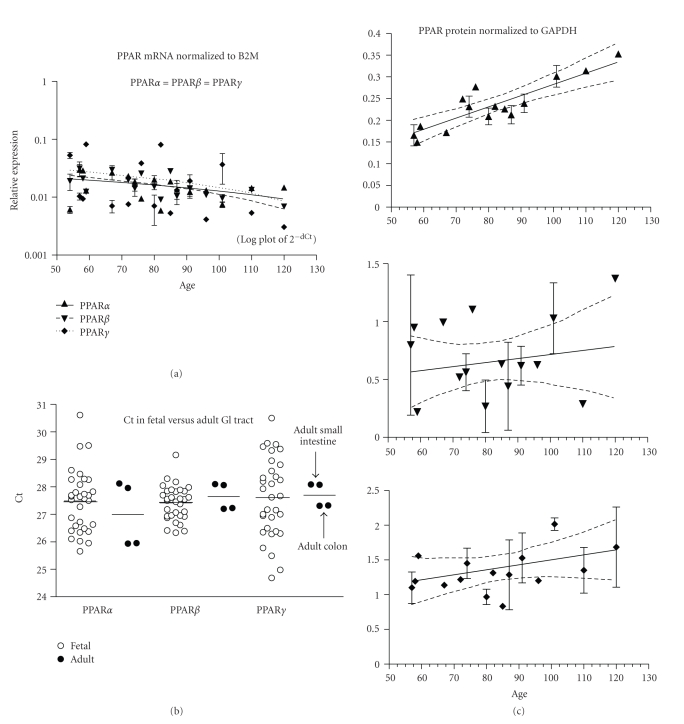
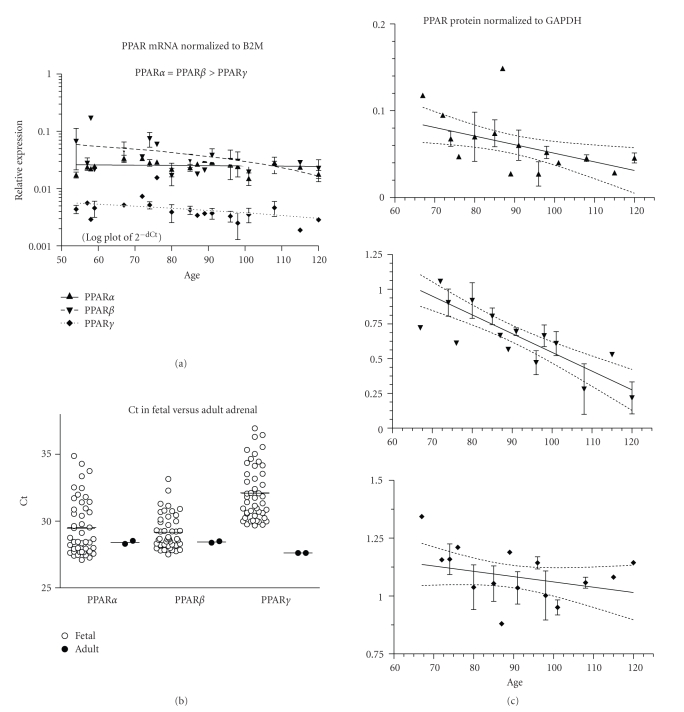
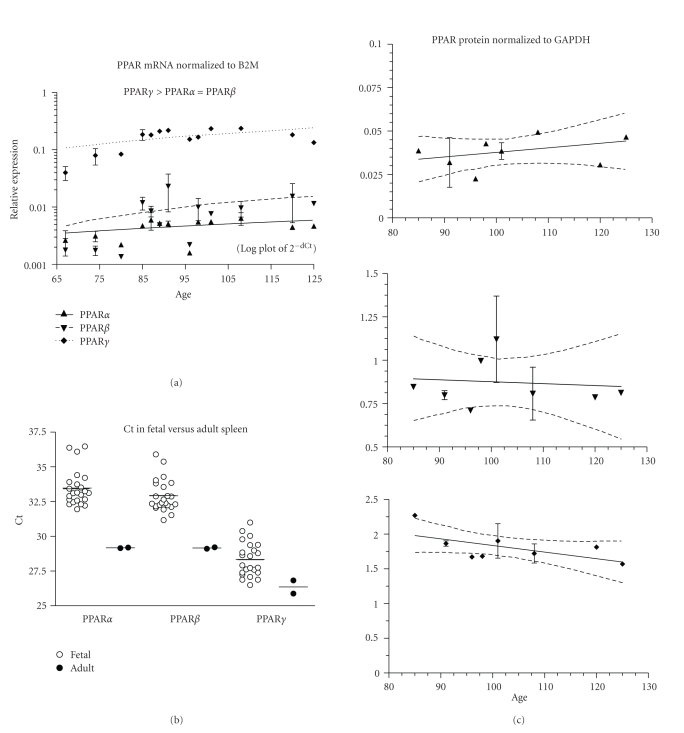
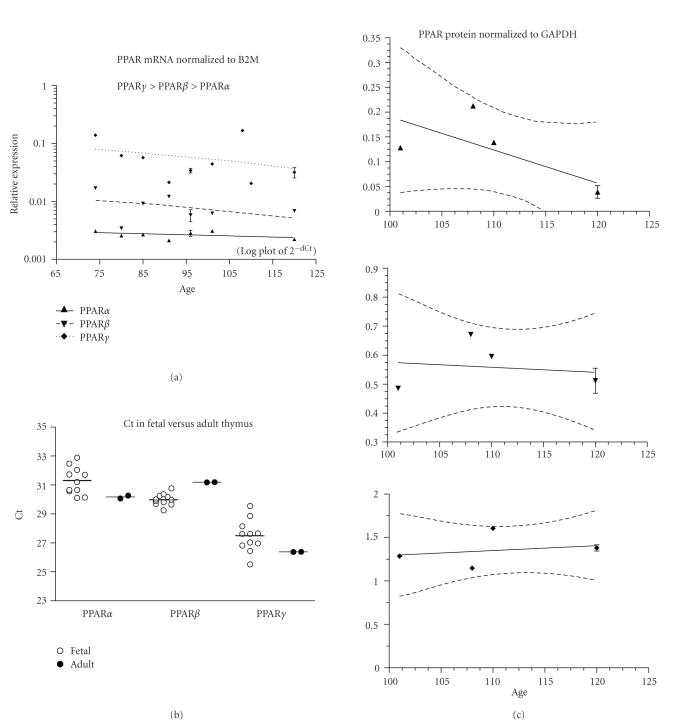
Peroxisome proliferator-activated receptors (PPARs) regulate lipid and glucose homeostasis, are targets of pharmaceuticals, and are also activated by environmental contaminants. Almost nothing is known about expression of PPARs during human fetal development. This study examines expression of PPARalpha, beta, and gamma mRNA and protein in human fetal tissues. With increasing fetal age, mRNA expression of PPARalpha and beta increased in liver, but PPARbeta decreased in heart and intestine, and PPARgamma decreased in adrenal. Adult and fetal mean expression of PPARalpha, beta, and gamma mRNA did not differ in intestine, but expression was lower in fetal stomach and heart. PPARalpha and beta mRNA in kidney and spleen, and PPARgamma mRNA in lung and adrenal were lower in fetal versus adult. PPARgamma in liver and PPARbeta mRNA in thymus were higher in fetal versus adult. PPARalpha protein increased with fetal age in intestine and decreased in lung, kidney, and adrenal. PPARbeta protein in adrenal and PPARgamma in kidney decreased with fetal age. This study provides new information on expression of PPAR subtypes during human development and will be important in evaluating the potential for the developing human to respond to PPAR environmental or pharmaceutical agonists.
过氧化物酶体增殖物激活受体(PPARs)调节脂质和葡萄糖稳态,是药物的靶点,也被环境污染物激活。几乎不知道 PPARs 在人类胎儿发育过程中的表达情况。本研究检测了人类胎儿组织中 PPARalpha、beta 和 gamma mRNA 和蛋白的表达。随着胎儿年龄的增长,肝中 PPARalpha 和 beta 的 mRNA 表达增加,但心和肠中 PPARbeta 减少,肾上腺中 PPARgamma 减少。肠中 PPARalpha、beta 和 gamma mRNA 的成人和胎儿平均表达没有差异,但在胎儿胃和心脏中表达较低。肾和脾中的 PPARalpha 和 beta mRNA,以及肺和肾上腺中的 PPARgamma mRNA 在胎儿中均低于成人。肝中的 PPARgamma 和胸腺中的 PPARbeta mRNA 在胎儿中高于成人。肠中 PPARalpha 蛋白随胎儿年龄增加而增加,肺、肾和肾上腺中则减少。肾上腺中的 PPARbeta 蛋白和肾中的 PPARgamma 蛋白随胎儿年龄减少。本研究提供了人类发育过程中 PPAR 亚型表达的新信息,对于评估发育中的人类对 PPAR 环境或药物激动剂的反应潜力将非常重要。