Department of Microbiology and Immunology, University of Melbourne, Parkville, Australia.
PLoS Pathog. 2010 Aug 12;6(8):e1001039. doi: 10.1371/journal.ppat.1001039.
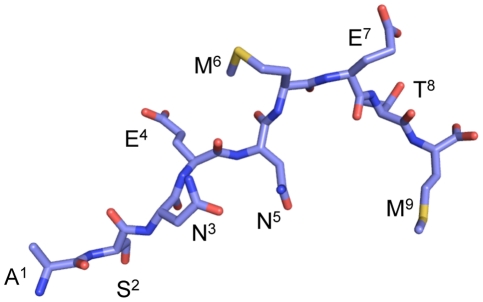
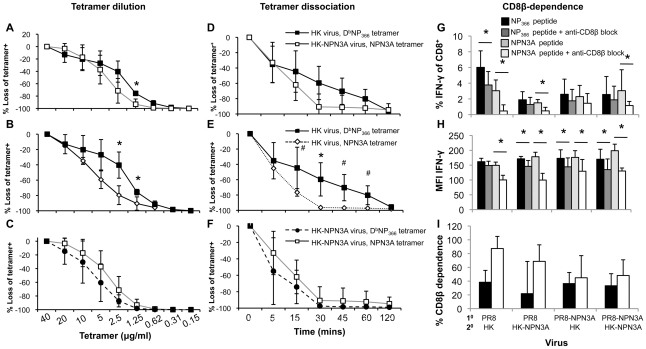
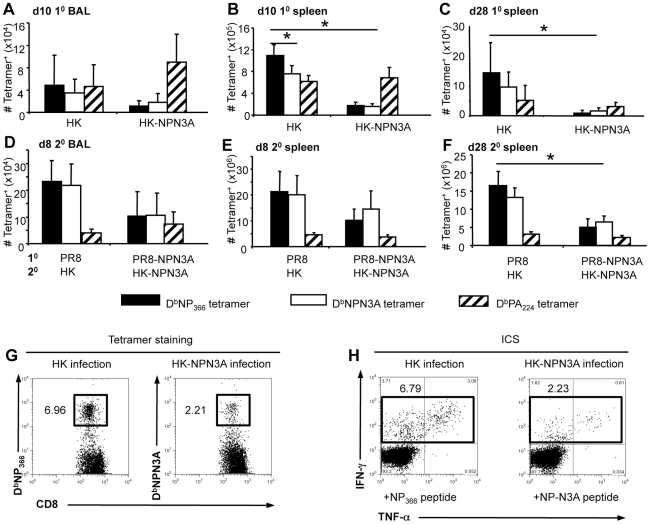
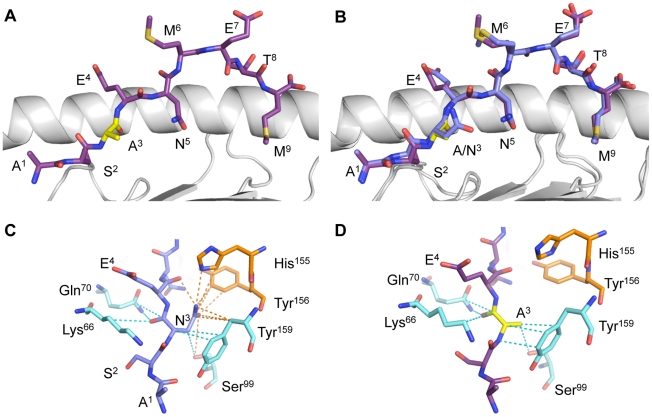
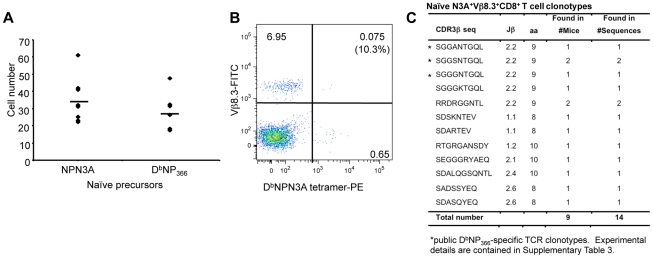
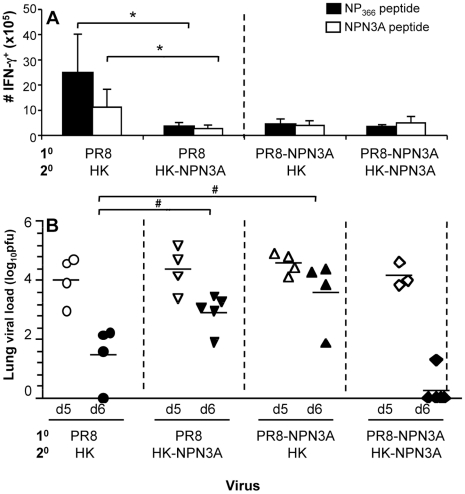
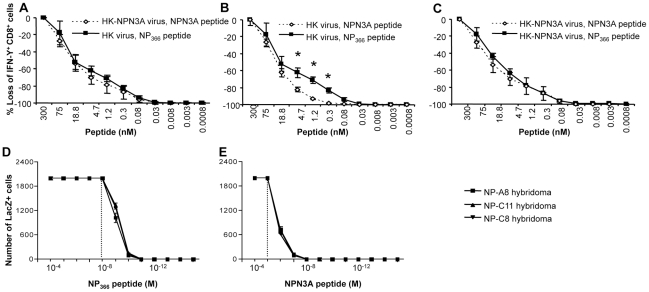
Emergence of a new influenza strain leads to a rapid global spread of the virus due to minimal antibody immunity. Pre-existing CD8(+) T-cell immunity directed towards conserved internal viral regions can greatly ameliorate the disease. However, mutational escape within the T cell epitopes is a substantial issue for virus control and vaccine design. Although mutations can result in a loss of T cell recognition, some variants generate cross-reactive T cell responses. In this study, we used reverse genetics to modify the influenza NP(336-374) peptide at a partially-solvent exposed residue (N->A, NPN3A mutation) to assess the availability, effectiveness and mechanism underlying influenza-specific cross-reactive T cell responses. The engineered virus induced a diminished CD8(+) T cell response and selected a narrowed T cell receptor (TCR) repertoire within two V beta regions (V beta 8.3 and V beta 9). This can be partially explained by the H-2D(b)NPN3A structure that showed a loss of several contacts between the NPN3A peptide and H-2D(b), including a contact with His155, a position known to play an important role in mediating TCR-pMHC-I interactions. Despite these differences, common cross-reactive TCRs were detected in both the naïve and immune NPN3A-specific TCR repertoires. However, while the NPN3A epitope primes memory T-cells that give an equivalent recall response to the mutant or wild-type (wt) virus, both are markedly lower than wt->wt challenge. Such decreased CD8(+) responses elicited after heterologous challenge resulted in delayed viral clearance from the infected lung. Furthermore, mice first exposed to the wt virus give a poor, low avidity response following secondary infection with the mutant. Thus, the protective efficacy of cross-reactive CD8(+) T cells recognising mutant viral epitopes depend on peptide-MHC-I structural interactions and functional avidity. Our study does not support vaccine strategies that include immunization against commonly selected cross-reactive variants with mutations at partially-solvent exposed residues that have characteristics comparable to NPN3A.
新流感株的出现由于抗体免疫作用极小而导致病毒迅速在全球范围内传播。针对保守的内部病毒区域的预先存在的 CD8(+) T 细胞免疫可以极大地改善疾病。然而,T 细胞表位中的突变逃逸是病毒控制和疫苗设计的一个重大问题。尽管突变会导致 T 细胞识别丧失,但某些变体产生了交叉反应性 T 细胞反应。在这项研究中,我们使用反向遗传学方法修饰流感 NP(336-374)肽在部分溶剂暴露的残基处(N->A,NPN3A 突变),以评估流感特异性交叉反应性 T 细胞反应的可用性、有效性和机制。工程病毒诱导的 CD8(+) T 细胞反应减弱,并在两个 V beta 区域(V beta 8.3 和 V beta 9)中选择了更窄的 T 细胞受体(TCR)库。这可以部分解释为 H-2D(b)NPN3A 结构,其显示出 NPN3A 肽与 H-2D(b)之间的几个接触丢失,包括与 His155 的接触,该位置已知在介导 TCR-pMHC-I 相互作用中发挥重要作用。尽管存在这些差异,但在幼稚和免疫 NPN3A 特异性 TCR 库中均检测到常见的交叉反应性 TCR。然而,尽管 NPN3A 表位引发记忆 T 细胞对突变体或野生型(wt)病毒产生等效的回忆反应,但两者均明显低于 wt->wt 挑战。异源挑战后引发的这种 CD8(+) 反应的减少导致感染肺中病毒清除延迟。此外,首先暴露于 wt 病毒的小鼠在第二次感染突变体后反应不佳,亲和力低。因此,识别突变病毒表位的交叉反应性 CD8(+) T 细胞的保护效力取决于肽-MHC-I 结构相互作用和功能亲和力。我们的研究不支持包括针对具有类似于 NPN3A 特征的部分溶剂暴露残基的常见选择的交叉反应性变体进行免疫的疫苗策略。