Institute for Clinical Chemistry, University Hospital Zurich and Center for Integrative Human Physiology, University of Zurich, Zurich, Switzerland.
Lipids Health Dis. 2010 Aug 16;9:84. doi: 10.1186/1476-511X-9-84.
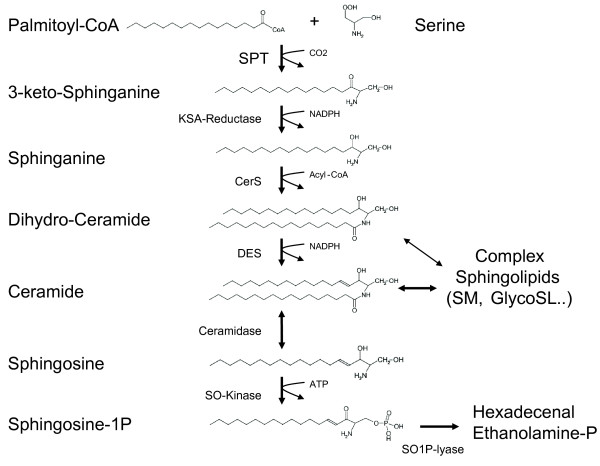
Sphingoid bases are formed from the precursors L-serine and palmitoyl-CoA-a reaction which is catalyzed by the serine-palmitoyltransferase (SPT). SPT metabolizes, besides palmitoyl-CoA also other acyl-CoAs but shows also variability towards the use of other amino acid substrates. The enzyme is also able to metabolize alanine, which results in the formation of an atypical deoxy-sphingoid base (DSB). This promiscuous activity is greatly increased in the case of the sensory neuropathy HSAN1, and pathologically elevated DSB levels have been identified as the cause of this disease. Clinically, HSAN1 shows a pronounced similarity to the diabetic sensory neuropathy (DSN), which is the most common chronic complication of diabetes mellitus. Since serine and alanine metabolism is functionally linked to carbohydrate metabolism by their precursors 3-phosphoglycerate and pyruvate, we were interested to see whether the levels of certain sphingoid base metabolites are altered in patients with diabetes.
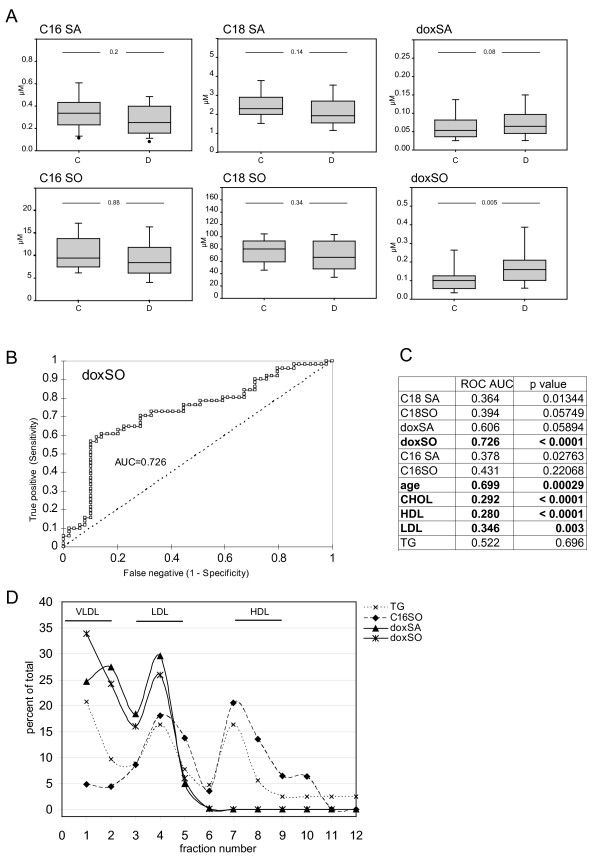
In a case-control study we compared plasma sphingoid base levels between healthy and diabetic individuals. DSB levels were higher in the diabetic group whereas C16 and C18 sphingoid bases were not significantly different. Plasma serine, but not alanine levels were lower in the diabetic group. A subsequent lipoprotein fractionation showed that the DSBs are primarily present in the LDL and VLDL fraction.
Our results suggest that DSBs are a novel category of plasma biomarkers in diabetes which reflect functional impairments of carbohydrate metabolism. Furthermore, elevated DSB levels as we see them in diabetic patients might also contribute to the progression of the diabetic sensory neuropathy, the most frequent complication of diabetes.
神经鞘氨醇碱基是由 L-丝氨酸和棕榈酰辅酶 A 前体形成的——这一反应由丝氨酸棕榈酰转移酶(SPT)催化。SPT 除了棕榈酰辅酶 A 之外还代谢其他酰基辅酶 A,但对其他氨基酸底物的使用也表现出可变性。该酶还能够代谢丙氨酸,导致形成非典型脱氧神经鞘氨醇碱基(DSB)。这种混杂活性在感觉神经病 HSAN1 中大大增加,并且病理上升高的 DSB 水平已被确定为这种疾病的原因。临床上,HSAN1 与糖尿病感觉神经病(DSN)表现出明显的相似性,DSN 是糖尿病最常见的慢性并发症。由于丝氨酸和丙氨酸代谢通过其前体 3-磷酸甘油酸和丙酮酸与碳水化合物代谢在功能上相关,我们有兴趣了解糖尿病患者中某些神经鞘氨醇碱基代谢物的水平是否发生改变。
在一项病例对照研究中,我们比较了健康人和糖尿病患者之间的血浆神经鞘氨醇碱基水平。糖尿病组的 DSB 水平较高,而 C16 和 C18 神经鞘氨醇碱基没有显著差异。糖尿病组的血浆丝氨酸水平较低,但丙氨酸水平没有差异。随后的脂蛋白分离表明,DSB 主要存在于 LDL 和 VLDL 部分。
我们的结果表明,DSB 是糖尿病中一种新型的血浆生物标志物,反映了碳水化合物代谢的功能障碍。此外,我们在糖尿病患者中看到的升高的 DSB 水平也可能导致糖尿病感觉神经病的进展,这是糖尿病最常见的并发症。