Department of Chemical & Biological Engineering, Princeton University, Princeton, NJ 08544, USA.
Integr Biol (Camb). 2010 Sep;2(9):424-34. doi: 10.1039/c0ib00040j. Epub 2010 Aug 17.
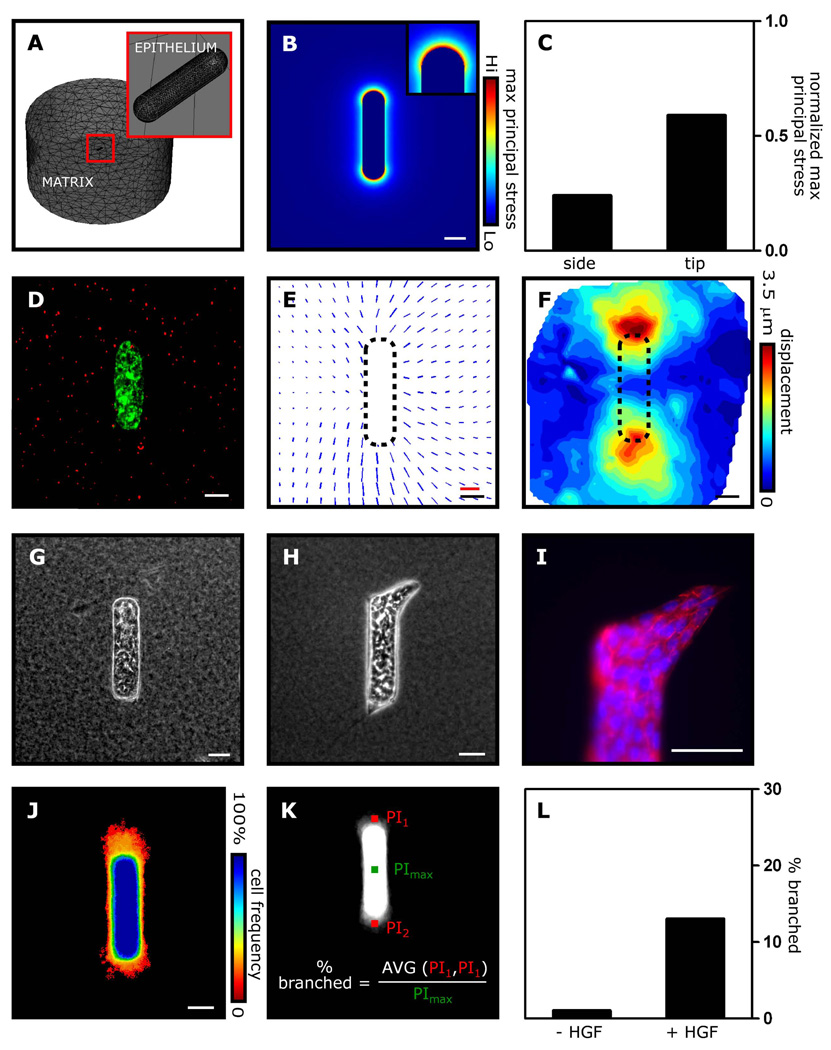
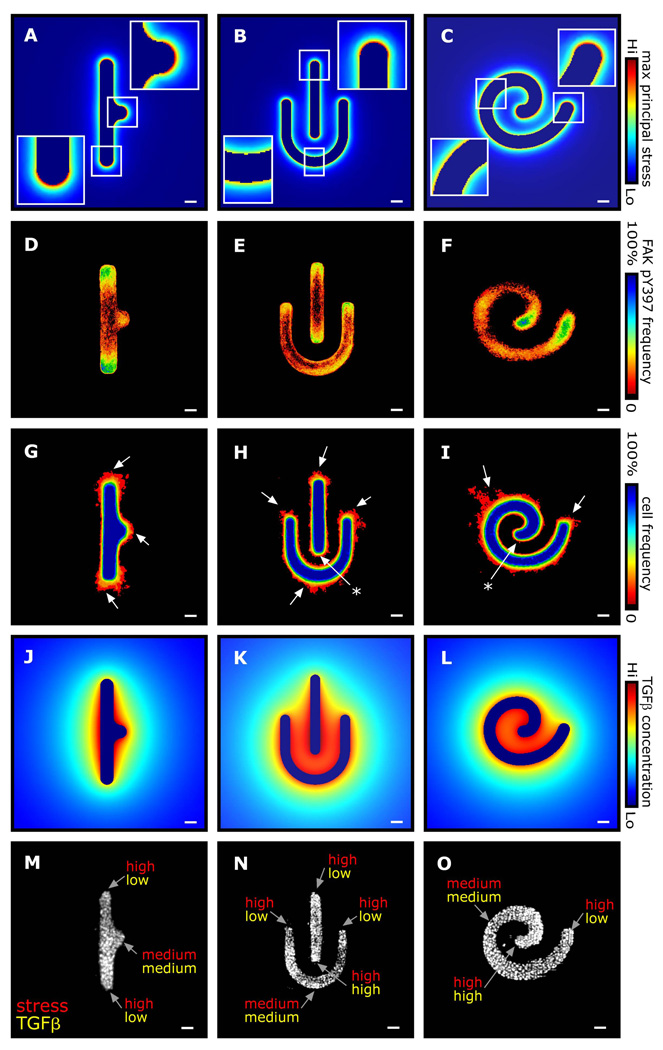
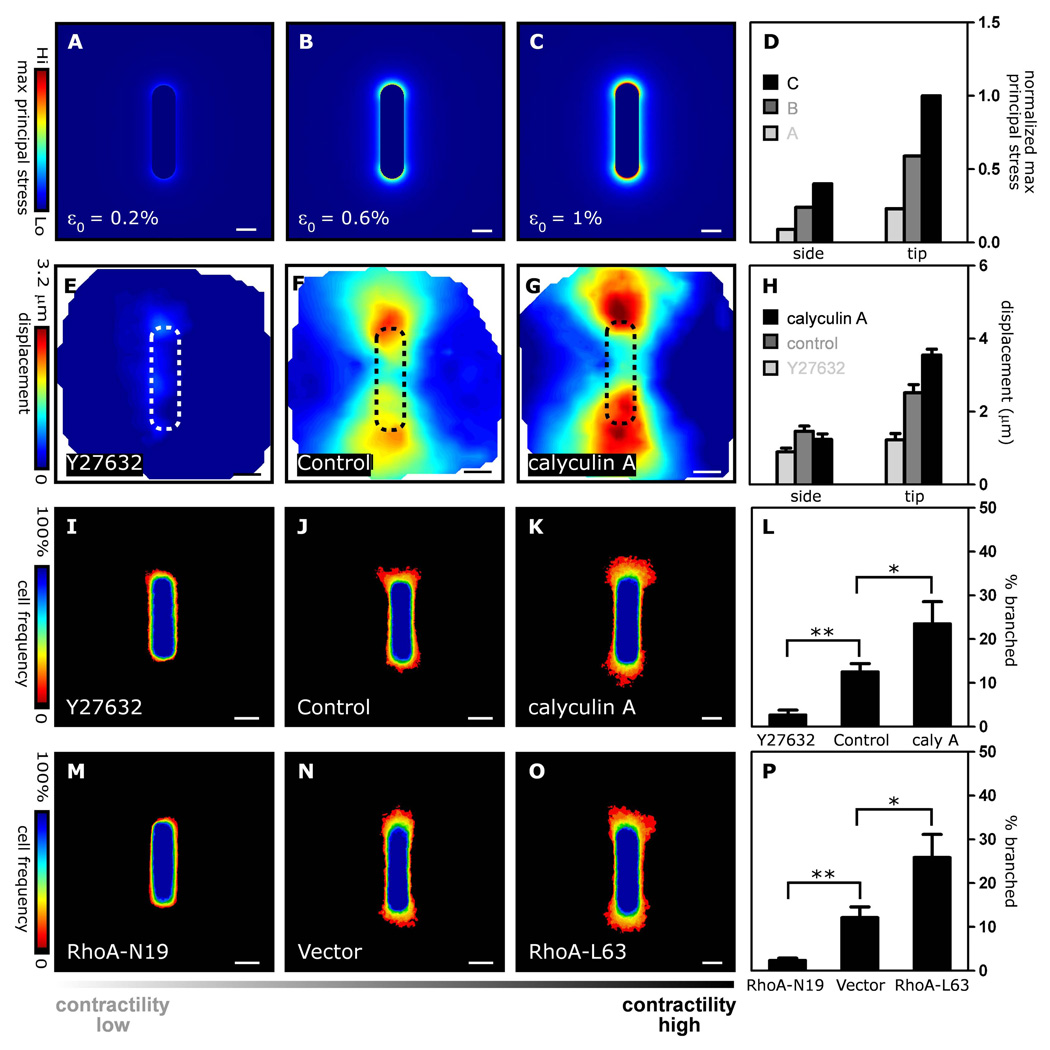
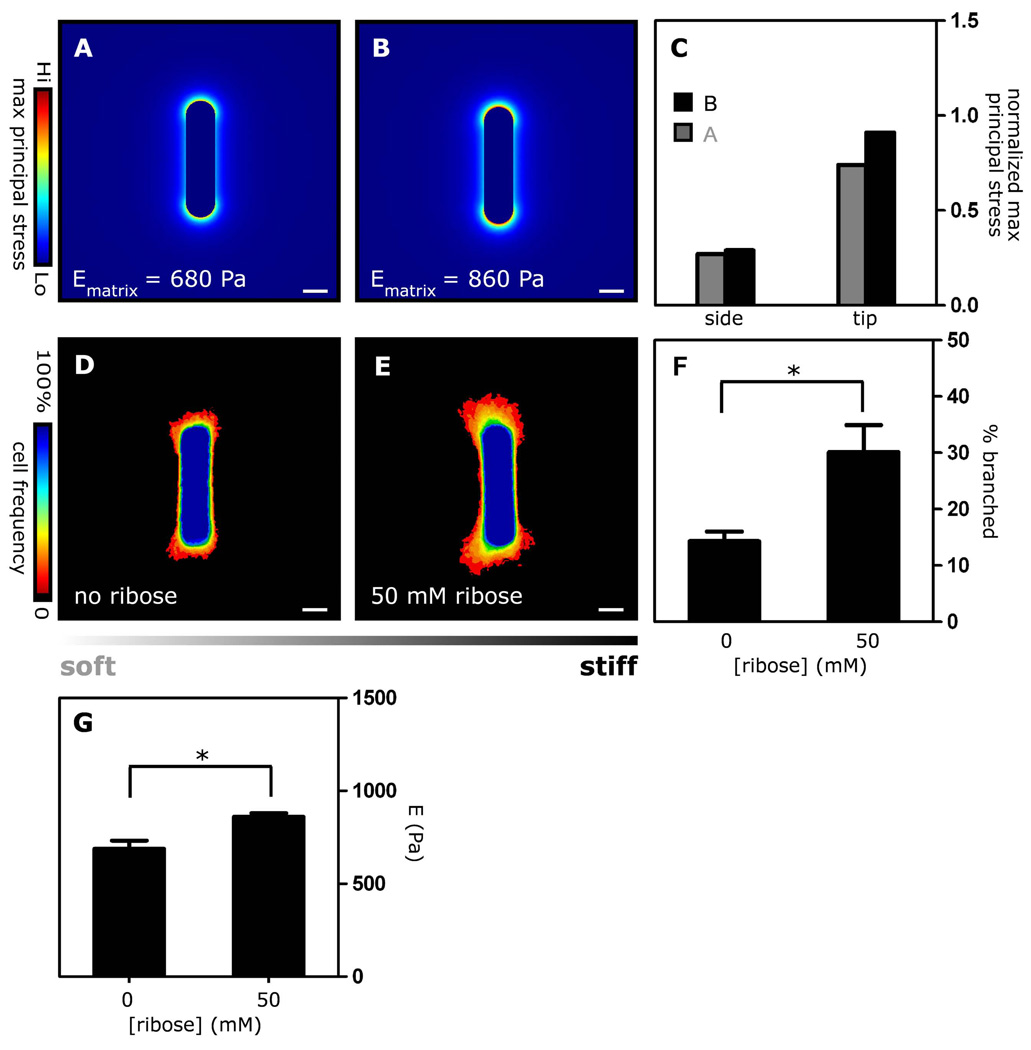
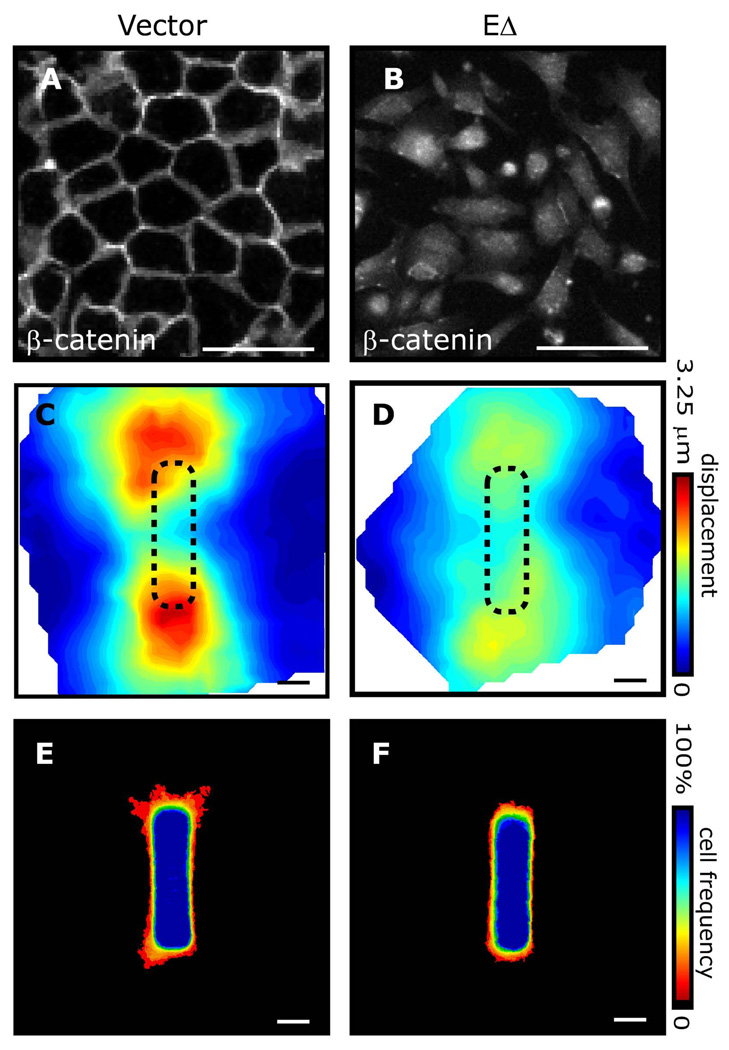
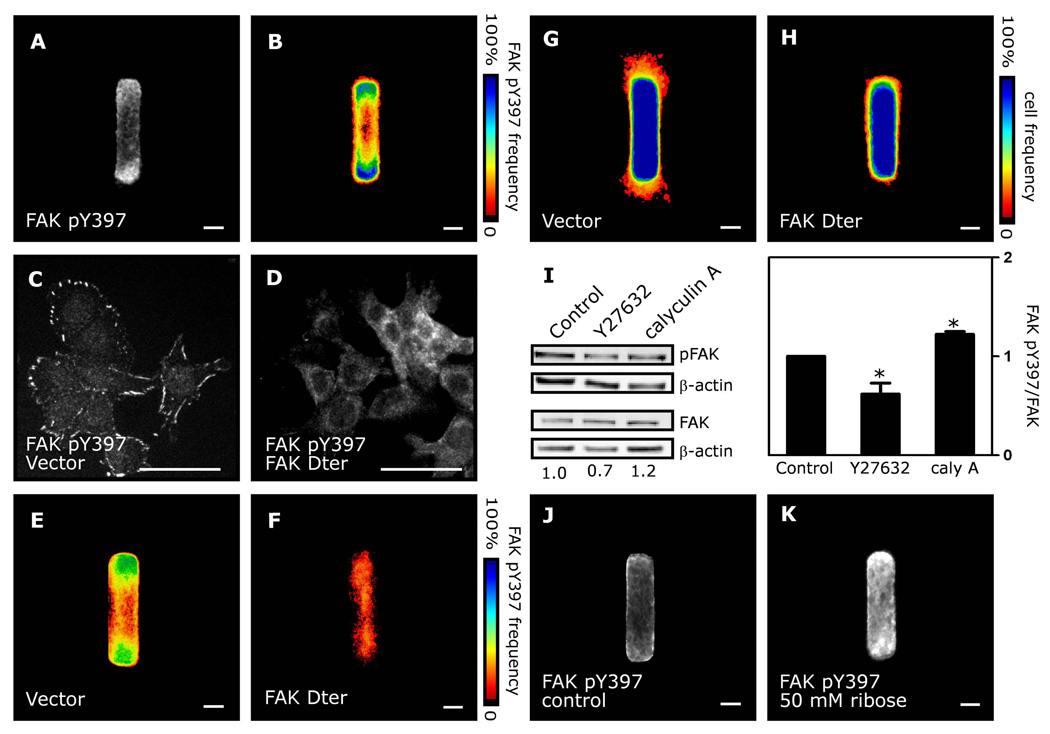
Spatial patterning of cell behaviors establishes the regional differences within tissues that collectively develop branched organs into their characteristic treelike shapes. Here we show that the pattern of branching morphogenesis of three-dimensional (3D) engineered epithelial tissues is controlled in part by gradients of endogenous mechanical stress. We used microfabrication to build model mammary epithelial tissues of defined geometry that branched in a stereotyped pattern when induced with growth factors. Branches initiated from sites of high mechanical stress within the tissues, as predicted numerically and measured directly using 3D traction force microscopy. Branch sites were defined by activation of focal adhesion kinase (FAK), inhibition of which disrupted morphogenesis. Stress, FAK activation, and branching were all altered by manipulating cellular contractility, matrix stiffness, intercellular cohesion and tissue geometry. These data suggest that the pattern and magnitude of mechanical stress across epithelial tissues cooperate with biochemical signals to specify branching pattern.
细胞行为的空间模式在组织内建立了区域差异,这些差异共同将分支器官发展成其特征性的树状形状。在这里,我们表明,三维(3D)工程上皮组织的分支形态发生模式部分受到内源性机械应力梯度的控制。我们使用微制造技术构建了具有明确定义几何形状的模型乳腺上皮组织,当用生长因子诱导时,这些组织会以刻板的模式分支。分支从组织内高机械应力的部位开始,这可以通过数值预测和使用 3D 牵引力显微镜直接测量来确定。分支部位通过粘着斑激酶(FAK)的激活来定义,抑制 FAK 会破坏形态发生。通过操纵细胞收缩性、基质刚度、细胞间黏附和组织几何形状,可改变应力、FAK 激活和分支。这些数据表明,上皮组织中机械应力的模式和幅度与生化信号共同作用,以指定分支模式。