BIOMIN Research Center, Technopark 1, 3430 Tulln, Austria.
Microb Cell Fact. 2010 Aug 18;9:62. doi: 10.1186/1475-2859-9-62.
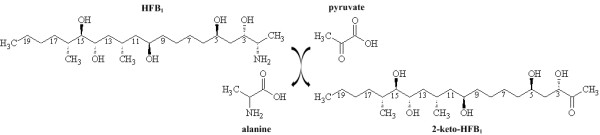
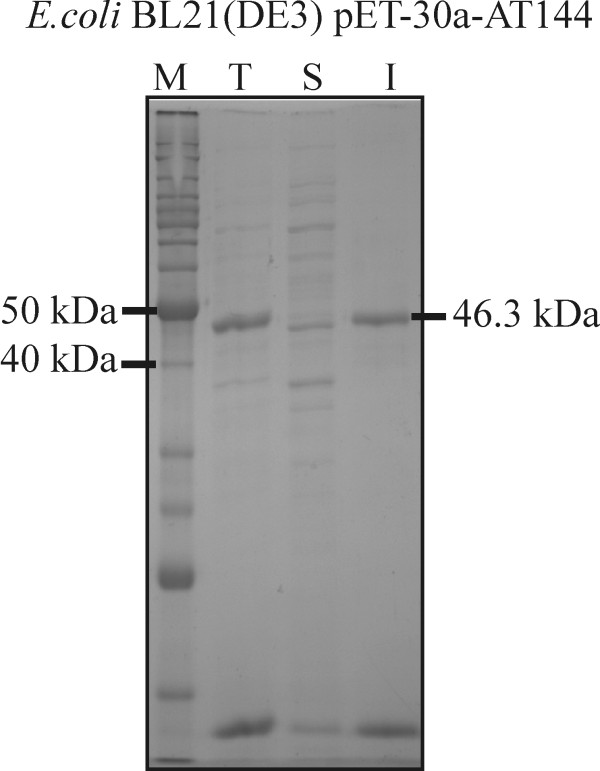
Fumonisin B(1) is a cancerogenic mycotoxin produced by Fusarium verticillioides and other fungi. Sphingopyxis sp. MTA144 can degrade fumonisin B(1), and a key enzyme in the catabolic pathway is an aminotransferase which removes the C2-amino group from hydrolyzed fumonisin B(1). In order to study this aminotransferase with respect to a possible future application in enzymatic fumonisin detoxification, we attempted expression of the corresponding fumI gene in E. coli and purification of the enzyme. Since the aminotransferase initially accumulated in inclusion bodies, we compared the effects of induction level, host strain, expression temperature, solubility enhancers and a fusion partner on enzyme solubility and activity.
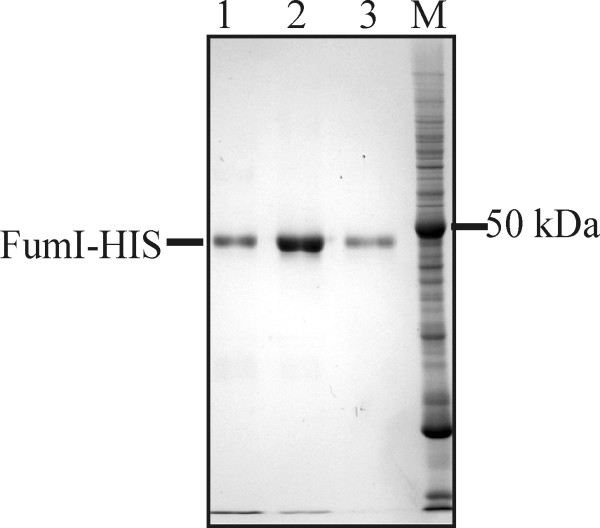
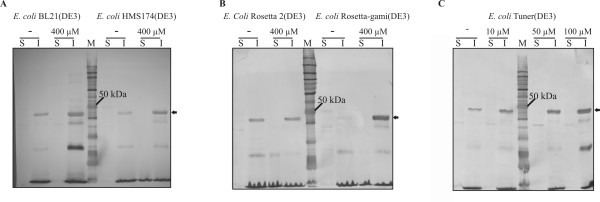
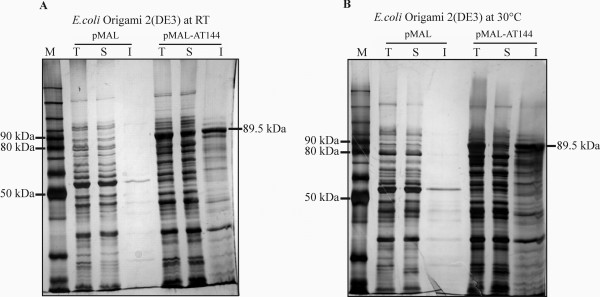
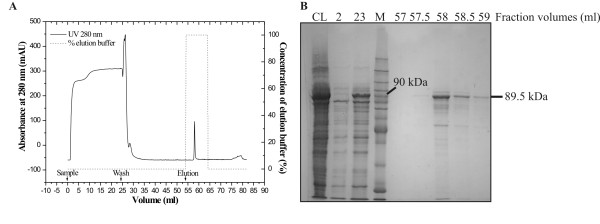
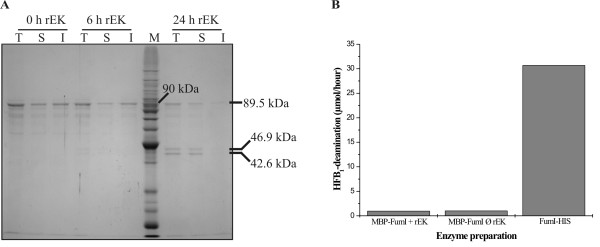
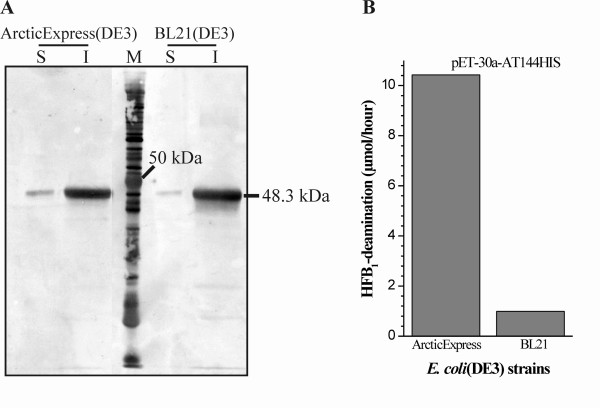
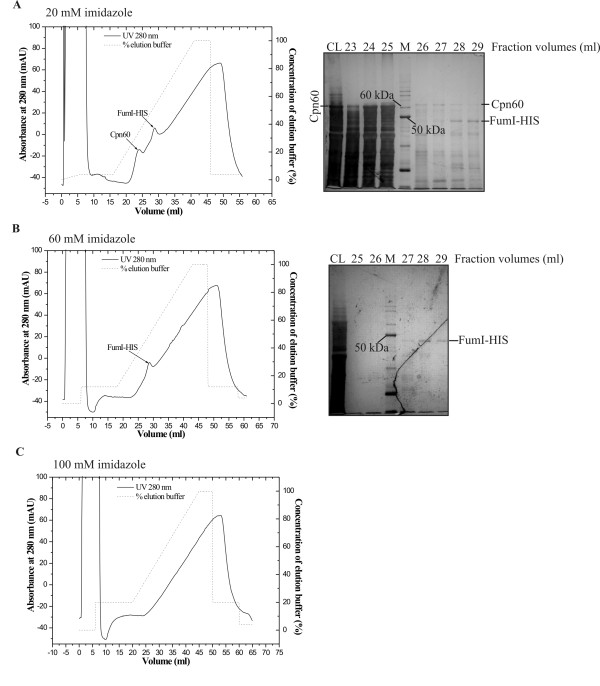
When expressed from a T7 promoter at 30 degrees C, the aminotransferase accumulated invariably in inclusion bodies in DE3 lysogens of the E. coli strains BL21, HMS174, Rosetta 2, Origami 2, or Rosetta-gami. Omission of the isopropyl-beta-D-thiogalactopyranoside (IPTG) used for induction caused a reduction of expression level, but no enhancement of solubility. Likewise, protein production but not solubility correlated with the IPTG concentration in E. coli Tuner(DE3). Addition of the solubility enhancers betaine and sorbitol or the co-enzyme pyridoxal phosphate showed no effect. Maltose-binding protein, used as an N-terminal fusion partner, promoted solubility at 30 degrees C or less, but not at 37 degrees C. Low enzyme activity and subsequent aggregation in the course of purification and cleavage indicated that the soluble fusion protein contained incorrectly folded aminotransferase. Expression in E. coli ArcticExpress(DE3), which co-expresses two cold-adapted chaperonins, at 11 degrees C finally resulted in production of appreciable amounts of active enzyme. Since His tag-mediated affinity purification from this strain was hindered by co-elution of chaperonin, two steps of chromatography with optimized imidazole concentration in the binding buffer were performed to obtain 1.45 mg of apparently homogeneous aminotransferase per liter of expression culture.
We found that only reduction of temperature, but not reduction of expression level or fusion to maltose-binding protein helped to produce correctly folded, active aminotransferase FumI in E. coli. Our results may provide a starting point for soluble expression of related aminotransferases or other aggregation-prone proteins in E. coli.
伏马菌素 B(1)是由串珠镰刀菌和其他真菌产生的致癌霉菌毒素。鞘氨醇单胞菌 MTA144 可以降解伏马菌素 B(1),其代谢途径中的关键酶是一种氨基转移酶,它从水解的伏马菌素 B(1)中去除 C2-氨基基团。为了研究这种氨基转移酶在酶法脱伏马菌素解毒方面的潜在应用,我们试图在大肠杆菌中表达相应的 fumI 基因并纯化该酶。由于氨基转移酶最初在包涵体中积累,因此我们比较了诱导水平、宿主菌株、表达温度、可溶性增强剂和融合伴侣对酶可溶性和活性的影响。
当在 30°C 下由 T7 启动子表达时,氨基转移酶在大肠杆菌菌株 BL21、HMS174、Rosetta 2、Origami 2 或 Rosetta-gami 的 DE3 溶源菌中总是以包涵体的形式积累。省略用于诱导的异丙基-β-D-硫代半乳糖吡喃糖苷(IPTG)会降低表达水平,但不会提高可溶性。同样,蛋白质产量而不是可溶性与大肠杆菌 Tuner(DE3)中的 IPTG 浓度相关。添加可溶性增强剂甜菜碱和山梨醇或辅酶吡哆醛磷酸没有效果。麦芽糖结合蛋白作为 N 端融合伴侣,在 30°C 或更低温度下促进可溶性,但在 37°C 时则不然。在纯化和切割过程中酶活性低且随后聚集表明可溶性融合蛋白含有错误折叠的氨基转移酶。在 11°C 下表达共表达两种冷适应伴侣蛋白的大肠杆菌 ArcticExpress(DE3)最终产生了相当数量的活性酶。由于 His 标签介导的亲和纯化受到伴侣蛋白共洗脱的阻碍,因此进行了两步色谱分离,在结合缓冲液中优化了咪唑浓度,从每升表达培养物中获得了 1.45 毫克明显同质的氨基转移酶。
我们发现,只有降低温度,而不是降低表达水平或融合到麦芽糖结合蛋白,有助于在大肠杆菌中产生正确折叠的、有活性的氨基转移酶 FumI。我们的结果可能为在大肠杆菌中可溶性表达相关氨基转移酶或其他易聚集蛋白提供了起点。