Department of Biology, Universidad de Chile, Santiago, Chile.
Mol Biol Cell. 2010 Oct 15;21(20):3518-28. doi: 10.1091/mbc.E09-08-0709. Epub 2010 Aug 18.
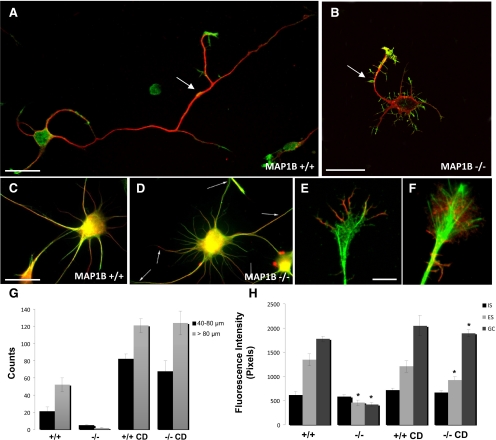
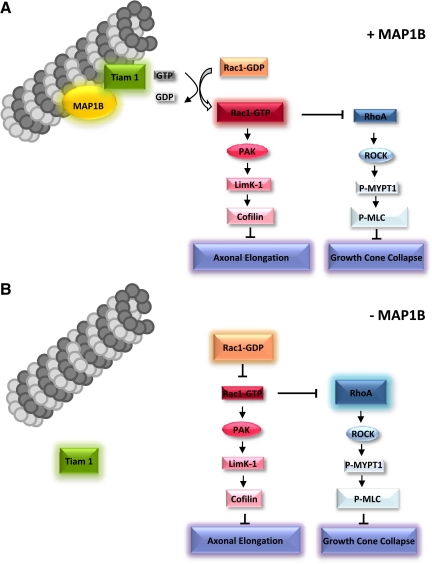
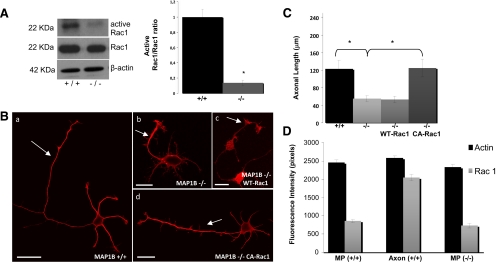
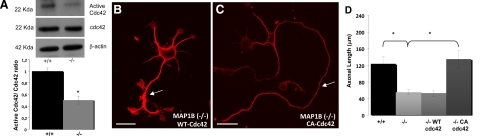
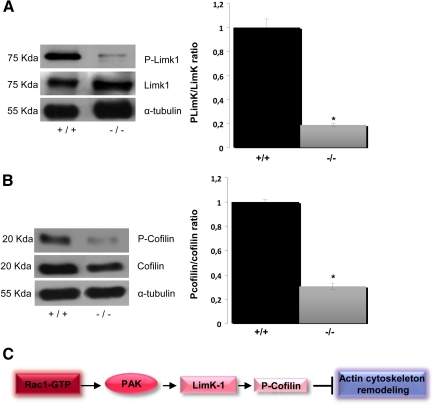
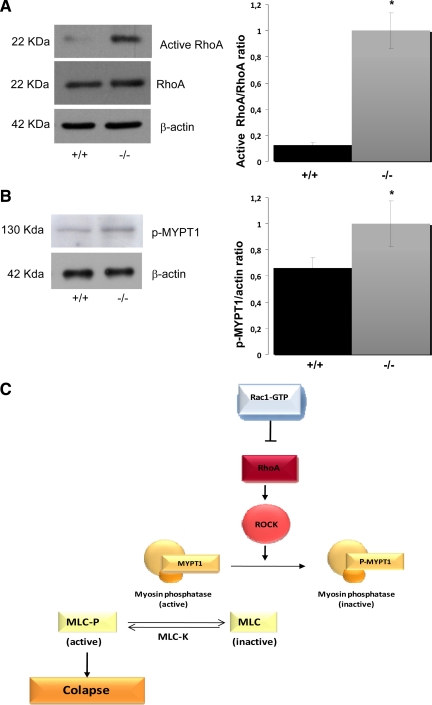
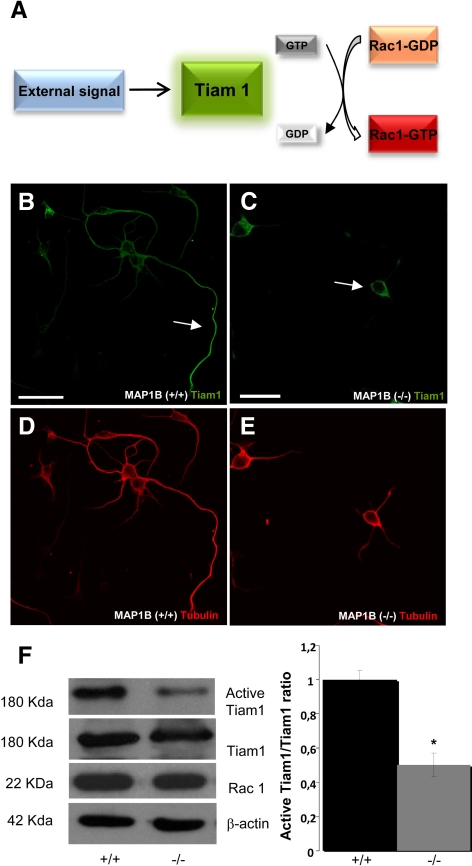
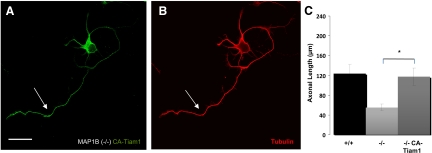
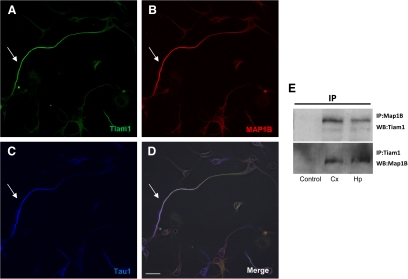
Cultured neurons obtained from MAP1B-deficient mice have a delay in axon outgrowth and a reduced rate of axonal elongation compared with neurons from wild-type mice. Here we show that MAP1B deficiency results in a significant decrease in Rac1 and cdc42 activity and a significant increase in Rho activity. We found that MAP1B interacted with Tiam1, a guanosine nucleotide exchange factor for Rac1. The decrease in Rac1/cdc42 activity was paralleled by decreases in the phosphorylation of the downstream effectors of these proteins, such as LIMK-1 and cofilin. The expression of a constitutively active form of Rac1, cdc42, or Tiam1 rescued the axon growth defect of MAP1B-deficient neurons. Taken together, these observations define a new and crucial function of MAP1B that we show to be required for efficient cross-talk between microtubules and the actin cytoskeleton during neuronal polarization.
从 MAP1B 缺陷型小鼠中获得的培养神经元与野生型小鼠的神经元相比,轴突生长有延迟,轴突伸长速度降低。在这里,我们表明 MAP1B 缺陷导致 Rac1 和 cdc42 活性显著降低,Rho 活性显著增加。我们发现 MAP1B 与 Tiam1 相互作用,Tiam1 是 Rac1 的鸟嘌呤核苷酸交换因子。Rac1/cdc42 活性的降低与这些蛋白质的下游效应物如 LIMK-1 和丝切蛋白的磷酸化水平降低相平行。组成型激活形式的 Rac1、cdc42 或 Tiam1 的表达挽救了 MAP1B 缺陷型神经元的轴突生长缺陷。总之,这些观察结果定义了 MAP1B 的一个新的关键功能,我们表明它在神经元极化过程中微管和肌动蛋白细胞骨架之间的有效交流中是必需的。