State Key Laboratory of Agricultural Microbiology, College of Life Science and Technology, Huazhong Agricultural University, Wuhan, 430070, China.
BMC Microbiol. 2010 Aug 19;10:221. doi: 10.1186/1471-2180-10-221.
Chromium is a toxic heavy metal, which primarily exists in two inorganic forms, Cr(VI) and Cr(III). Chromate [Cr(VI)] is carcinogenic, mutational, and teratogenic due to its strong oxidizing nature. Biotransformation of Cr(VI) to less-toxic Cr(III) by chromate-resistant and reducing bacteria has offered an ecological and economical option for chromate detoxification and bioremediation. However, knowledge of the genetic determinants for chromate resistance and reduction has been limited so far. Our main aim was to investigate chromate resistance and reduction by Bacillus cereus SJ1, and to further study the underlying mechanisms at the molecular level using the obtained genome sequence.
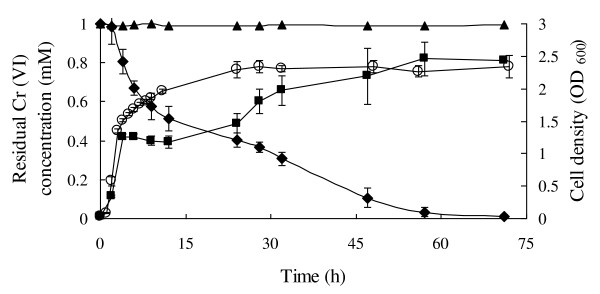
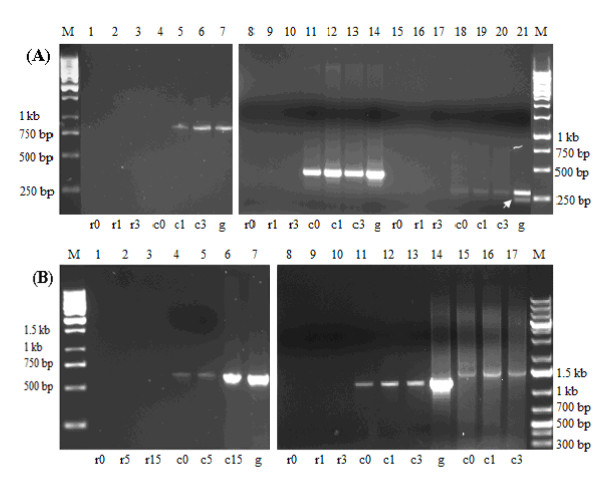
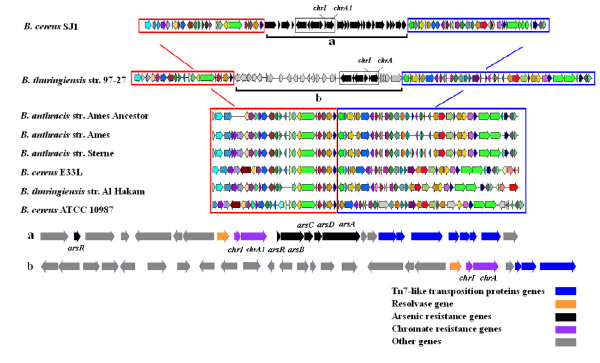
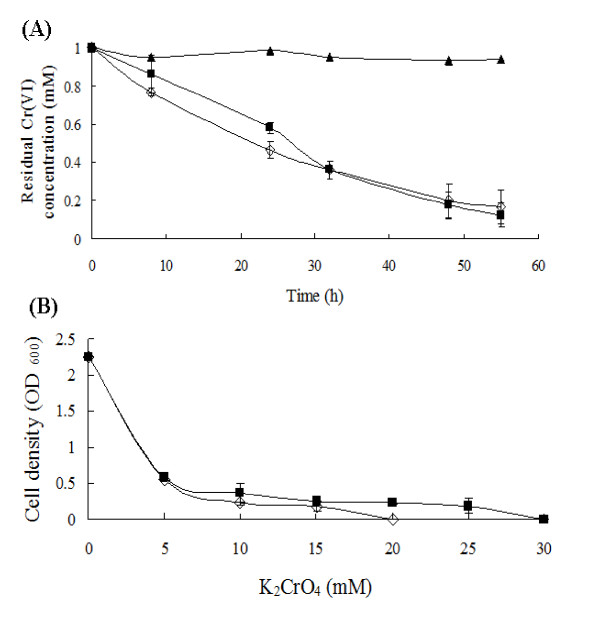
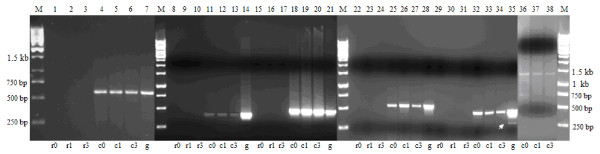
Bacillus cereus SJ1 isolated from chromium-contaminated wastewater of a metal electroplating factory displayed high Cr(VI) resistance with a minimal inhibitory concentration (MIC) of 30 mM when induced with Cr(VI). A complete bacterial reduction of 1 mM Cr(VI) was achieved within 57 h. By genome sequence analysis, a putative chromate transport operon, chrIA1, and two additional chrA genes encoding putative chromate transporters that likely confer chromate resistance were identified. Furthermore, we also found an azoreductase gene azoR and four nitroreductase genes nitR possibly involved in chromate reduction. Using reverse transcription PCR (RT-PCR) technology, it was shown that expression of adjacent genes chrA1 and chrI was induced in response to Cr(VI) but expression of the other two chromate transporter genes chrA2 and chrA3 was constitutive. In contrast, chromate reduction was constitutive in both phenotypic and gene expression analyses. The presence of a resolvase gene upstream of chrIA1, an arsenic resistance operon and a gene encoding Tn7-like transposition proteins ABBCCCD downstream of chrIA1 in B. cereus SJ1 implied the possibility of recent horizontal gene transfer.
Our results indicate that expression of the chromate transporter gene chrA1 was inducible by Cr(VI) and most likely regulated by the putative transcriptional regulator ChrI. The bacterial Cr(VI)-resistant level was also inducible. The presence of an adjacent arsenic resistance gene cluster nearby the chrIA1 suggested that strong selective pressure by chromium and arsenic could cause bacterial horizontal gene transfer. Such events may favor the survival and increase the resistance level of B. cereus SJ1.
铬是一种有毒重金属,主要以两种无机形式存在,即六价铬(Cr(VI))和三价铬(Cr(III))。由于具有很强的氧化性,铬酸盐[Cr(VI)]具有致癌性、致突变性和致畸性。耐铬酸盐和还原细菌将 Cr(VI)转化为毒性较低的 Cr(III),为铬酸盐解毒和生物修复提供了一种生态和经济的选择。然而,到目前为止,对铬酸盐抗性和还原的遗传决定因素的了解还很有限。我们的主要目的是研究解淀粉芽孢杆菌 SJ1 对铬酸盐的抗性和还原作用,并通过获得的基因组序列进一步在分子水平上研究其潜在机制。
从一家金属电镀厂含铬废水的污染废水中分离出的解淀粉芽孢杆菌 SJ1 对 Cr(VI)的最小抑菌浓度(MIC)为 30 mM,显示出很高的 Cr(VI)抗性。在 57 小时内,1 mM Cr(VI)完全被还原。通过基因组序列分析,鉴定了一个假定的铬酸盐转运操纵子 chrIA1,以及两个编码可能赋予铬酸盐抗性的假定铬酸盐转运蛋白的 chrA 基因。此外,我们还发现了一个偶氮还原酶基因 azoR 和四个亚硝酸盐还原酶基因 nitR,可能参与了铬酸盐的还原。通过反转录 PCR(RT-PCR)技术,表明在 Cr(VI)存在的情况下,相邻基因 chrA1 和 chrI 的表达被诱导,但另外两个铬酸盐转运蛋白基因 chrA2 和 chrA3 的表达是组成型的。相比之下,在表型和基因表达分析中,铬酸盐还原都是组成型的。chrIA1 上游存在一个 resolvase 基因,chrIA1 下游存在一个砷抗性操纵子和一个编码 Tn7 样转位蛋白 ABBCCCD 的基因,这表明可能发生了最近的水平基因转移。
我们的结果表明,铬酸盐转运蛋白基因 chrA1 的表达可被 Cr(VI)诱导,且很可能受假定的转录调节因子 ChrI 调节。细菌对 Cr(VI)的抗性水平也是可诱导的。chrIA1 附近存在一个相邻的砷抗性基因簇,表明铬和砷的强烈选择压力可能导致细菌的水平基因转移。这种事件可能有利于解淀粉芽孢杆菌 SJ1 的生存和增加其抗性水平。