Faculty of Veterinary Medicine, University of Leipzig, 04103 Leipzig, Germany.
J Dairy Sci. 2010 Sep;93(9):4155-64. doi: 10.3168/jds.2009-2914.
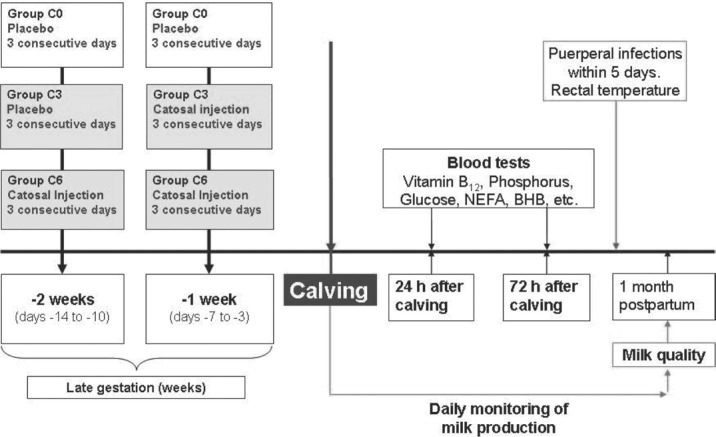
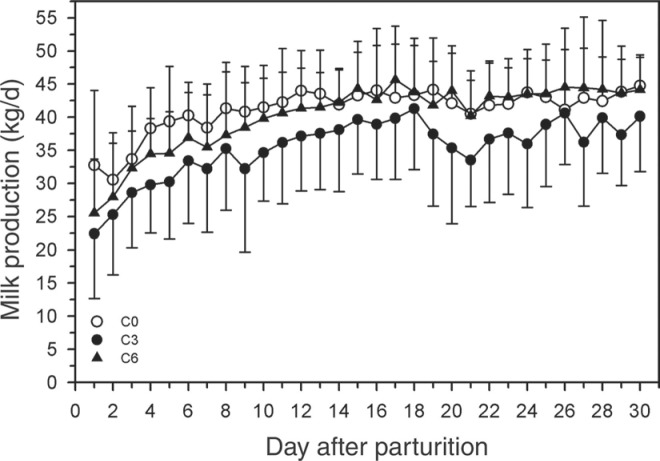
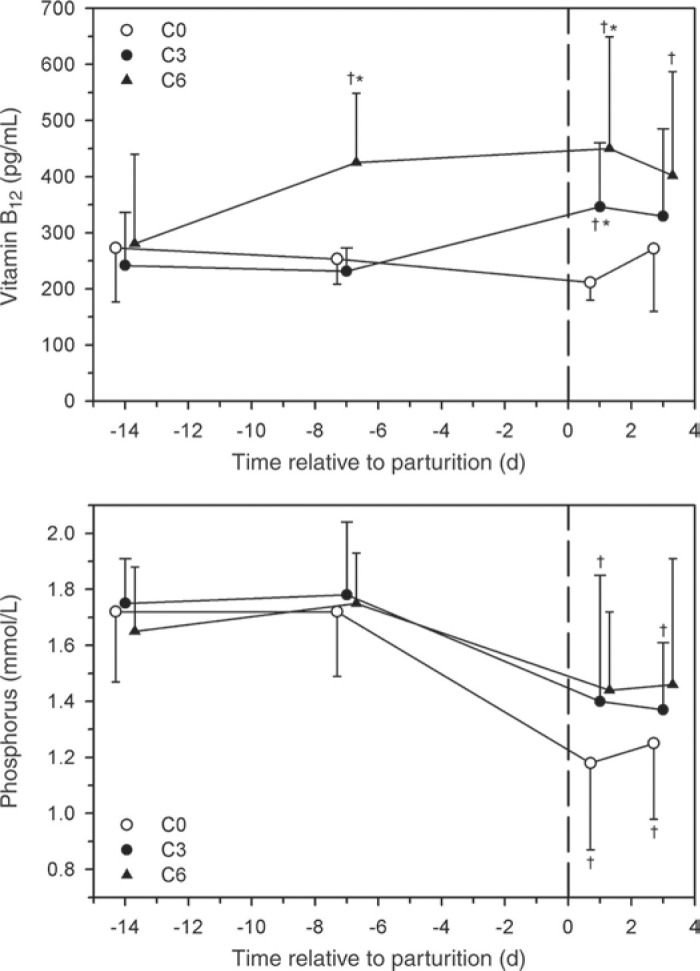
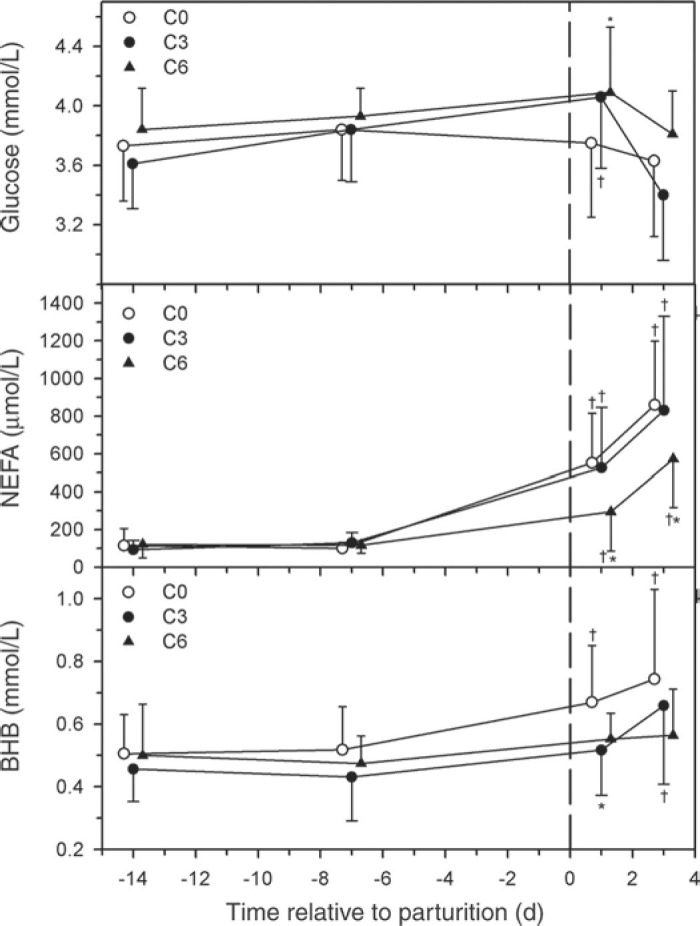
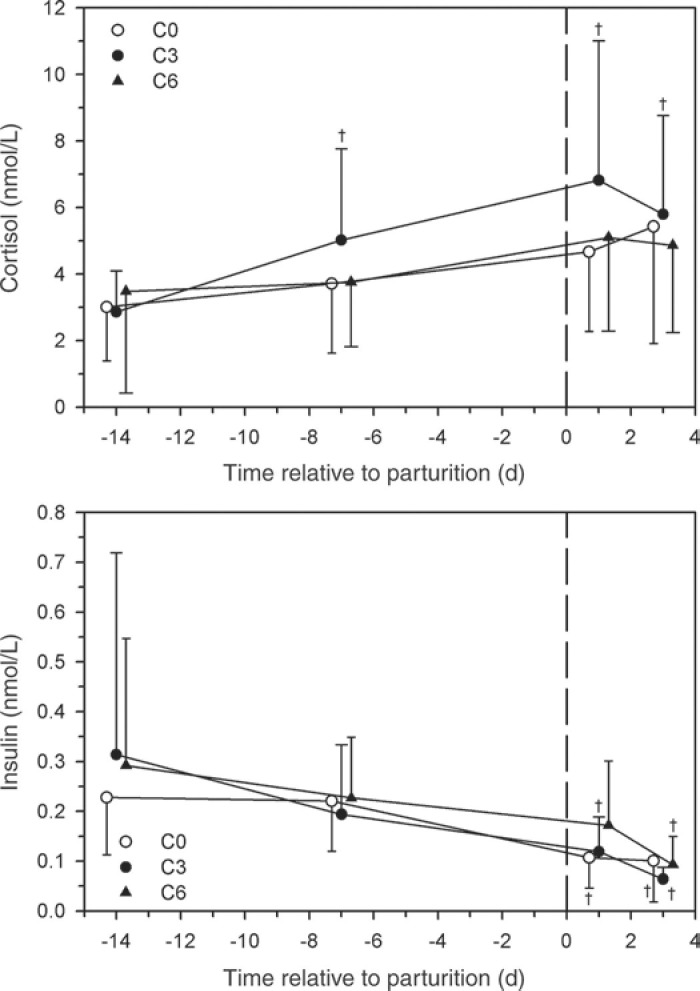
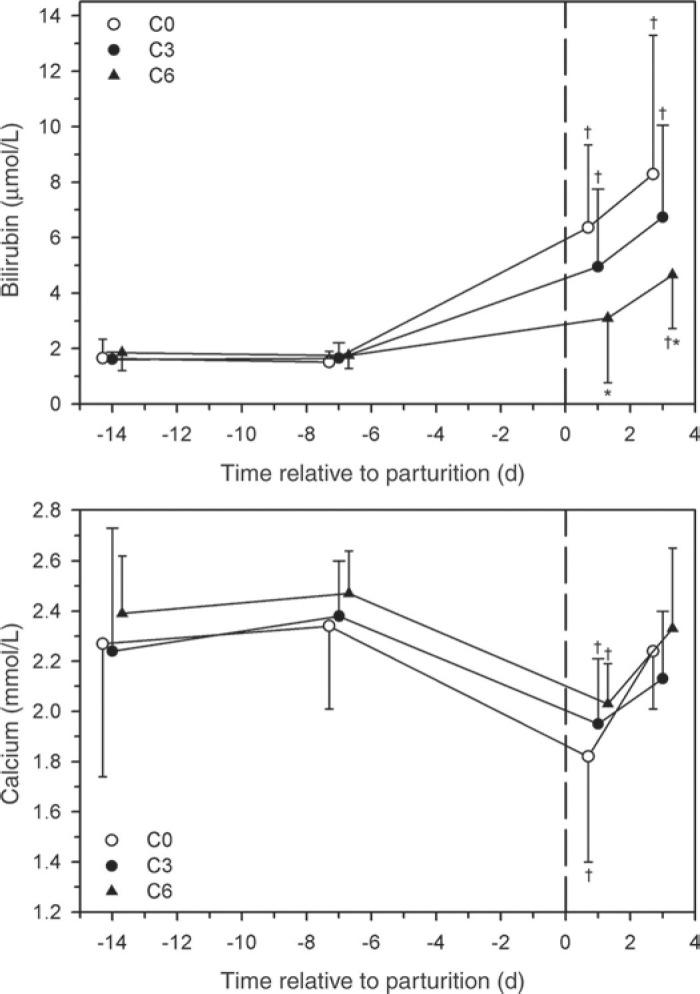
Numerous adjunct therapeutic agents have been investigated for the treatment or control of fat mobilization syndrome in periparturient dairy cows. The aim of this study was to determine the effects of multiple i.v. injections of 10% butaphosphan and 0.005% cyanocobalamin combination (Catosal, Bayer Animal Health, Leverkusen, Germany) between 1 and 2 wk antepartum (a.p.) on the metabolism and health of dairy cows. Forty-five late-gestation Holstein-Friesian cows (second pregnancy) were allocated randomly to 1 of 3 groups with 15 cows/group: group C6 (6 daily i.v. injections of butaphosphan at 10 mg/kg of body weight (BW) and cyanocobalamin at 5 microg/kg of BW in the last 2 wk of gestation); group C3 (3 daily i.v. injections of butaphosphan at 10 mg/kg of BW and cyanocobalamin at 5 microg/kg of BW in the last week of gestation); and group C0 (equivolume daily i.v. injections of 0.9% NaCl solution). Serum biochemical analysis was performed on jugular venous blood samples that were periodically obtained a.p. and postpartum (p.p.). Health status and milk production were monitored p.p. Serum cyanocobalamin concentration increased in groups C6 and C3 p.p. Multiple daily i.v. injections of Catosal before parturition increased p.p. glucose availability, as evaluated by p.p. serum glucose concentration, and decreased peripheral fat mobilization and ketone body formation, as evaluated by p.p. serum nonesterified fatty acid and beta-OH butyrate concentrations. The number of puerperal infections in the first 5 d after calving was decreased in group C6, relative to group C0. We conclude that multiple injections of Catosal during the close-up period have a beneficial effect on the metabolism of periparturient dairy cows. Our results are consistent with the hypothesis that high-producing dairy cows in early lactation may have a relative or actual deficiency of cyanocobalamin.
许多辅助治疗药物已被研究用于治疗或控制围产期奶牛的脂肪动员综合征。本研究的目的是确定在产前 1 至 2 周内多次静脉注射 10%丁磷酸和 0.005%氰钴胺组合(Catosal,拜耳动物保健,德国勒沃库森)对奶牛代谢和健康的影响。将 45 头妊娠后期荷斯坦-弗里森奶牛(第二胎)随机分配到 3 组中的 1 组,每组 15 头:C6 组(妊娠最后 2 周每天静脉注射 6 次丁磷酸,剂量为 10mg/kg 体重和 5μg/kg 体重的氰钴胺);C3 组(妊娠最后一周每天静脉注射 3 次丁磷酸,剂量为 10mg/kg 体重和 5μg/kg 体重的氰钴胺);和 C0 组(等量的 0.9%生理盐水每日静脉注射)。在产前和产后定期从颈静脉采血进行血清生化分析。产后监测健康状况和产奶量。分娩前多次静脉注射 Catosal 可增加产后血清氰钴胺浓度。如产后血清葡萄糖浓度所示,可增加葡萄糖的可用性,如产后血清非酯化脂肪酸和β-羟基丁酸浓度所示,可减少外周脂肪动员和酮体形成。与 C0 组相比,C6 组产后第 5 天的产褥感染数量减少。我们得出结论,围产期奶牛在围产前期多次注射 Catosal 对其代谢有有益的影响。我们的结果与高产奶牛在泌乳早期可能存在相对或实际缺乏氰钴胺的假设一致。