Institute for Molecular Virology, Saint Louis University Health Sciences Center, 1100 South Grand Boulevard, Saint Louis, Missouri 63104, USA.
Biochemistry. 2010 Sep 28;49(38):8376-87. doi: 10.1021/bi100514s.
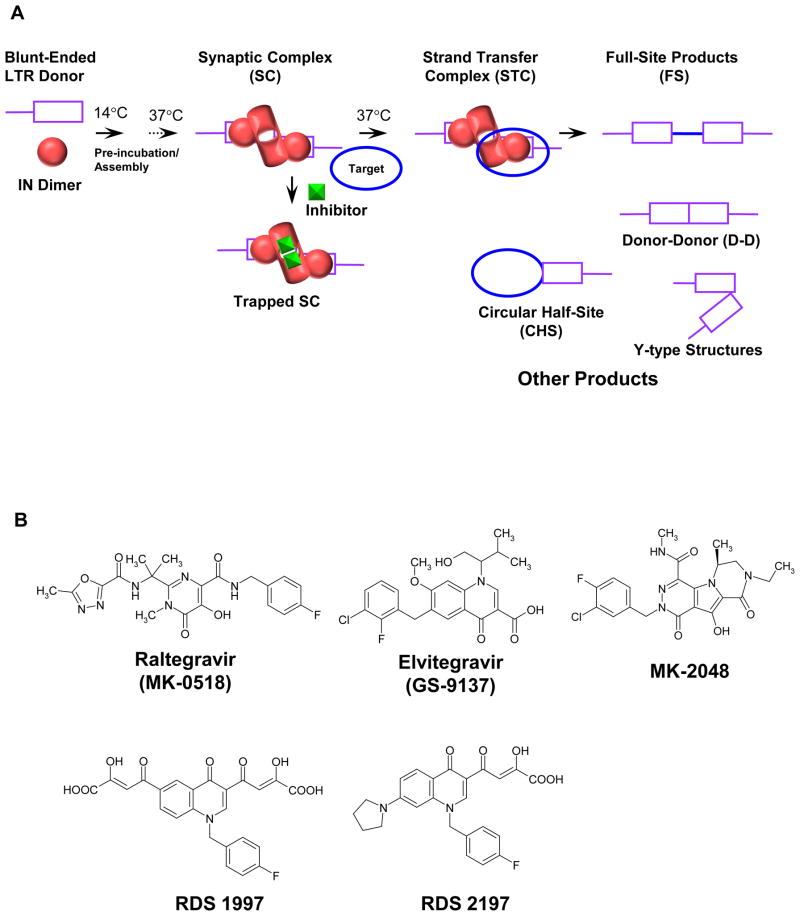
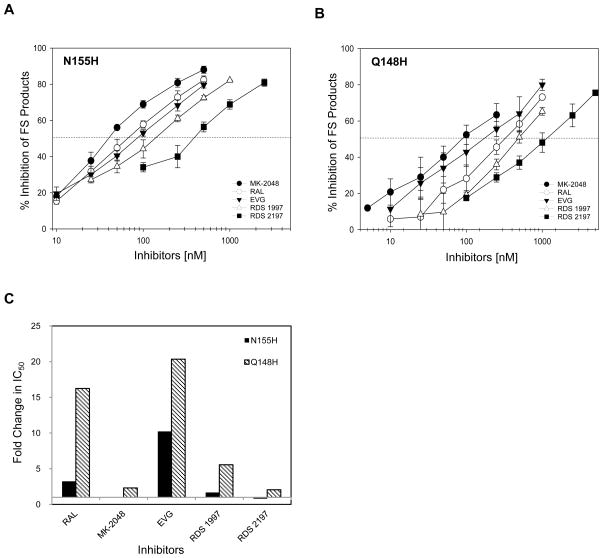
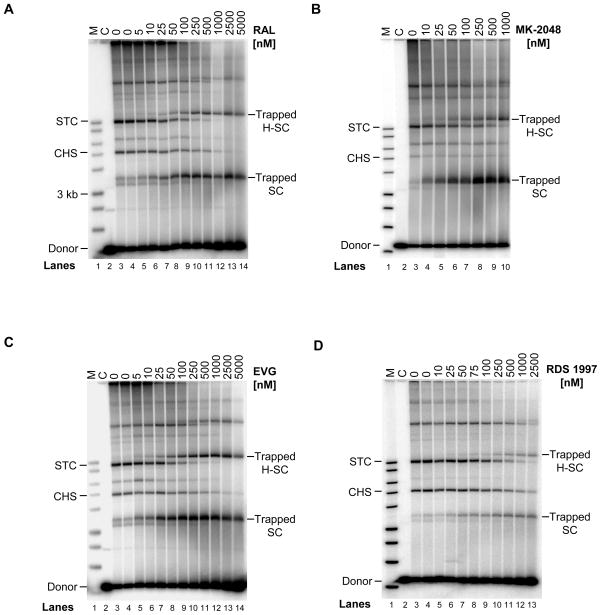
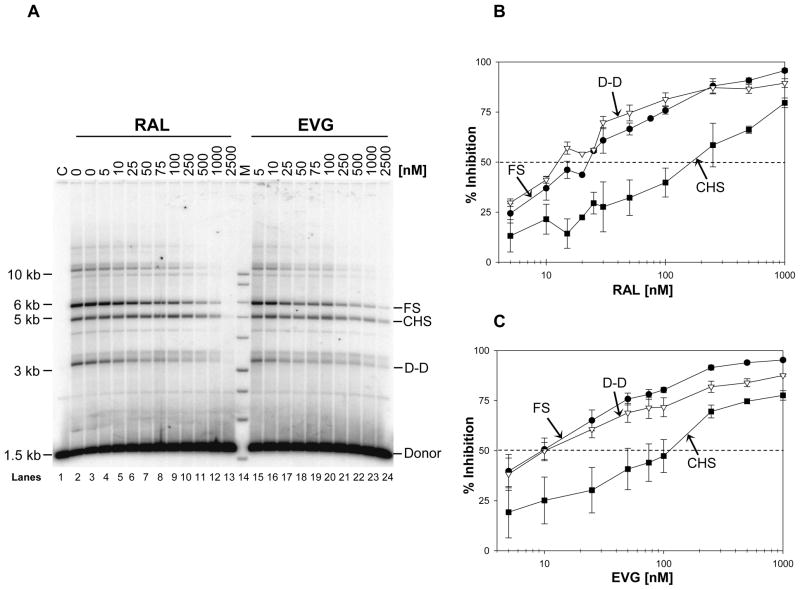
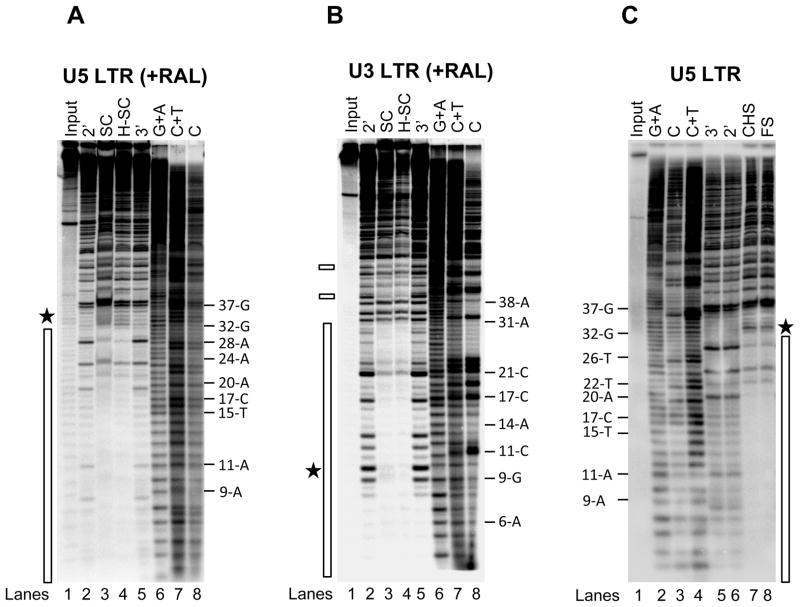
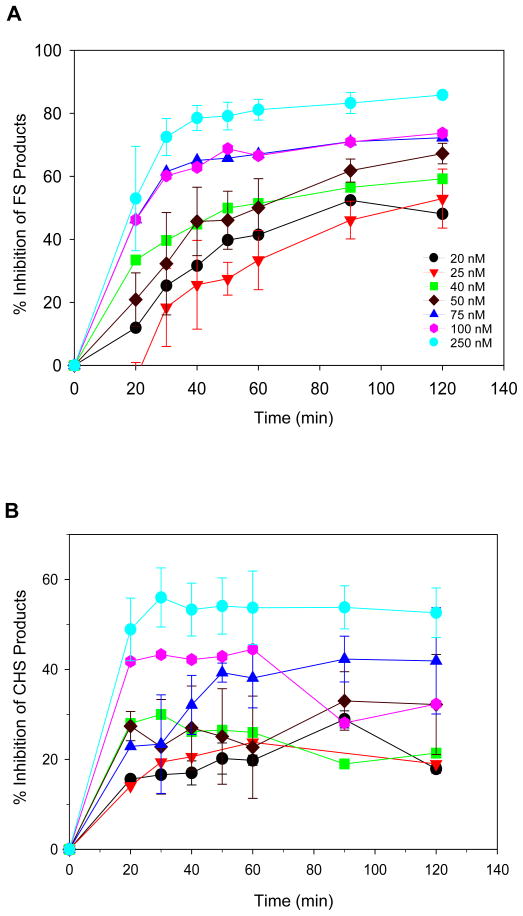
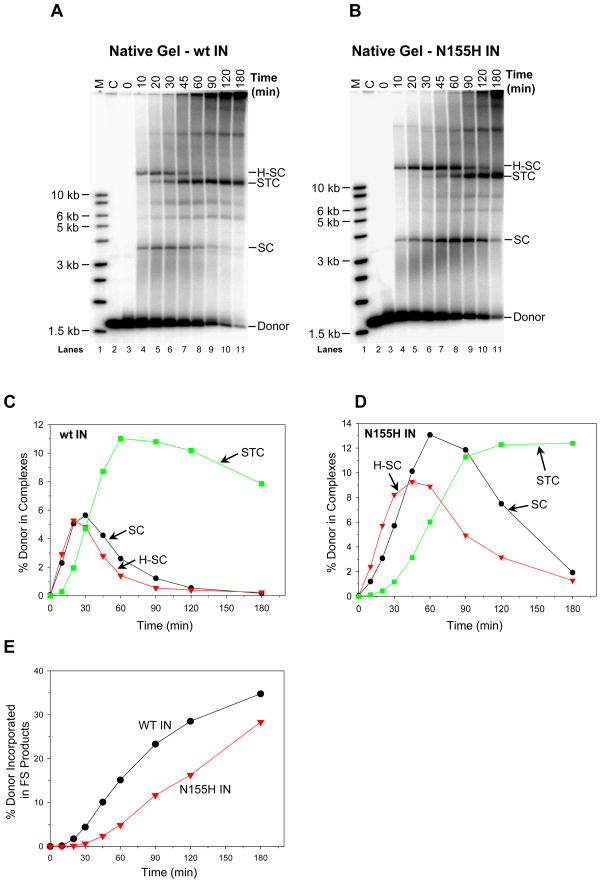
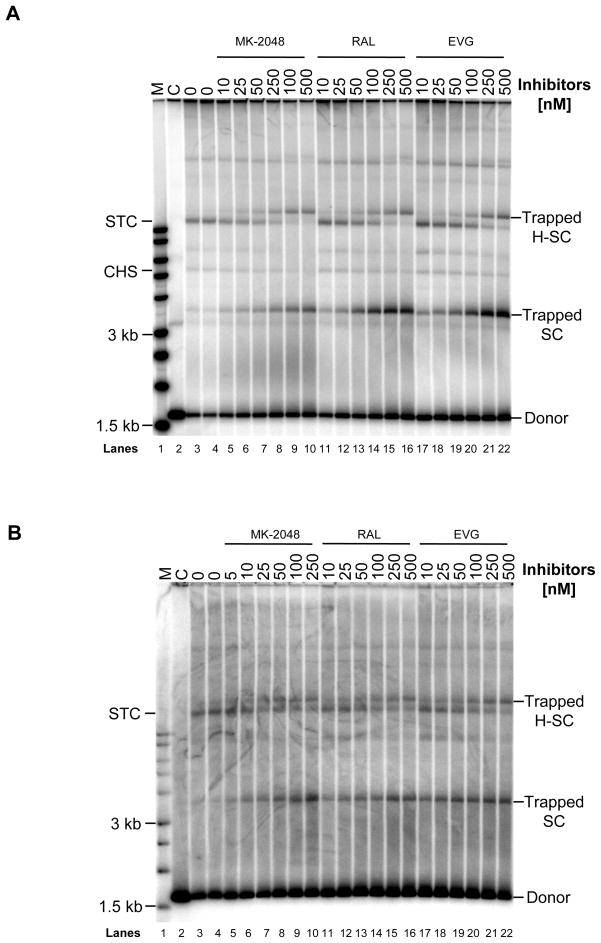
Raltegravir is an FDA approved inhibitor directed against human immunodeficiency virus type 1 (HIV-1) integrase (IN). In this study, we investigated the mechanisms associated with multiple strand transfer inhibitors capable of inhibiting concerted integration by HIV-1 IN. The results show raltegravir, elvitegravir, MK-2048, RDS 1997, and RDS 2197 all appear to encompass a common inhibitory mechanism by modifying IN-viral DNA interactions. These structurally different inhibitors bind to and inactivate the synaptic complex, an intermediate in the concerted integration pathway in vitro. The inhibitors physically trap the synaptic complex, thereby preventing target DNA binding and thus concerted integration. The efficiency of a particular inhibitor to trap the synaptic complex observed on native agarose gels correlated with its potency for inhibiting the concerted integration reaction, defined by IC(50) values for each inhibitor. At low nanomolar concentrations (<50 nM), raltegravir displayed a time-dependent inhibition of concerted integration, a property associated with slow-binding inhibitors. Studies of raltegravir-resistant IN mutants N155H and Q148H without inhibitors demonstrated that their capacity to assemble the synaptic complex and promote concerted integration was similar to their reported virus replication capacities. The concerted integration activity of Q148H showed a higher cross-resistance to raltegravir than observed with N155H, providing evidence as to why the Q148H pathway with secondary mutations is the predominant pathway upon prolonged treatment. Notably, MK-2048 is equally potent against wild-type IN and raltegravir-resistant IN mutant N155H, suggesting this inhibitor may bind similarly within their drug-binding pockets.
拉替拉韦是一种经美国食品药品监督管理局批准的针对人类免疫缺陷病毒 1 型(HIV-1)整合酶(IN)的抑制剂。在这项研究中,我们研究了与多种能够抑制 HIV-1 IN 协同整合的链转移抑制剂相关的机制。结果表明,拉替拉韦、艾维雷格、MK-2048、RDS 1997 和 RDS 2197 似乎都通过改变 IN-病毒 DNA 相互作用来包含一种共同的抑制机制。这些结构不同的抑制剂结合并失活了突触复合物,这是体外协同整合途径中的一个中间产物。抑制剂物理上捕获了突触复合物,从而阻止了靶 DNA 的结合,因此阻止了协同整合。在天然琼脂糖凝胶上观察到的特定抑制剂捕获突触复合物的效率与其抑制协同整合反应的效力相关,用每个抑制剂的 IC50 值来定义。在低纳摩尔浓度(<50 nM)下,拉替拉韦表现出协同整合的时间依赖性抑制,这是一种与慢结合抑制剂相关的特性。在没有抑制剂的情况下,对耐拉替拉韦的 IN 突变体 N155H 和 Q148H 的研究表明,它们组装突触复合物和促进协同整合的能力与它们报告的病毒复制能力相似。Q148H 的协同整合活性对拉替拉韦的交叉耐药性比 N155H 观察到的更高,这提供了证据,说明为什么在长时间治疗后,次级突变的 Q148H 途径是主要途径。值得注意的是,MK-2048 对野生型 IN 和耐拉替拉韦的 IN 突变体 N155H 同样有效,这表明该抑制剂可能在其药物结合口袋中以类似的方式结合。