Cancer Epigenetics and Biology Program (PEBC), Bellvitge Biomedical Research Institute (IDIBELL), 08907L'Hospitalet, Barcelona, Spain.
Oncogene. 2010 Dec 2;29(48):6390-401. doi: 10.1038/onc.2010.361. Epub 2010 Aug 30.
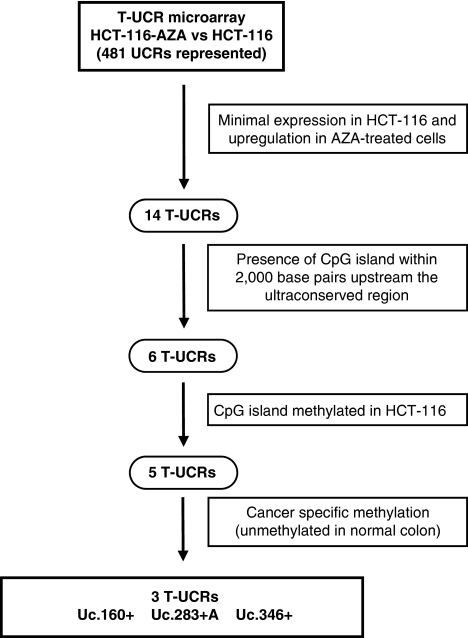
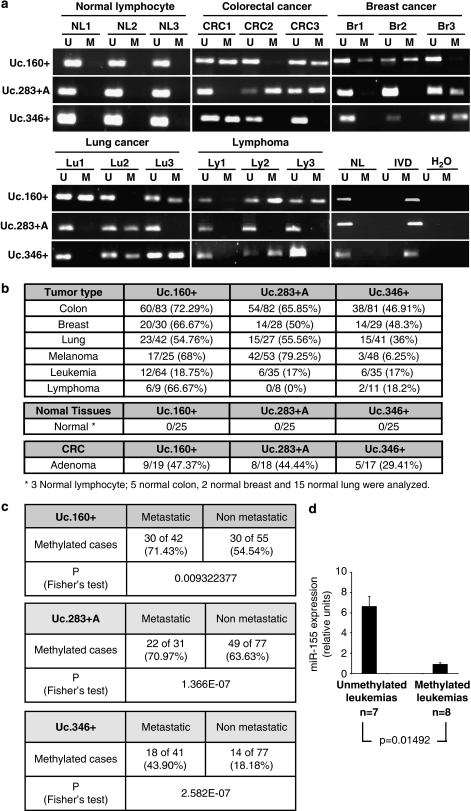
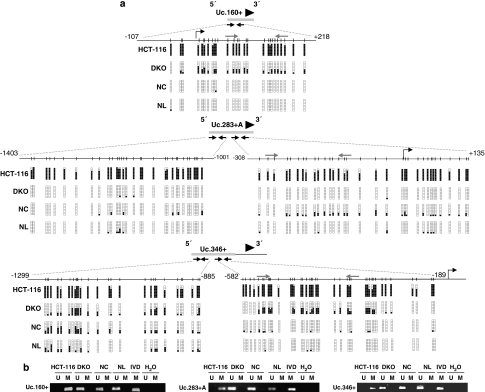
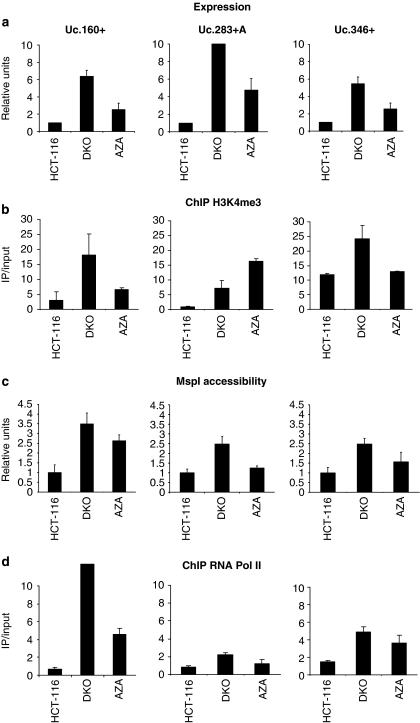
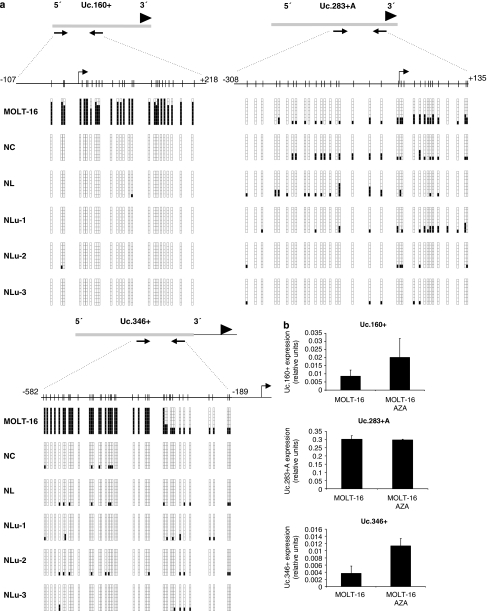
Although only 1.5% of the human genome appears to code for proteins, much effort in cancer research has been devoted to this minimal fraction of our DNA. However, the last few years have witnessed the realization that a large class of non-coding RNAs (ncRNAs), named microRNAs, contribute to cancer development and progression by acting as oncogenes or tumor suppressor genes. Recent studies have also shown that epigenetic silencing of microRNAs with tumor suppressor features by CpG island hypermethylation is a common hallmark of human tumors. Thus, we wondered whether there were other ncRNAs undergoing aberrant DNA methylation-associated silencing in transformed cells. We focused on the transcribed-ultraconserved regions (T-UCRs), a subset of DNA sequences that are absolutely conserved between orthologous regions of the human, rat and mouse genomes and that are located in both intra- and intergenic regions. We used a pharmacological and genomic approach to reveal the possible existence of an aberrant epigenetic silencing pattern of T-UCRs by treating cancer cells with a DNA-demethylating agent followed by hybridization to an expression microarray containing these sequences. We observed that DNA hypomethylation induces release of T-UCR silencing in cancer cells. Among the T-UCRs that were reactivated upon drug treatment, Uc.160+, Uc283+A and Uc.346+ were found to undergo specific CpG island hypermethylation-associated silencing in cancer cells compared with normal tissues. The analysis of a large set of primary human tumors (n=283) demonstrated that hypermethylation of the described T-UCR CpG islands was a common event among the various tumor types. Our finding that, in addition to microRNAs, another class of ncRNAs (T-UCRs) undergoes DNA methylation-associated inactivation in transformed cells supports a model in which epigenetic and genetic alterations in coding and non-coding sequences cooperate in human tumorigenesis.
虽然人类基因组中只有 1.5%似乎编码蛋白质,但癌症研究中的大量努力都集中在我们 DNA 的这一小部分上。然而,过去几年见证了这样一个认识,即大量非编码 RNA(ncRNAs),称为 microRNAs,通过作为癌基因或肿瘤抑制基因,有助于癌症的发展和进展。最近的研究还表明,CpG 岛超甲基化引起的具有肿瘤抑制特征的 microRNAs 的表观遗传沉默是人类肿瘤的一个常见标志。因此,我们想知道在转化细胞中是否有其他 ncRNAs 经历异常的 DNA 甲基化相关沉默。我们专注于转录超保守区(T-UCRs),这是一组 DNA 序列,它们在人类、大鼠和小鼠基因组的同源区域之间绝对保守,并且位于基因内和基因间区域。我们使用药理学和基因组学方法来揭示用 DNA 去甲基化剂处理癌细胞后 T-UCR 可能存在异常的表观遗传沉默模式,然后用包含这些序列的表达微阵列进行杂交。我们观察到 DNA 低甲基化诱导癌细胞中 T-UCR 沉默的释放。在药物处理后重新激活的 T-UCRs 中,与正常组织相比,Uc.160+、Uc283+A 和 Uc.346+发现经历了特定的 CpG 岛超甲基化相关沉默。对一大组原发性人类肿瘤(n=283)的分析表明,所描述的 T-UCR CpG 岛的 hypermethylation 是各种肿瘤类型中的常见事件。我们的发现表明,除了 microRNAs 之外,另一种 ncRNAs(T-UCRs)在转化细胞中经历 DNA 甲基化相关失活,支持了一种模型,即编码和非编码序列中的表观遗传和遗传改变在人类肿瘤发生中协同作用。