Melo Sonia A, Ropero Santiago, Moutinho Catia, Aaltonen Lauri A, Yamamoto Hiroyuki, Calin George A, Rossi Simona, Fernandez Agustin F, Carneiro Fatima, Oliveira Carla, Ferreira Bibiana, Liu Chang-Gong, Villanueva Alberto, Capella Gabriel, Schwartz Simo, Shiekhattar Ramin, Esteller Manel
Cancer Epigenetics Laboratory, Spanish National Cancer Research Centre (CNIO), 28029 Madrid, Spain.
Nat Genet. 2009 Mar;41(3):365-70. doi: 10.1038/ng.317. Epub 2009 Feb 15.
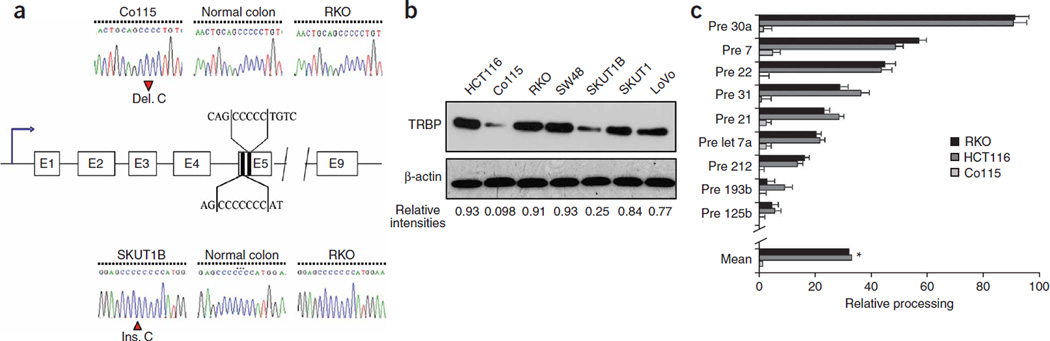
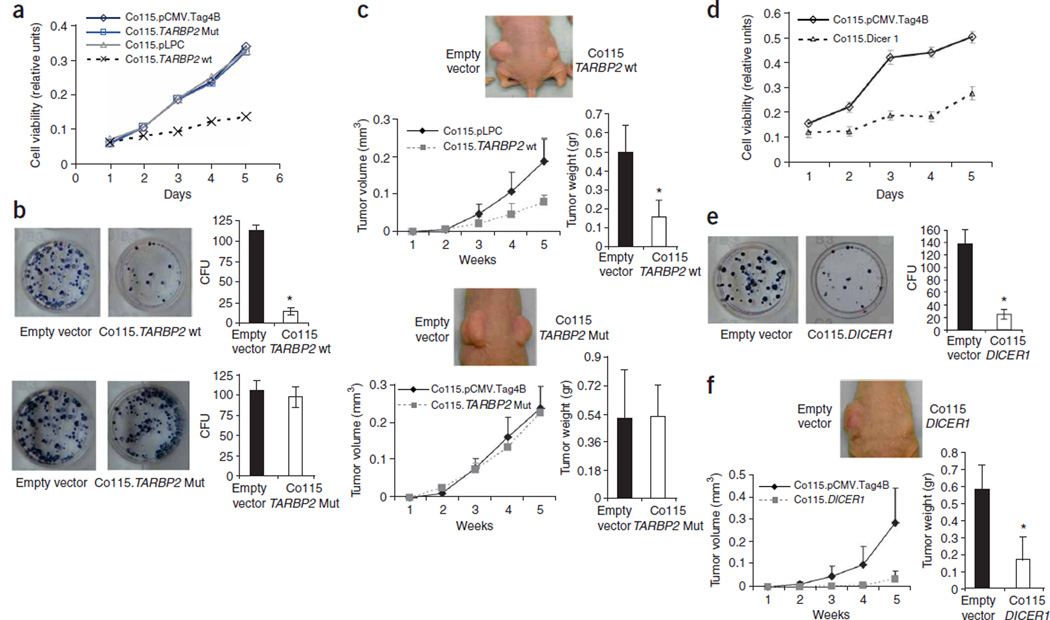
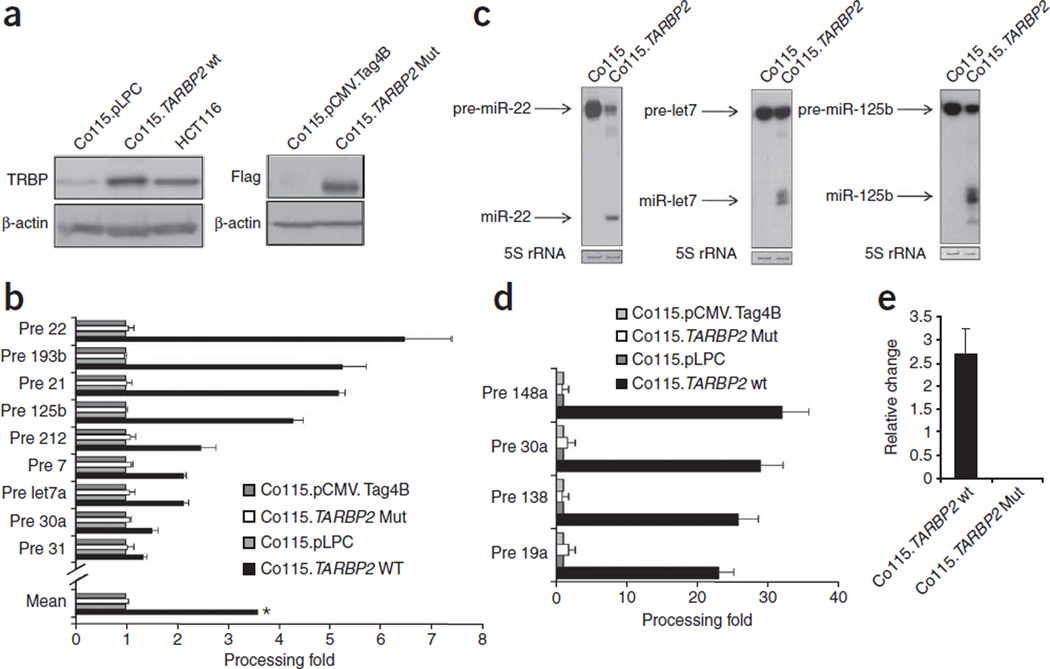
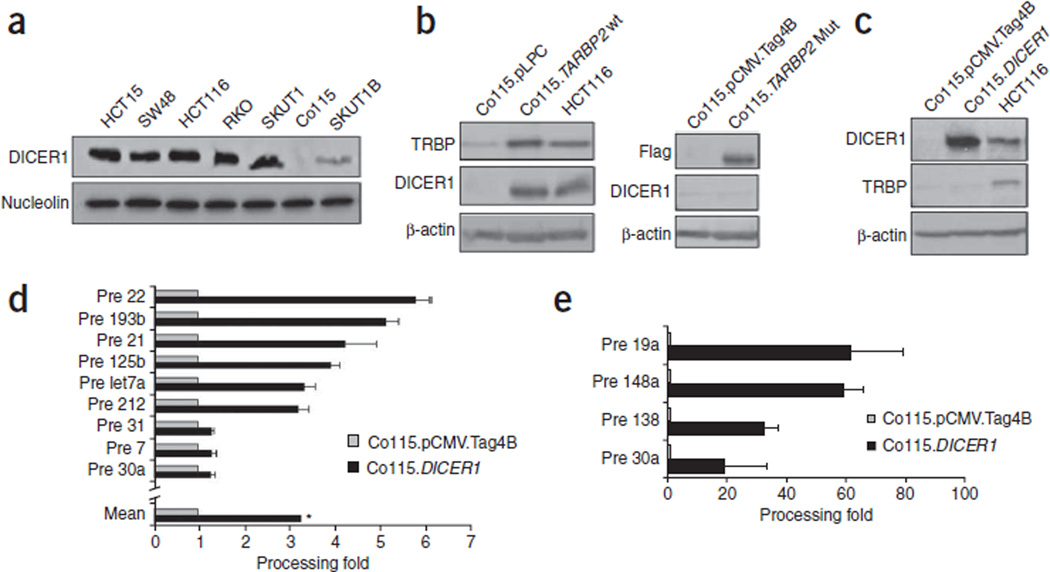
microRNAs (miRNAs) are small noncoding RNAs that regulate gene expression by targeting messenger RNA (mRNA) transcripts. Recently, a miRNA expression profile of human tumors has been characterized by an overall miRNA downregulation. Explanations for this observation include a failure of miRNA post-transcriptional regulation, transcriptional silencing associated with hypermethylation of CpG island promoters and miRNA transcriptional repression by oncogenic factors. Another possibility is that the enzymes and cofactors involved in miRNA processing pathways may themselves be targets of genetic disruption, further enhancing cellular transformation. However, no loss-of-function genetic alterations in the genes encoding these proteins have been reported. Here we have identified truncating mutations in TARBP2 (TAR RNA-binding protein 2), encoding an integral component of a DICER1-containing complex, in sporadic and hereditary carcinomas with microsatellite instability. The presence of TARBP2 frameshift mutations causes diminished TRBP protein expression and a defect in the processing of miRNAs. The reintroduction of TRBP in the deficient cells restores the efficient production of miRNAs and inhibits tumor growth. Most important, the TRBP impairment is associated with a destabilization of the DICER1 protein. These results provide, for a subset of human tumors, an explanation for the observed defects in the expression of mature miRNAs.
微小RNA(miRNA)是一类小的非编码RNA,通过靶向信使RNA(mRNA)转录本来调控基因表达。最近,人类肿瘤的miRNA表达谱的特征是整体miRNA下调。对此现象的解释包括miRNA转录后调控失败、与CpG岛启动子高甲基化相关的转录沉默以及致癌因子对miRNA转录的抑制。另一种可能性是,参与miRNA加工途径的酶和辅助因子本身可能是基因破坏的靶点,从而进一步促进细胞转化。然而,尚未报道编码这些蛋白质的基因中存在功能丧失的基因改变。在这里,我们在具有微卫星不稳定性的散发性和遗传性癌中,鉴定出了TARBP2(TAR RNA结合蛋白2)的截短突变,TARBP2编码含DICER1复合物的一个组成部分。TARBP2移码突变的存在导致TRBP蛋白表达减少以及miRNA加工缺陷。在缺陷细胞中重新引入TRBP可恢复miRNA的高效产生并抑制肿瘤生长。最重要的是,TRBP损伤与DICER1蛋白的不稳定有关。这些结果为一部分人类肿瘤中观察到的成熟miRNA表达缺陷提供了解释。