Department of Pathology and Immunology, Baylor College of Medicine, Houston, Texas 77030, USA.
J Cell Biochem. 2010 Dec 1;111(5):1299-309. doi: 10.1002/jcb.22854.
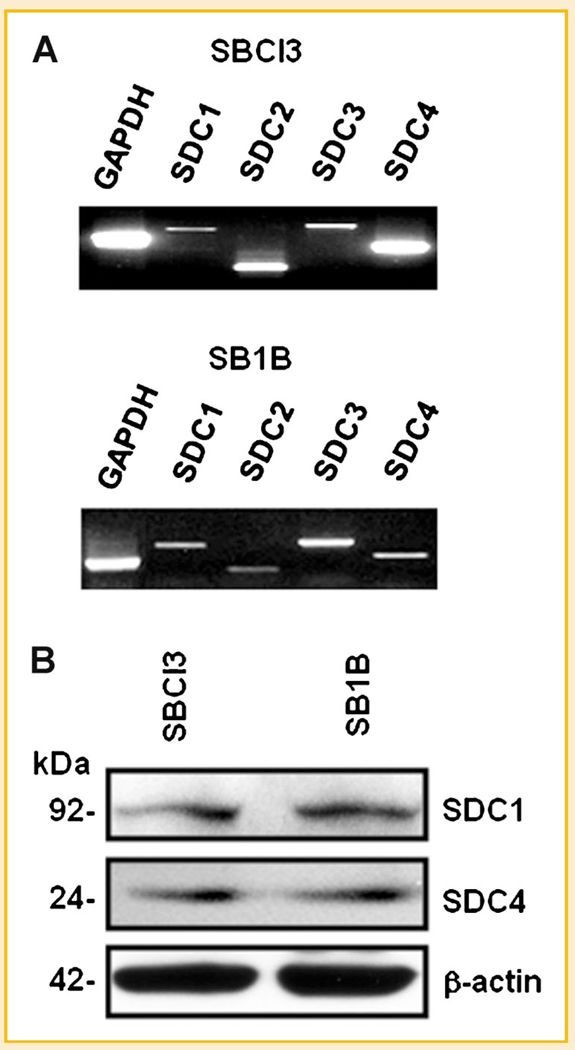
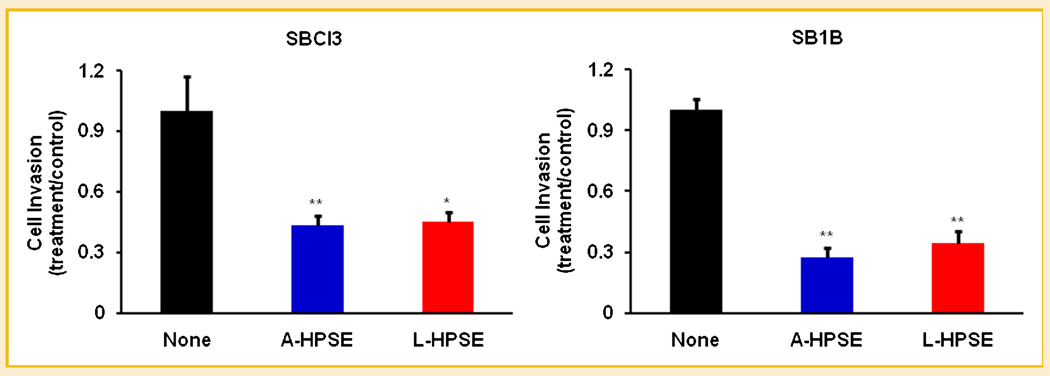
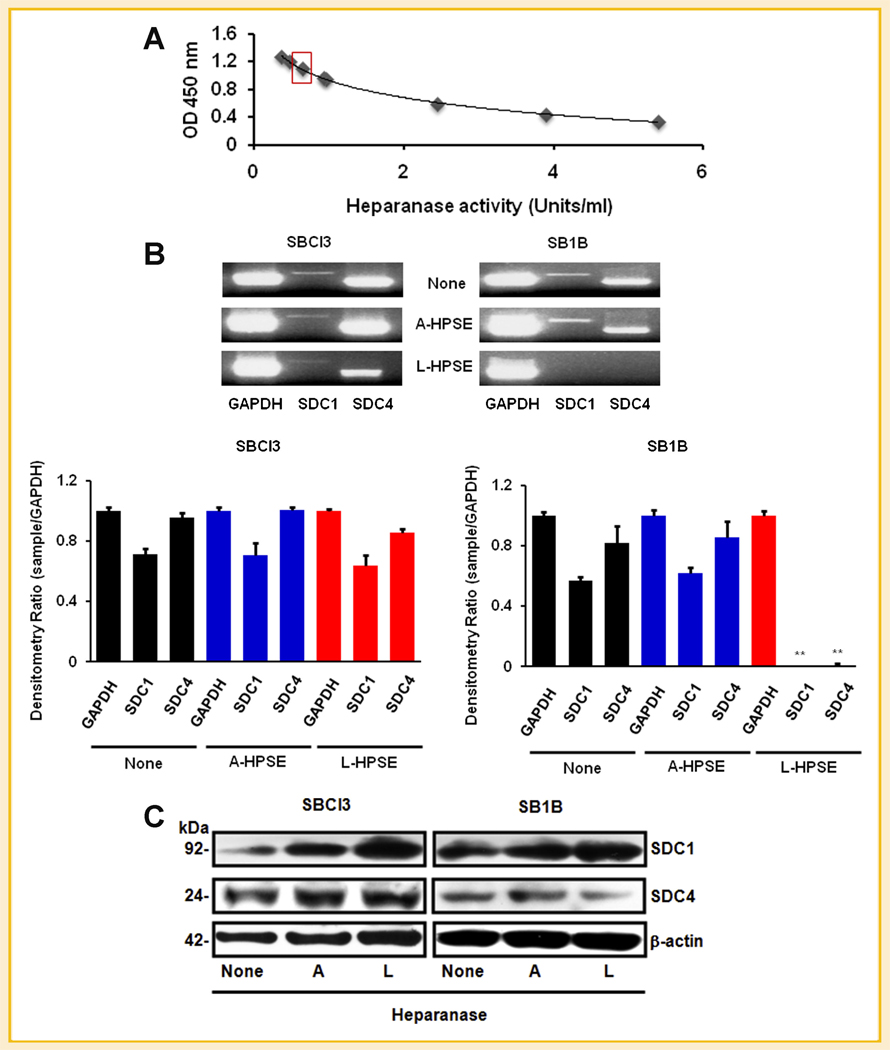
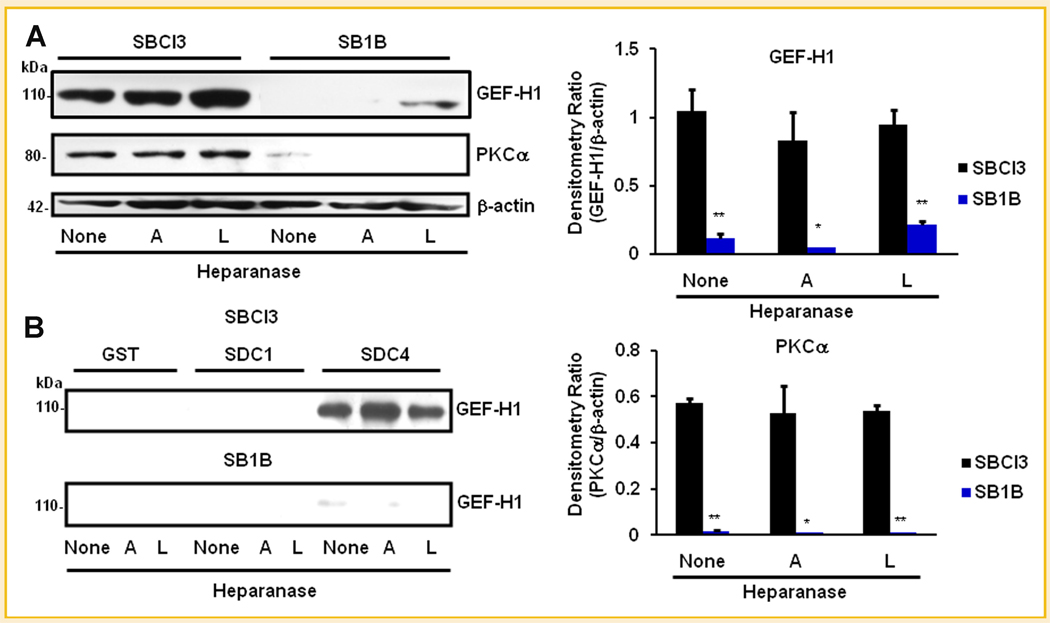
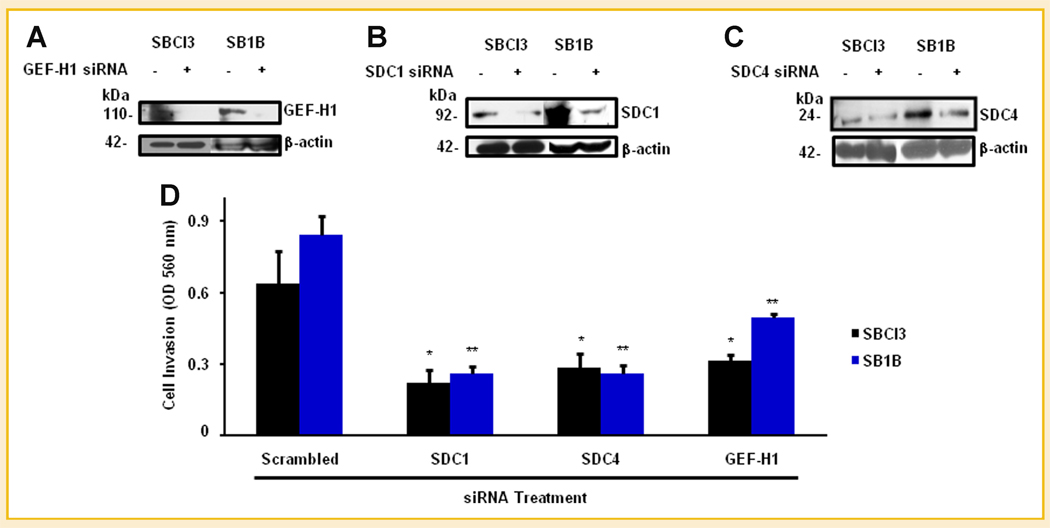
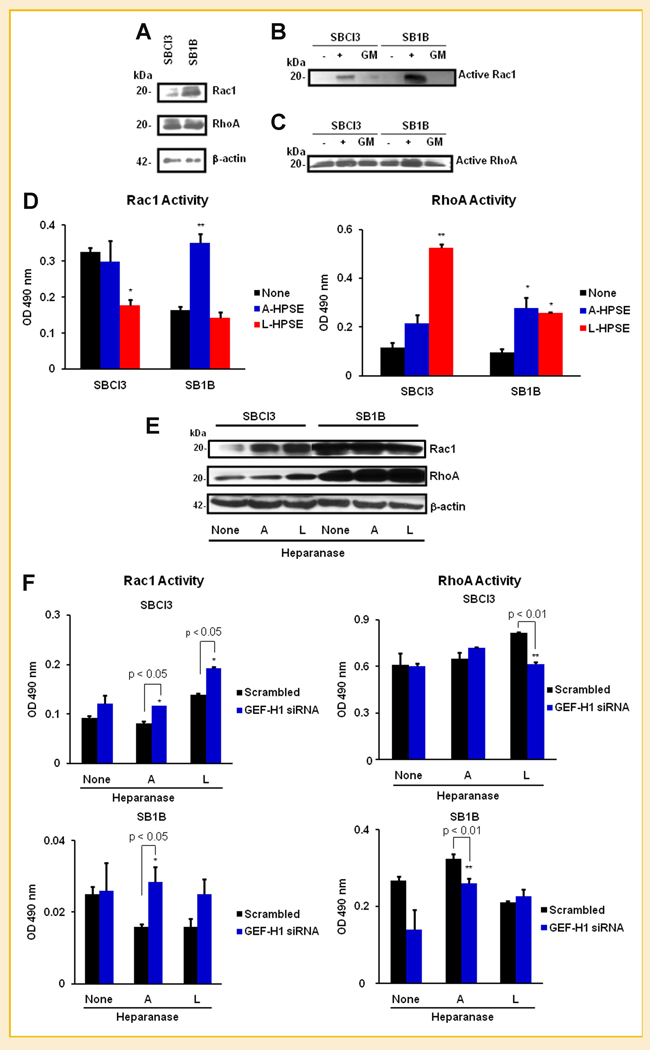
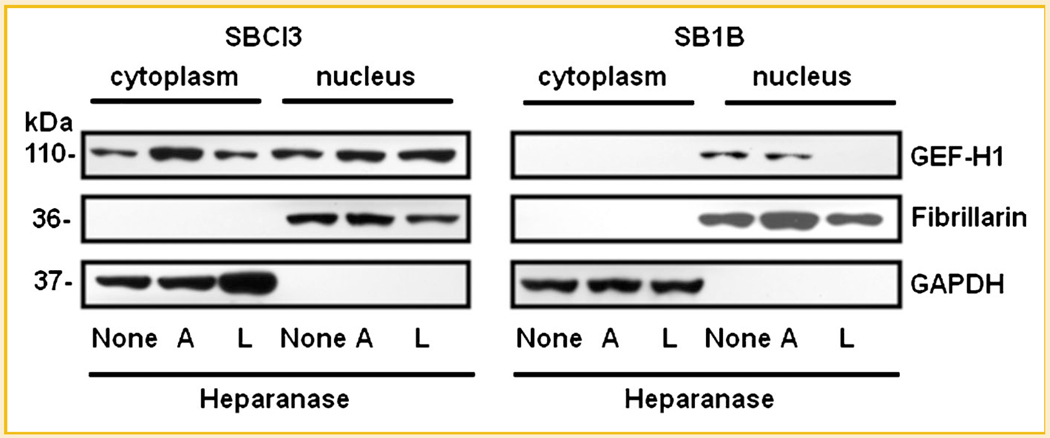
Mechanisms of brain metastatic melanoma (BMM) remain largely unknown. Understanding the modulation of signaling pathways that alter BMM cell invasion and metastasis is critical to develop new therapies for BMM. Heparanase has been widely implicated in cancer and is the dominant mammalian endoglycosidase which degrades heparan sulfate chains of proteoglycans (HSPG) including syndecans (SDCs). Recent findings also indicate that heparanase possesses non-enzymatic functions in its latent form. We hypothesized that extracellular heparanase modulates BMM cell signaling by involving SDC1/4 carboxy terminal-associated proteins and downstream targets. We digested BMM cell surface HS with human recombinant active or latent heparanase to delineate their effects on cytoskeletal dynamics and cell invasiveness. We identified the small GTPase guanine nucleotide exchange factor-H1 (GEF-H1) as a new component of a SDC signaling complex that is differentially expressed in BMM cells compared to corresponding non-metastatic counterparts. Second, knockdown of GEF-H1, SDC1, or SDC4 decreased BMM cell invasiveness and GEF-H1 modulated small GTPase activity of Rac1 and RhoA in conjunction with heparanase treatment. Third, both active and latent forms of heparanase affected Rac1 and RhoA activity; notably increasing RhoA activity. Both forms of heparanase were found to mediate the expression and subcellular localization of GEF-H1, and treatment of BMM with latent heparanase modulated SDC1/4 gene expression. Finally, treatment with exogenous heparanase downregulated BMM cell invasion. These studies indicate the relevance of heparanase signaling pathways in BMM progression, and provide insights into the molecular mechanisms regulating HSPG signaling in response to exogenous heparanase.
脑转移性黑色素瘤(BMM)的机制在很大程度上尚不清楚。了解改变 BMM 细胞侵袭和转移的信号通路的调节对于开发 BMM 的新疗法至关重要。肝素酶已广泛涉及癌症,并且是降解蛋白聚糖(HSPG)包括连接蛋白(SDC)的肝素硫酸链的主要哺乳动物内切糖苷酶。最近的发现还表明,肝素酶在其潜伏形式中具有非酶功能。我们假设细胞外肝素酶通过涉及 SDC1/4 羧基末端相关蛋白和下游靶标来调节 BMM 细胞信号转导。我们用重组人活性或潜伏肝素酶消化 BMM 细胞表面 HS,以阐明其对细胞骨架动力学和细胞侵袭性的影响。我们确定小 GTP 酶鸟嘌呤核苷酸交换因子-H1(GEF-H1)是 SDC 信号复合物的一个新成分,与相应的非转移性 BMM 细胞相比,在 BMM 细胞中差异表达。其次,GEF-H1、SDC1 或 SDC4 的敲低降低了 BMM 细胞的侵袭性,并且 GEF-H1 与肝素酶处理一起调节 Rac1 和 RhoA 的小 GTP 酶活性。第三,活性和潜伏形式的肝素酶均影响 Rac1 和 RhoA 活性;特别是增加 RhoA 活性。发现两种形式的肝素酶均介导 GEF-H1 的表达和亚细胞定位,并且 BMM 用潜伏肝素酶处理可调节 SDC1/4 基因表达。最后,外源性肝素酶处理可下调 BMM 细胞侵袭。这些研究表明肝素酶信号通路在 BMM 进展中的相关性,并深入了解调节 HSPG 信号转导以响应外源性肝素酶的分子机制。