Department of Pathology, The University of Melbourne, Parkville, Victoria, Australia.
PLoS One. 2010 Aug 23;5(8):e12351. doi: 10.1371/journal.pone.0012351.
The accumulation of protease resistant conformers of the prion protein (PrP(res)) is a key pathological feature of prion diseases. Polyanions, including RNA and glycosaminoglycans have been identified as factors that contribute to the propagation, transmission and pathogenesis of prion disease. Recent studies have suggested that the contribution of these cofactors to prion propagation may be species specific.
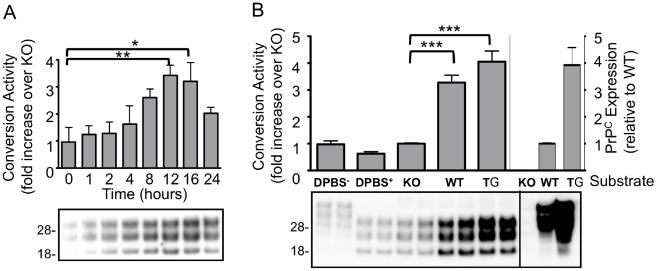
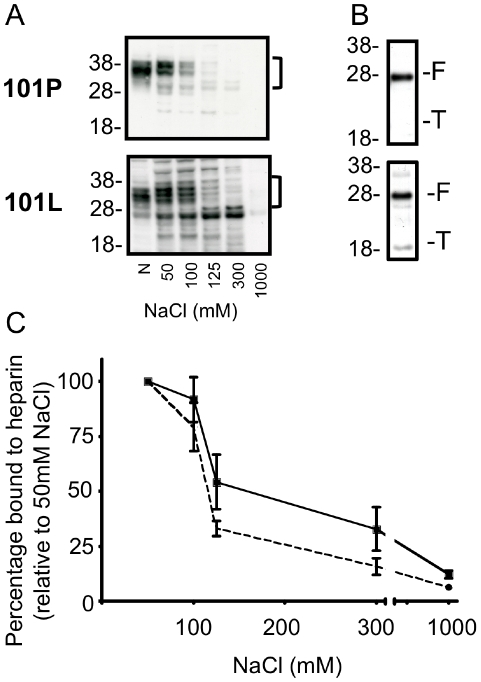
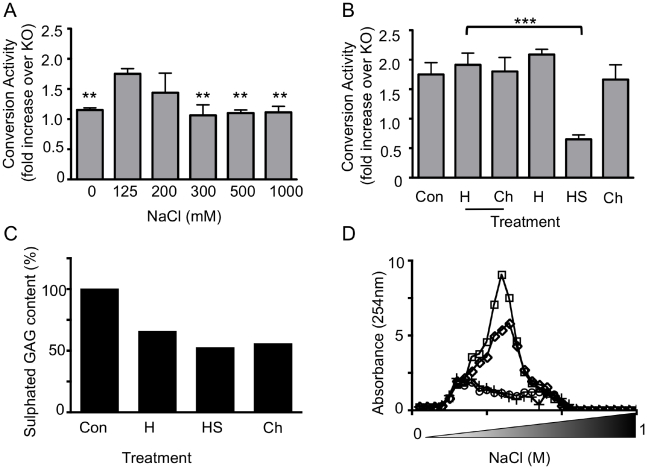
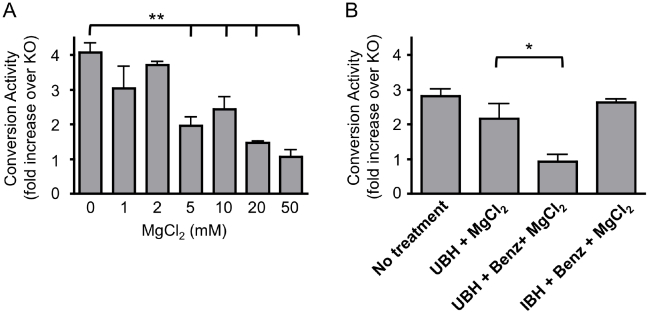
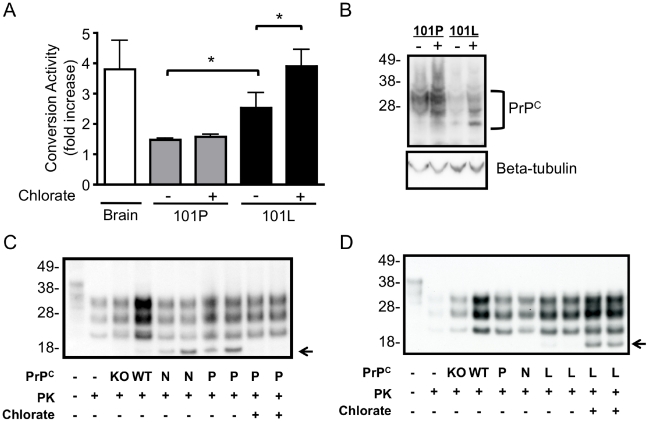
METHODOLOGY/PRINCIPAL FINDING: In this study a cell-free assay was used to investigate the molecular basis of polyanion stimulated PrP(res) formation using brain tissue or cell line derived murine PrP. Enzymatic depletion of endogenous nucleic acids or heparan sulphate (HS) from the PrP(C) substrate was found to specifically prevent PrP(res) formation seeded by mouse derived PrP(Sc). Modification of the negative charge afforded by the sulphation of glycosaminoglycans increased the ability of a familial PrP mutant to act as a substrate for PrP(res) formation, while having no effect on PrP(res) formed by wildtype PrP. This difference may be due to the observed differences in the binding of wild type and mutant PrP for glycosaminoglycans.
CONCLUSIONS/SIGNIFICANCE: Cofactor requirements for PrP(res) formation are host species and prion strain specific and affected by disease associated mutations of the prion protein. This may explain both species and strain dependent propagation characteristics and provide insights into the underlying mechanisms of familial prion disease. It further highlights the challenge of designing effective therapeutics against a disease which effects a range of mammalian species, caused by range of aetiologies and prion strains.
朊病毒蛋白(PrP(res))的蛋白酶抗性构象的积累是朊病毒病的关键病理学特征。多阴离子,包括 RNA 和糖胺聚糖,已被确定为促进朊病毒病的传播、发病和发病机制的因素。最近的研究表明,这些辅助因子对朊病毒传播的贡献可能具有物种特异性。
方法/主要发现:在这项研究中,使用无细胞测定法,使用脑组织或细胞系衍生的鼠 PrP 研究了多阴离子刺激 PrP(res)形成的分子基础。发现从 PrP(C)底物中酶促耗尽内源性核酸或硫酸乙酰肝素 (HS)特异性防止由鼠源性 PrP(Sc)引发的 PrP(res)形成。糖胺聚糖硫酸化提供的负电荷的修饰增加了家族性 PrP 突变体作为 PrP(res)形成底物的能力,而对野生型 PrP 形成的 PrP(res)没有影响。这种差异可能是由于观察到野生型和突变型 PrP 与糖胺聚糖的结合存在差异所致。
结论/意义:PrP(res)形成的辅助因子要求因宿主物种和朊病毒株而异,并受朊病毒蛋白的疾病相关突变影响。这可以解释物种和株依赖性传播特征,并为家族性朊病毒病的潜在机制提供深入了解。它进一步强调了设计针对一系列哺乳动物物种、由多种病因和朊病毒株引起的疾病的有效治疗方法的挑战。