Department of Research, Development and Education, Sint Maartenskliniek, Nijmegen, The Netherlands.
Acta Orthop. 2010 Aug;81(4):471-7. doi: 10.3109/17453674.2010.501743.
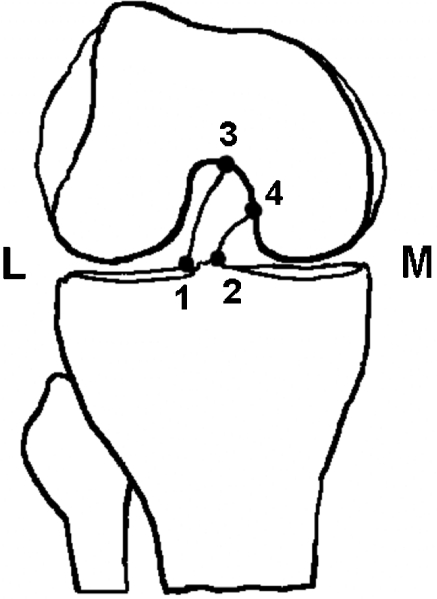
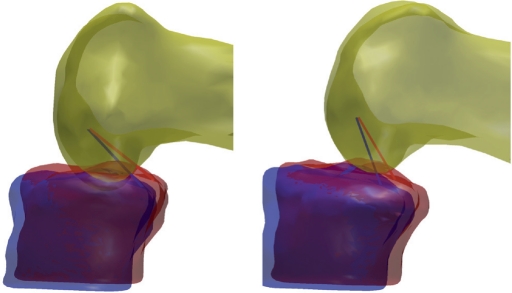
Because of the oblique orientation of the posterior cruciate ligament (PCL), flexion gap distraction could lead to anterior movement of the tibia, which would influence the tibiofemoral contact point. This would affect the kinematics of the TKR. We assessed the flexion gap parameters when the knee is distracted during implantation of a PCL-retaining TKR. Furthermore, the effects of PCL elevation (steep or flat) and collateral ligament releases on the flexion gap parameters were determined.
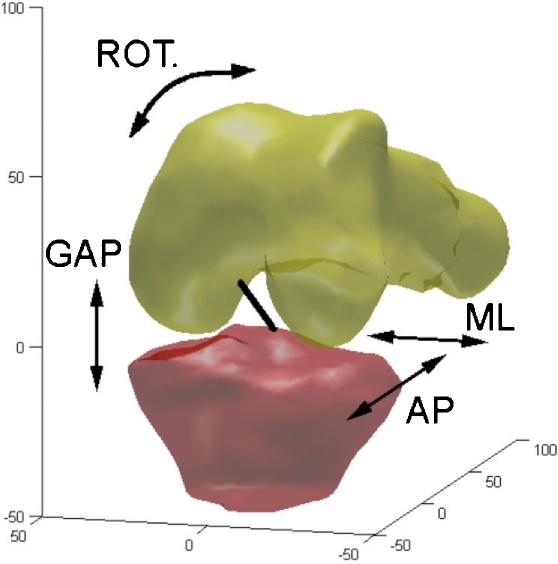
During a ligament-guided TKR procedure in 50 knees, the flexion gap was distracted with a double-spring tensor with 200N after the tibia had been cut. The flexion gap height, anterior tibial translation, and femoral rotation were measured intraoperatively using a CT-free navigation system.
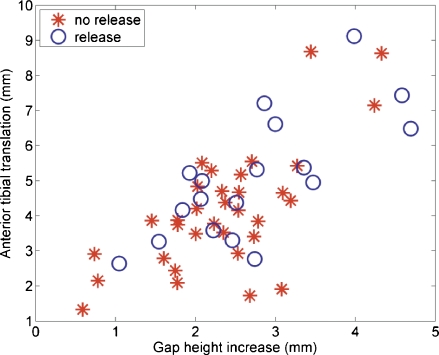
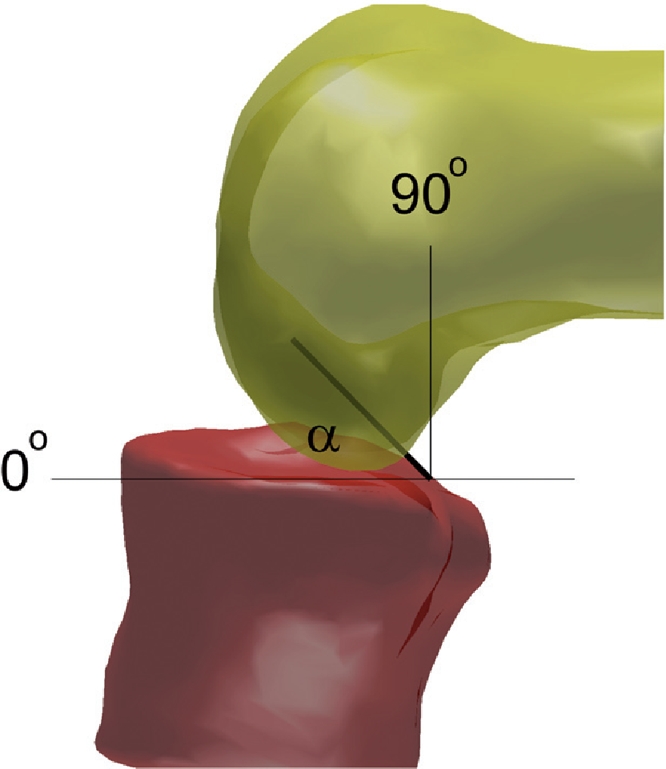
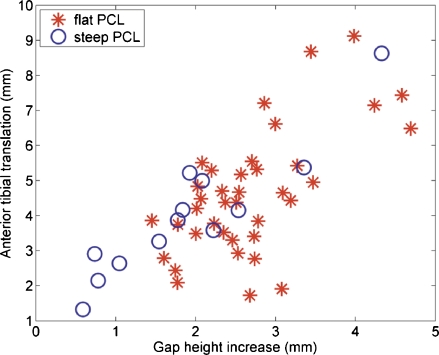
During flexion gap distraction, the greatest displacement was seen in anterior-posterior direction. Mean ratio between increase in gap height and tibial translation was 1 to 1.9, and was highest for knees with a steep PCL (1 to 2.3). Knees with a flat PCL and knees with a ligament release had a larger increase in PCL elevation when the gap was distracted.
When the PCL is tensioned, every extra mm that the flexion gap is distracted can be expected to move the tibia anteriorly by at least 1.7 mm (flat PCL), or more if there is a steep PCL. This changes the tibiofemoral contact point, which may have consequences for polyethylene wear.
由于后交叉韧带(PCL)的倾斜方向,屈膝间隙分离可导致胫骨前向移动,从而影响胫股关节接触点。这将影响 TKR 的运动学。我们评估了在保留 PCL 的 TKR 植入过程中膝关节分离时的屈膝间隙参数。此外,还确定了 PCL 抬高(陡峭或平坦)和侧副韧带松解对屈膝间隙参数的影响。
在 50 例膝关节韧带导向 TKR 手术中,在胫骨截骨后用 200N 的双弹簧张力器分离屈膝间隙。使用无 CT 导航系统术中测量屈膝间隙高度、胫骨前移位和股骨旋转。
在屈膝间隙分离过程中,前后方向的位移最大。间隙高度增加与胫骨平移之间的平均比值为 1 比 1.9,对于 PCL 陡峭的膝关节(1 比 2.3)最高。屈膝间隙分离时,PCL 平坦的膝关节和韧带松解的膝关节的 PCL 抬高增加幅度更大。
当 PCL 紧张时,每增加 1mm 的屈膝间隙分离,预计胫骨会向前移动至少 1.7mm(PCL 平坦),如果 PCL 陡峭则会移动更多。这改变了胫股关节接触点,可能会对聚乙烯磨损产生影响。