Division of Chemical Ecology, Department of Plant Protection Biology, Swedish University of Agricultural Sciences, Box 102, SE-230 53 Alnarp, Sweden.
BMC Biol. 2010 Sep 9;8:121. doi: 10.1186/1741-7007-8-121.
Abdominal wounding by traumatic insemination and the lack of a long distance attraction pheromone set the scene for unusual sexual signalling systems. Male bed bugs (Cimex lectularius) mount any large, newly fed individual in an attempt to mate. Last instar nymphs overlap in size with mature females, which make them a potential target for interested males. However, nymphs lack the female's specific mating adaptations and may be severely injured by the abdominal wounding. We, therefore, hypothesized that nymphs emit chemical deterrents that act as an honest status signal, which prevents nymph sexual harassment and indirectly reduces energy costs for males.
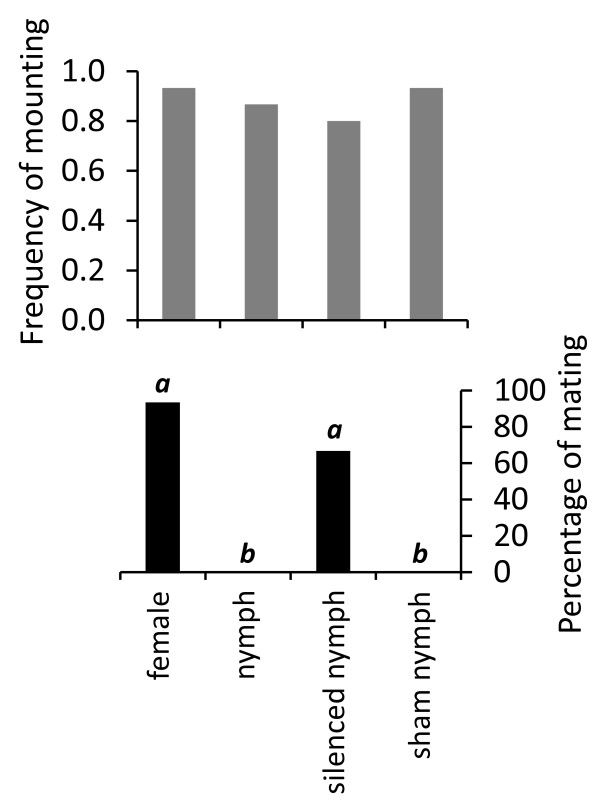
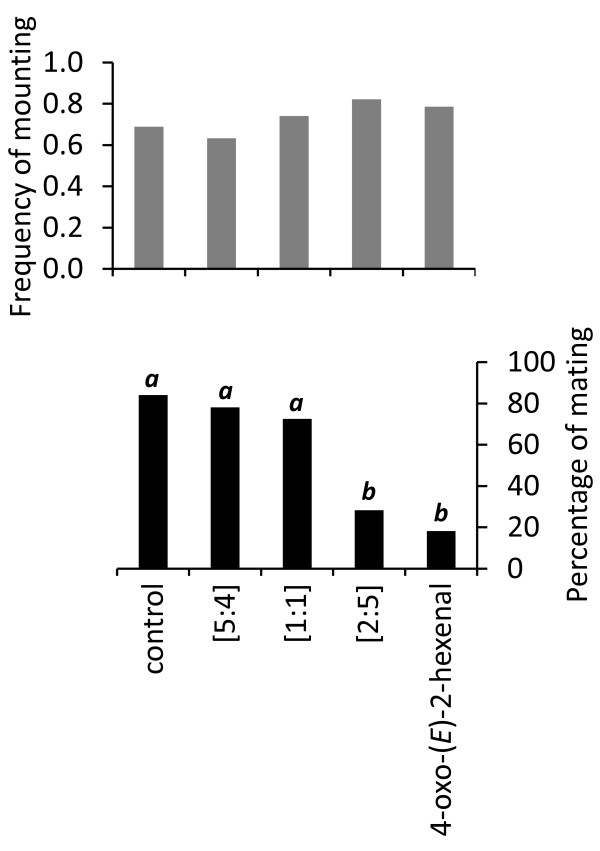
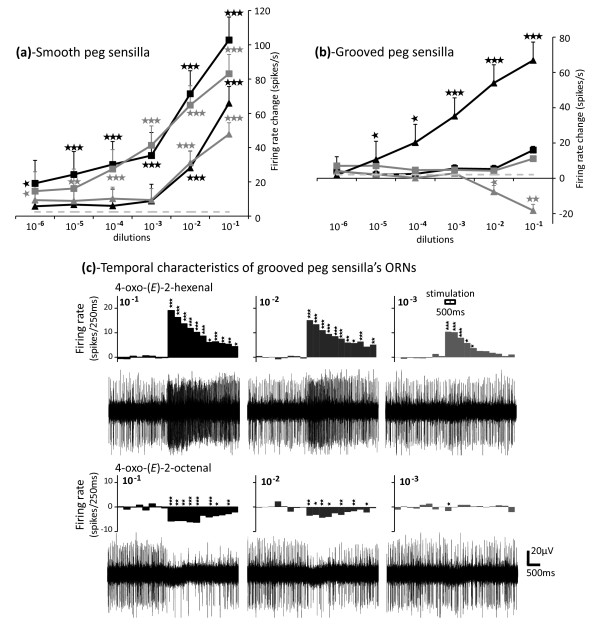
Behavioural mating assays showed that males mount nymphs significantly shorter time compared to females, although initial mounting preference was the same. In support of our hypothesis, nymphs experienced the same percentage of mating with sperm transfer as females if they were unable to emit (E)-2-hexenal, (E)-2-octenal 4-oxo-(E)-2-hexenal and 4-oxo-(E)-2-octenal, from their dorsal abdominal glands. We report that the aldehydes and 4-oxo-(E)-2-hexenal are detected by olfactory receptor neurons housed in smooth and grooved peg sensilla, respectively, on the adult antennae, at biologically relevant concentrations. Behavioural experiments showed that application of 4-oxo-(E)-2-hexenal or the two aldehydes at a nymph-emitted ratio, to a male/female pair during mounting initiation, decreased mating frequency to a rate comparable to that of a male/nymph pair.
By combining behavioural and sensory studies, we show that the nymph-specific alarm pheromone plays an important role in intra-specific communication in the common bed bug. Alarm pheromones are commonly looked upon as a system in predator/prey communication, but here we show that alarm pheromones may be used as multipurpose signals such as decreasing the risk of nymphal mating by males.
创伤性授精导致的腹部创伤和缺乏长距离吸引信息素为不寻常的性信号系统奠定了基础。雄性臭虫(Cimex lectularius)会爬上任何体型较大、刚吃饱的个体试图交配。最后一期若虫的体型与成熟雌性重叠,这使它们成为雄性感兴趣的潜在目标。然而,若虫缺乏雌性特有的交配适应性,可能会因腹部创伤而严重受伤。因此,我们假设若虫会发出化学驱避剂,作为诚实的状态信号,防止若虫受到性骚扰,并间接地降低雄性的能量成本。
行为交配试验表明,与雌性相比,雄性爬上若虫的时间明显缩短,尽管最初的交配偏好是相同的。支持我们的假设,如果若虫不能从其背腹腺中释放(E)-2-己烯醛、(E)-2-辛烯醛、4-氧代-(E)-2-己烯醛和 4-氧代-(E)-2-辛烯醛,它们与雌性经历相同的交配比例,同时有精子转移。我们报告说,醛和 4-氧代-(E)-2-己烯醛分别在成年触角的光滑和槽状钉状感觉毛上被嗅觉受体神经元检测到,浓度在生物学相关范围内。行为实验表明,在开始交配时,将 4-氧代-(E)-2-己烯醛或两种醛以若虫释放的比例应用于雌雄对,可将交配频率降低到与雄/若虫对相当的水平。
通过结合行为和感觉研究,我们表明,若虫特有的警报信息素在普通臭虫的种内通讯中起着重要作用。警报信息素通常被视为捕食者/猎物通讯系统,但在这里我们表明,警报信息素可以用作多用途信号,例如降低雄性对若虫交配的风险。