Cochlear Implant Program of Rio Grande do Norte, Natal, RN, Brazil.
Braz J Otorhinolaryngol. 2010 Jul-Aug;76(4):517-21. doi: 10.1590/S1808-86942010000400017.
Cochlear implant surgery is regarded as safe for the auditory rehabilitation of individuals suffering from profound/severe hearing loss. Complications may arise from the surgery. The complications of implant cochlear surgery reflect the operation complexity, the skill of the surgical team and the inherent risks of the procedure itself.
To establish and discuss the postoperative complications in implanted patients from the Cochlear Implant Program of Rio Grande do Norte-Brazil.
Retrospective analysis.
This paper discusses the clinical records of 250 patients implanted between August 2000 to December 2008. All patients were implanted by the same surgeon. The postoperative complications were classified in minor as those that resolved with minimal or no treatment and major as those requiring additional surgery or hospitalization.
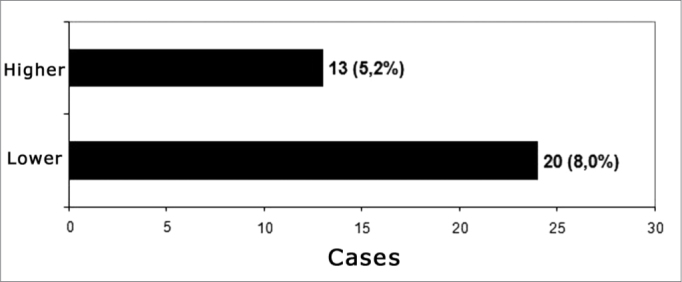
In our sample, 33 patients (13.2%) had postoperative complications. Minor complications affected 20 cases (8.0%), while major complications occurred in 13 cases (5.2%). Hematomas, device failures and infections had the highest clinical relevance.
This review reinstates the safety of the surgical procedure in relation to the possible occurrence of postoperative complications and emphasizes the need for continuous surgeon education and training.
人工耳蜗植入手术被认为是安全的,可以为患有深度/重度听力损失的个体提供听觉康复。手术可能会出现并发症。植入式耳蜗手术的并发症反映了手术的复杂性、手术团队的技能以及手术本身的固有风险。
从巴西北里奥格兰德州的人工耳蜗植入计划中确定和讨论植入患者的术后并发症。
回顾性分析。
本文讨论了 2000 年 8 月至 2008 年 12 月期间接受植入手术的 250 名患者的临床记录。所有患者均由同一位外科医生进行植入。术后并发症分为轻微并发症(那些经最小或无需治疗即可解决的并发症)和严重并发症(那些需要额外手术或住院治疗的并发症)。
在我们的样本中,33 名患者(13.2%)出现术后并发症。轻微并发症影响 20 例(8.0%),而严重并发症发生 13 例(5.2%)。血肿、设备故障和感染具有最高的临床相关性。
本次回顾重申了手术过程的安全性,同时也强调了对术后并发症发生的可能性进行持续的外科医生教育和培训的必要性。