Department of Anthropology, University of Pennsylvania, Philadelphia, Pennsylvania, United States of America.
PLoS One. 2010 Sep 3;5(9):e12572. doi: 10.1371/journal.pone.0012572.
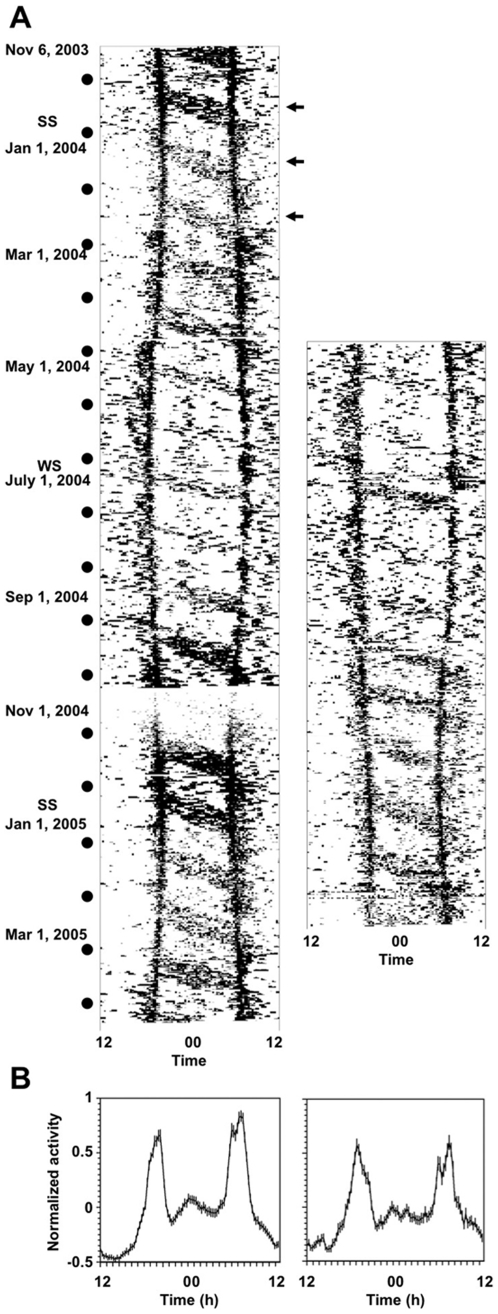
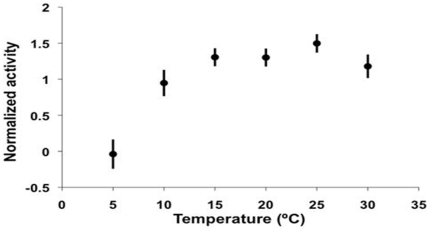
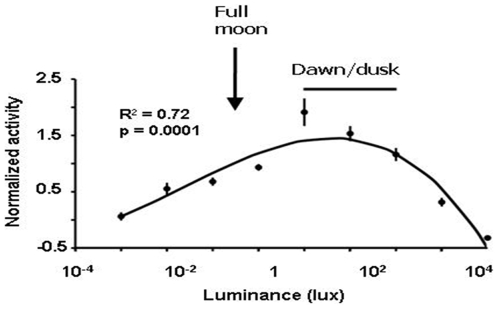
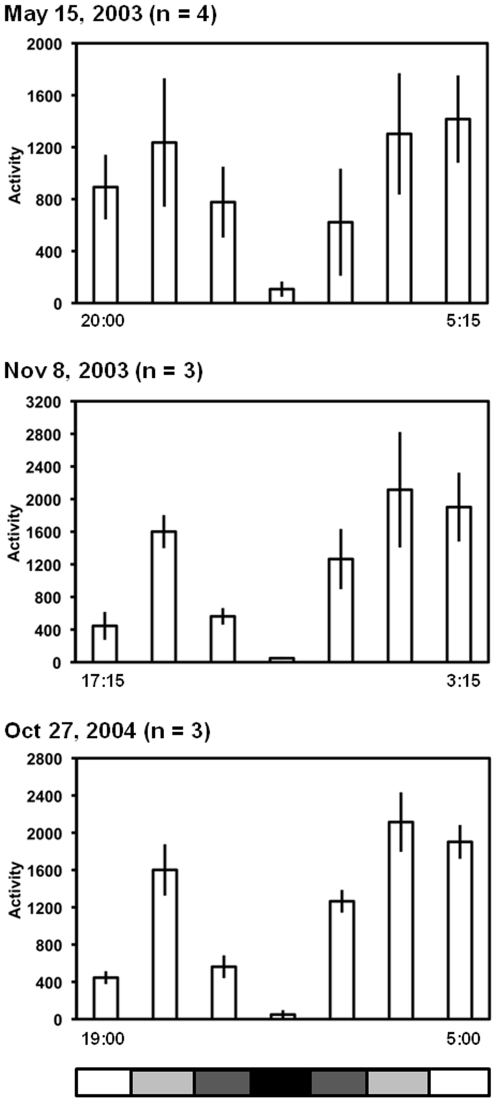
Primates show activity patterns ranging from nocturnality to diurnality, with a few species showing activity both during day and night. Among anthropoids (monkeys, apes and humans), nocturnality is only present in the Central and South American owl monkey genus Aotus. Unlike other tropical Aotus species, the Azara's owl monkeys (A. azarai) of the subtropics have switched their activity pattern from strict nocturnality to one that also includes regular diurnal activity. Harsher climate, food availability, and the lack of predators or diurnal competitors, have all been proposed as factors favoring evolutionary switches in primate activity patterns. However, the observational nature of most field studies has limited an understanding of the mechanisms responsible for this switch in activity patterns. The goal of our study was to evaluate the hypothesis that masking, namely the stimulatory and/or inhibitory/disinhibitory effects of environmental factors on synchronized circadian locomotor activity, is a key determinant of the unusual activity pattern of Azara's owl monkeys. We use continuous long-term (6-18 months) 5-min-binned activity records obtained with actimeter collars fitted to wild owl monkeys (n = 10 individuals) to show that this different pattern results from strong masking of activity by the inhibiting and enhancing effects of ambient luminance and temperature. Conclusive evidence for the direct masking effect of light is provided by data showing that locomotor activity was almost completely inhibited when moonlight was shadowed during three lunar eclipses. Temperature also negatively masked locomotor activity, and this masking was manifested even under optimal light conditions. Our results highlight the importance of the masking of circadian rhythmicity as a determinant of nocturnality in wild owl monkeys and suggest that the stimulatory effects of dim light in nocturnal primates may have been selected as an adaptive response to moonlight. Furthermore, our data indicate that changes in sensitivity to specific environmental stimuli may have been an essential key for evolutionary switches between diurnal and nocturnal habits in primates.
灵长类动物的活动模式从夜行性到日行性不等,少数物种在白天和晚上都有活动。在人科动物(猴子、猿和人类)中,夜行性仅存在于中美洲和南美洲的鸮猴属中。与其他热带的鸮猴物种不同,亚热带的阿扎拉鸮猴(A. azarai)已经将其活动模式从严格的夜行性转变为包括定期昼行性活动的模式。更恶劣的气候、食物的可获得性以及缺乏捕食者或昼行性竞争者,都被认为是促进灵长类动物活动模式进化转变的因素。然而,大多数野外研究的观察性质限制了对导致这种活动模式转变的机制的理解。我们的研究目的是评估这样一个假设,即掩蔽,即环境因素对同步昼夜节律运动活动的刺激和/或抑制/去抑制作用,是阿扎拉鸮猴不寻常活动模式的关键决定因素。我们使用连续的长期(6-18 个月)通过佩戴在野生鸮猴身上的计步器获得的 5 分钟-bin 活动记录(n = 10 个个体),表明这种不同的模式是由环境亮度和温度的抑制和增强作用对活动的强烈掩蔽产生的。光的直接掩蔽效应的决定性证据是数据显示,在三次月食期间,当月光被遮蔽时,运动活动几乎完全被抑制。温度也对运动活动产生负面影响,即使在最佳光照条件下也是如此。我们的研究结果强调了作为野生鸮猴夜行性决定因素的昼夜节律掩蔽的重要性,并表明在夜间活动的灵长类动物中,昏暗光线的刺激作用可能是对月光的一种适应性反应。此外,我们的数据表明,对特定环境刺激的敏感性变化可能是灵长类动物在昼行性和夜行性习性之间进化转变的关键。